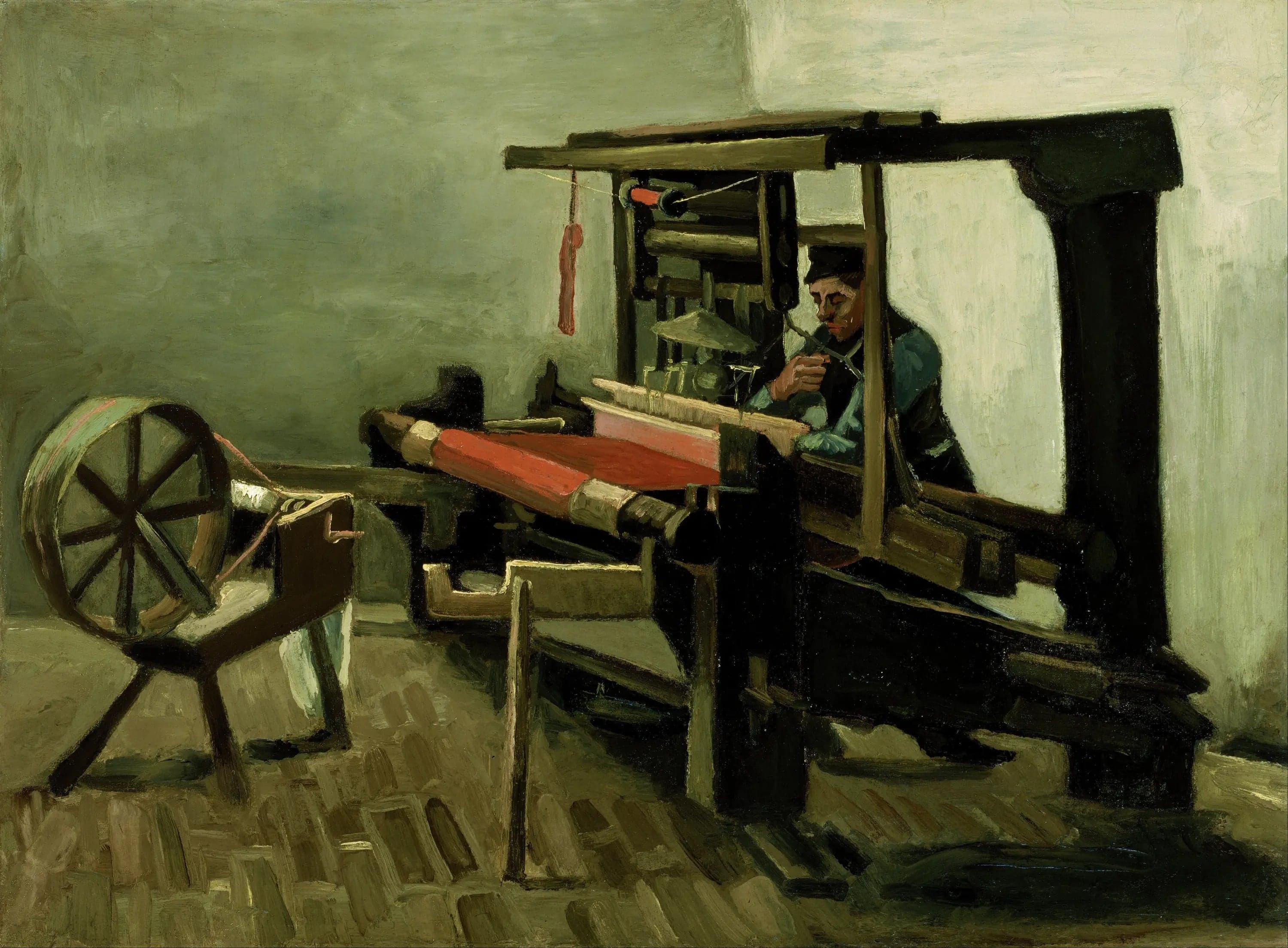
Tisserand
Scene depicted
In the painting titled “Weaver,” Van Gogh depicts a peaceful moment of daily life. The canvas features a worker, a weaver, whose repeated gesture evokes perseverance and passion for his craft. Through this painting, the artist not only captures an artisan at work, but elevates this moment to a nearly sacred level, paying tribute to humanity and its labor.
Historical context
Created in 1884, this painting emblematic was born in Nuenen , Netherlands, cradle of the post-impressionist movements. At the heart of an era marked by the quest for authenticity, this pictorial work is today carefully preserved at the Museum of Fine Arts in Boston . Its dimensions, 84.4 x 62.5 cm, testify to Van Gogh's ambition to capture the very essence of craftsmanship.
Place in the artist's career
This canvas is part of a period of maturity for Van Gogh, marked by an increasingly assertive style. Alongside other notable works such as “ The Starry Night ” and “ The Sunflowers ,” “Weaver” highlights his intensified introspection and growing mastery of nuances and textures.
Anecdote
“The light of a spring morning enchants my canvases,” Van Gogh might have said when evoking the birth of his masterpiece . Inspired by the serenity of a quiet alley, the artist absorbed the scent of blooming fields, translating into vibrant colors the beauty and simplicity of rural life.