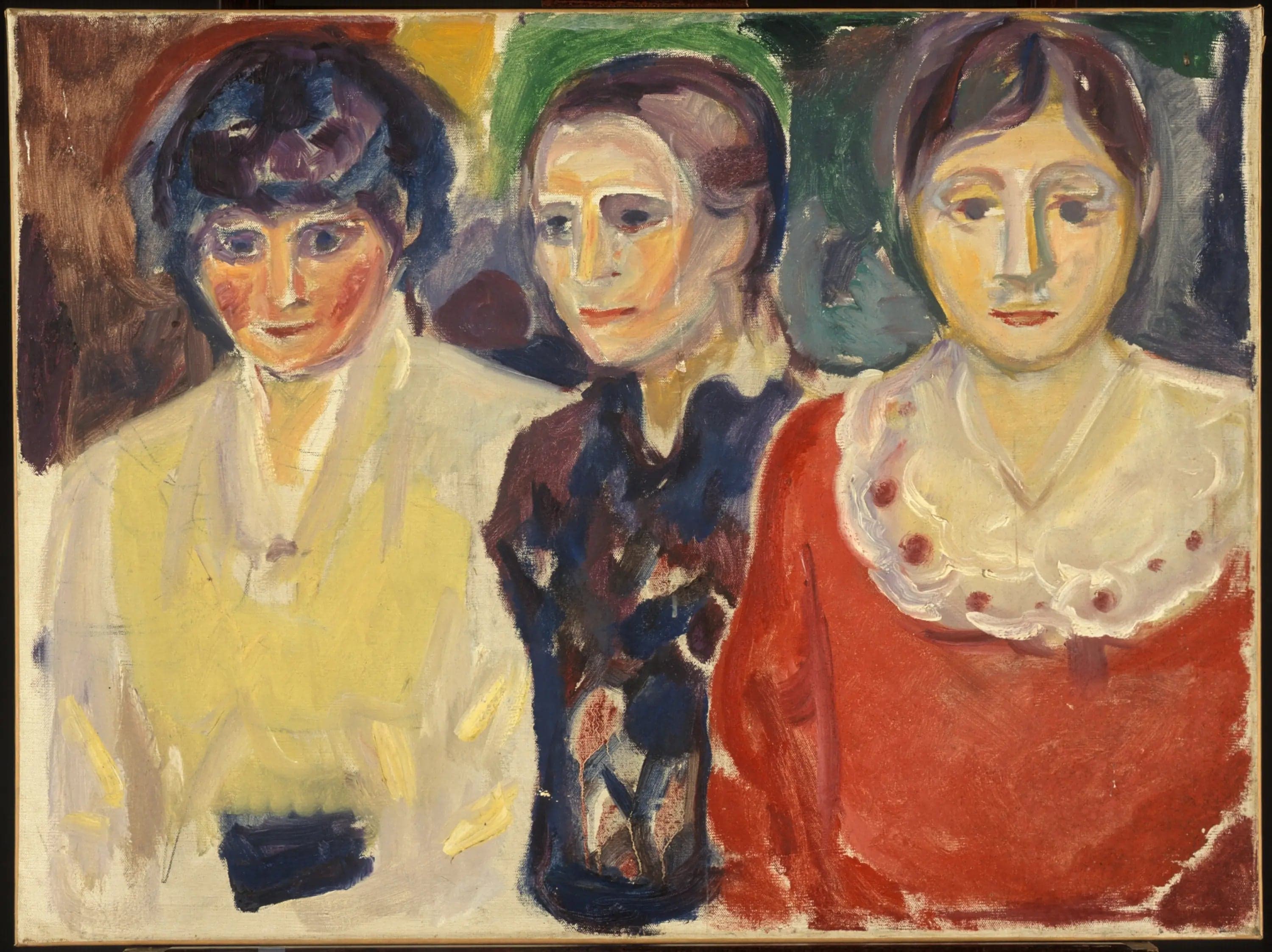
Three Women
- Original dimensions
- 91 x 68 cm
- Museum
- Munch Museum
- Year
- 1920
Scene depicted
The painting "Three Women" depicts female figures whose attitudes and expressions transcend mere portraiture. Gathered together, they symbolize various aspects of the female condition, blending softness and melancholy while creating a striking visual tension. The harmony of their silhouettes and the bold composition evoke a narrative that each observer can interpret according to their own emotions.
Historical context
Created in 1920 in Oslo, this painting is emblematic of the symbolism movement, marking a time of profound emotional and artistic upheaval. Immersed in the post-war context, the canvas evokes the complex relationship between the individual and society, capturing universal emotions. Today, this painting is preserved at the Munch Museum, revered for its dimensions and visual impact.
Place in the artist's career
"Three Women" is part of a key period in Munch's career, marked by a notable stylistic evolution. Alongside works such as "The Scream" and "The Madonna," this masterpiece reflects his exploration of themes of love, loss, and identity. This painting embodies both a culmination and a transition in his pictorial language.
Anecdote
Edvard Munch once said: "Art is not in the pursuit of external perfection, but in the authenticity of sensation." Inspired by a spring walk through the streets of Norway, he composed this work by crossing the gaze of three women, their deep essence resonating in every brushstroke of the painting . This fleeting encounter infused Three Women with a palpable strength and emotional intensity.