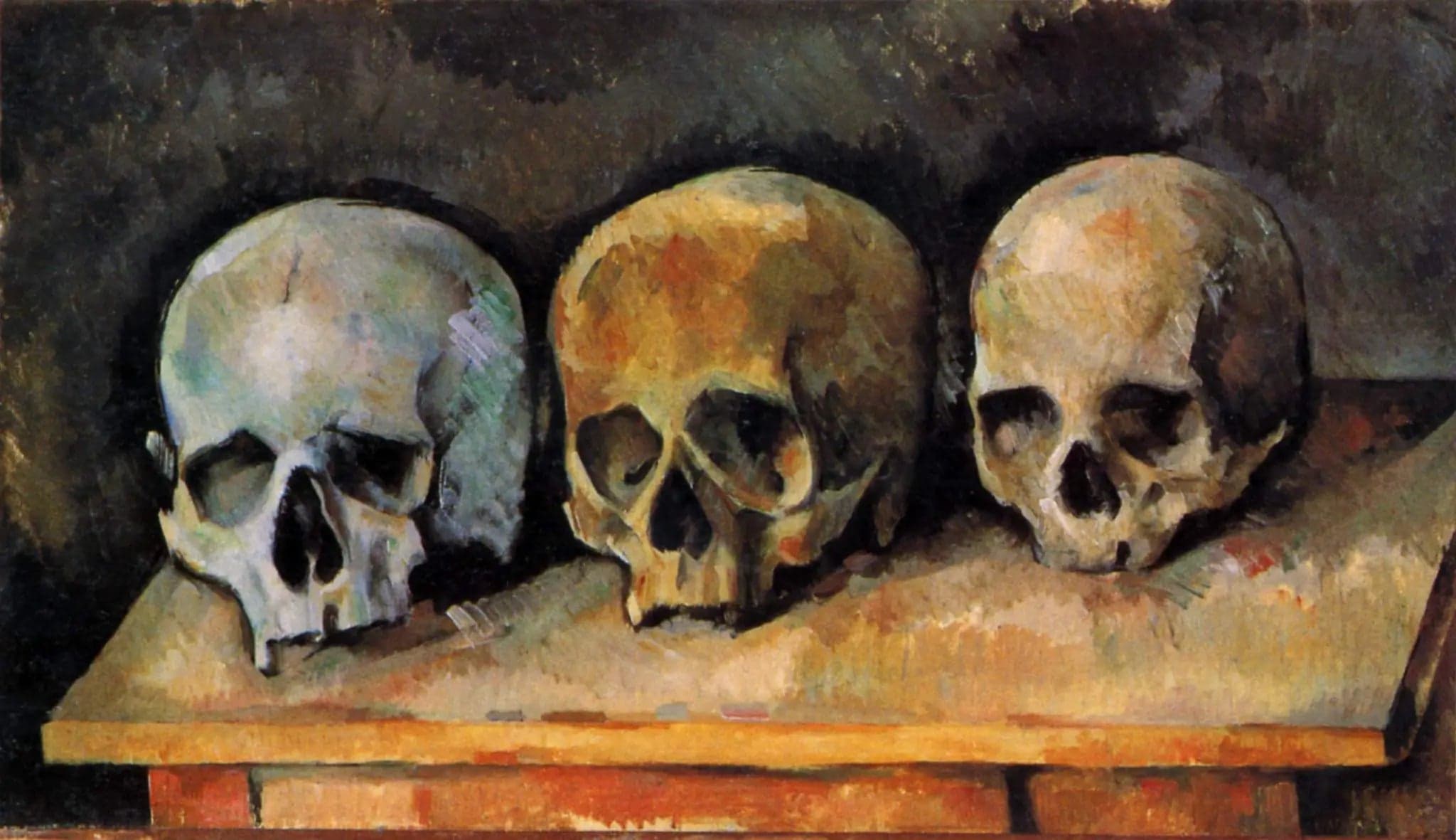
Three Skulls
- Original dimensions
- 60 x 34 cm
- Museum
- Detroit Institute of Arts
- Year
- 1898
Scene depicted
In this pictorial work , three skulls rest on a table, playing with light and shadows. The absence of bright color creates an atmosphere of gravity, inviting the viewer to meditate on mortality and the ephemeral beauty of life. Each detail resonates with poignant intensity, transforming a simple scene into an introspective quest.
Historical context
Created in 1898 in Aix-en-Provence, this iconic painting is part of the post-impressionist movement, which pushes the boundaries of traditional painting while anchoring deep emotions in its subjects. The painting is now treasured within the Detroit Institute of Arts , where its dialogue with the viewer continues to evolve.
Place in the artist's career
This painting marks an important milestone in Cézanne's evolution, situated between his experimental period and his artistic maturation. Compared to his earlier works such as “La Montagne Sainte-Victoire” and “Les Joueurs de cartes,” Trois crânes reflects his technical refinement and deeper contemplation of form and color.
Anecdote
“Every form has its own spirit, which emerges when one waits in silence.” One April morning, while contemplating an old skull on the table of his studio, Cézanne was inspired by the fragility of the passage of time. Thus was born the masterpiece that is Trois crânes , a canvas that whispers its eternal reflections.