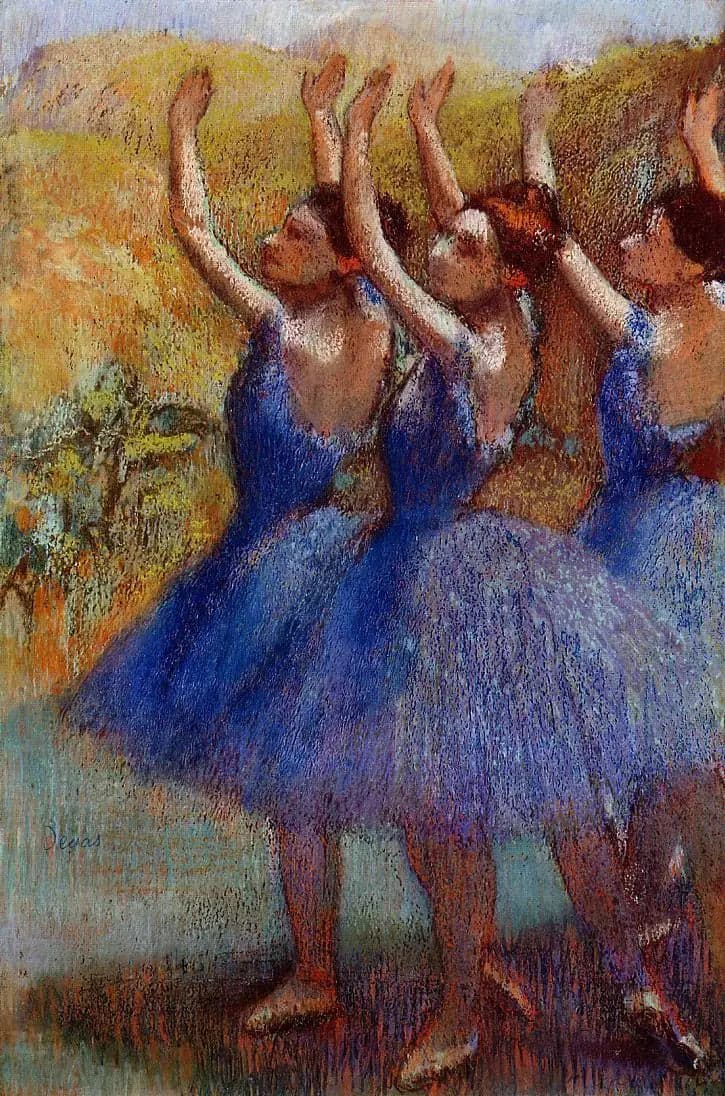
Three Dancers in Purple Tutus
- Original dimensions
- 49 x 73.2 cm
- Museum
- National Gallery
- Year
- 1898
Scene depicted
The painting “Three Dancers in Purple Tutus” illustrates a familiar scene in the world of Opera: three dancers in full rehearsal, their shimmering tutus contrasting with the muted background. Degas, a master of capturing movement, manages to freeze an effervescent dynamic, each ballerina telling a unique story through her gestures and expressions.
Historical context
Created in 1898, this painting by the famous French artist Edgar Degas is part of the Impressionist movement, in Paris, an iconic city of art. In this vibrant and bustling context, this canvas is a testament to the artistic and sociocultural evolution of the time. Today, this painting is displayed at the National Gallery, where it continues to enchant visitors with its energy and delicacy.
Place in the artist's career
This painting represents not only a major milestone in Degas's career but also a significant emotional turning point. At the peak of his artistic maturity, this work stands alongside “The Dance Class” and “Dance Above a Lake,” demonstrating his technical and emotional evolution throughout his career.
Anecdote
“Dance is the pleasure of living,” said Degas while observing the ballerinas. It was on a spring morning, in the intimacy of a Parisian studio, that he captured the essence of Three Dancers in Purple Tutus . The light filtering through the curtains, mixed with the scent of flowers, inspired him to create this masterpiece imbued with grace and movement.