Three Bathers
- Original dimensions
- 22 x 19 cm
- Movement
- post impressionism
- Museum
- Orsay Museum
- Year
- 1874
Scene depicted
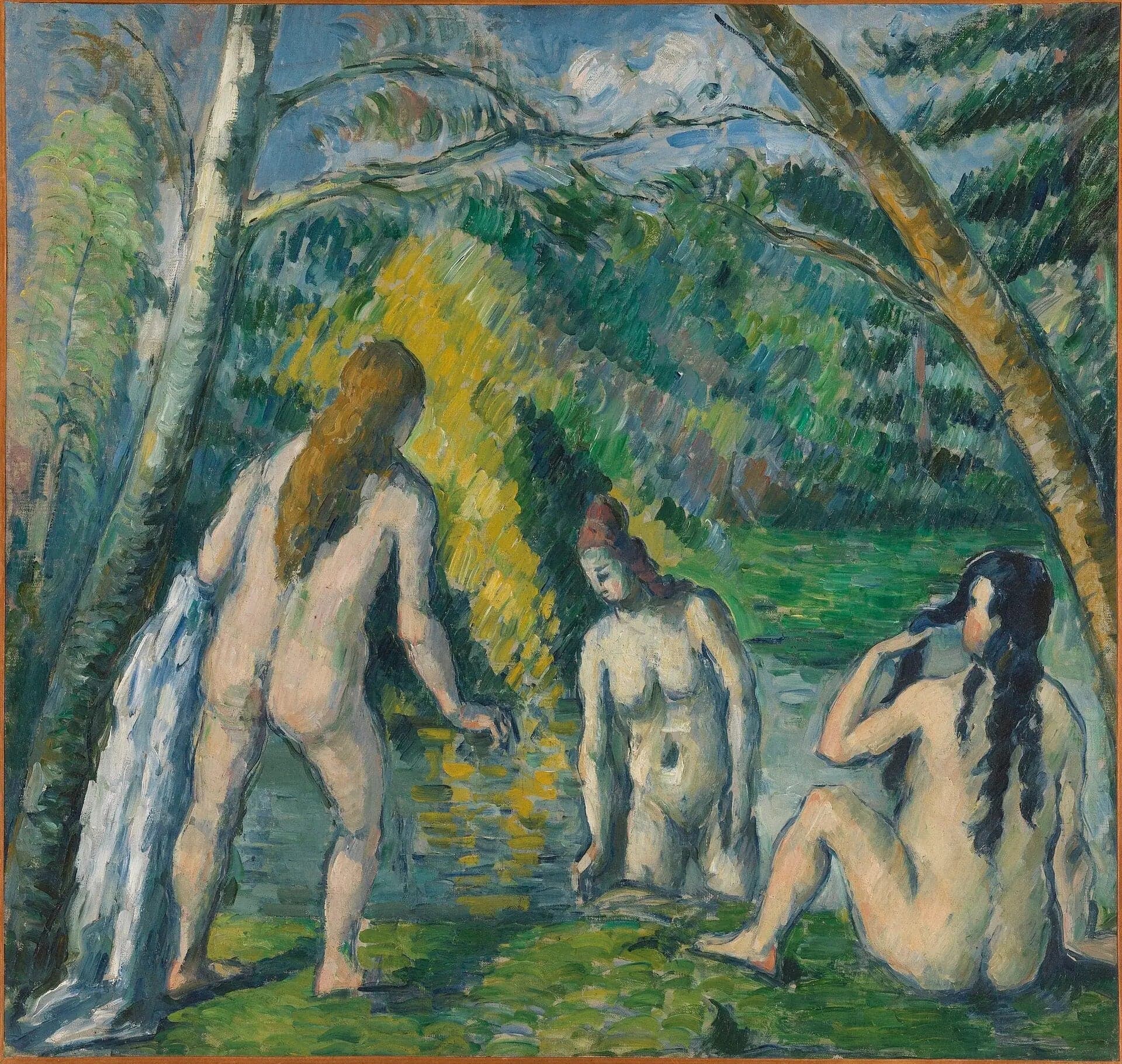
The painting Three Bathers illustrates a scene of serene intimacy, in which Cézanne depicts female figures at the edge of a swimming area. They seem to converse while immersing themselves in the surrounding nature, capturing the fleeting moment of a summer day. Light and color blend harmoniously, creating a vibrant atmosphere where the suspended hour becomes eternal.
Historical context
Created in 1874 in Paris, the painting Three Bathers is part of the post impressionist movement that marked a break with the artistic conventions of its time. At the heart of a period of artistic effervescence, the canvas bears witness to the innovation and aesthetic research that characterize Cézanne's work. Today, this masterpiece flourishes at the Orsay Museum , where its radiant presence illuminates the walls of the galleries, inviting visitors to dive into its colorful and sincere universe.
Place in the artist's career
This canvas , marking a pivotal stage in Cézanne's career, reveals the maturity of his style. It comes after his trial period in the impressionist world, but before reaching the peak of his expressionism . Alongside The Montagne Sainte-Victoire and The Card Players, Three Bathers illustrates the artist's transition to a more structured and intimate vision of reality.
Anecdote
“Art is a harmony parallel to nature.” These words from Cézanne beautifully evoke the genesis of his masterpiece . One summer morning, as the sun's rays danced among the foliage, the artist was inspired by the natural beauty of the bathers, a fusion of man and his environment. This original emotion infused in the composition of the painting Three Bathers still resonates in every brushstroke.