Three Bathers
- Original dimensions
- 73 x 60.3 cm
- Museum
- Minneapolis Institute of Art
- Year
- 1907
Scene depicted
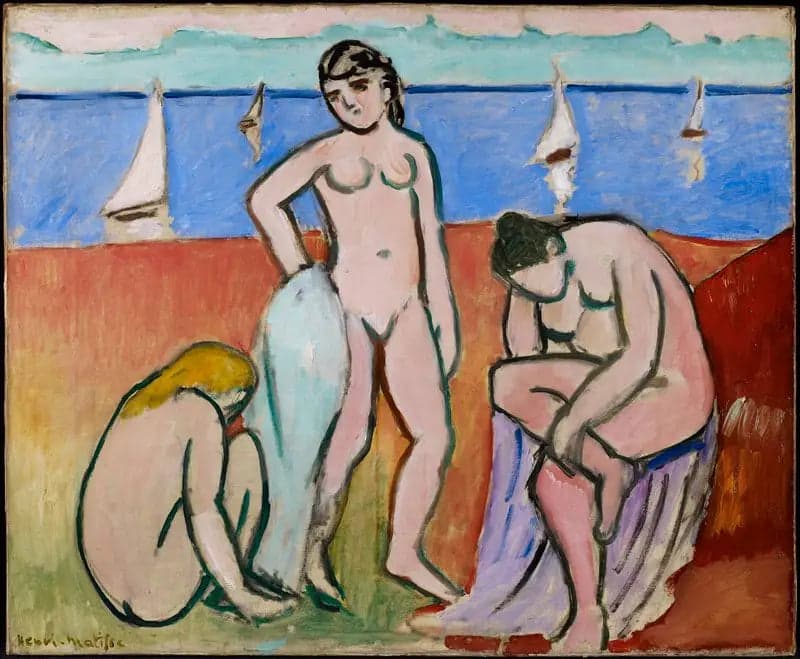
In Trois Baigneuses , Matisse immortalizes a moment of pure summer joy, scrutinizing the harmony between the female bodies and the surrounding nature. The characters, with voluptuous shapes and vibrant colors, seem to embody the pleasure of life. The composition , balanced and masterfully orchestrated, evokes a natural symphony where water, light, and flesh meet in a serene and euphoric dance.
Historical context
Created in 1907 in the dynamic artistic context of France, Trois Baigneuses appears as a masterpiece of Fauvism , a movement that celebrates bold color and emotional expression. At the time this painting was conceived, Matisse positioned himself as an innovator, introducing an unprecedented plastic language that would mark the history of art. Today, this canvas resides at the Minneapolis Institute of Art , a place where its brilliance and vibrancy continue to amaze art lovers from around the world.
Place in the artist's career
Trois Baigneuses is situated at a pivotal moment in Matisse's career, as he explores the possibilities offered by color and form. This painting can be compared to La Danse and Femme au Chapeau , two other iconic pieces that show the evolution of his style, moving from a classical realism to modern abstraction. Each painting testifies to the boldness of an artist in continual renewal.
Anecdote
Henri Matisse once stated: "Color is my mother tongue." Imagine a spring morning, as he strolls along the Mediterranean, he sees dancing silhouettes among the waves. This inspiring vision, saturated with golden light and aquatic ripples, brought Trois Baigneuses to life. This masterpiece transcends simple forms, capturing the very essence of this ephemeral beauty.