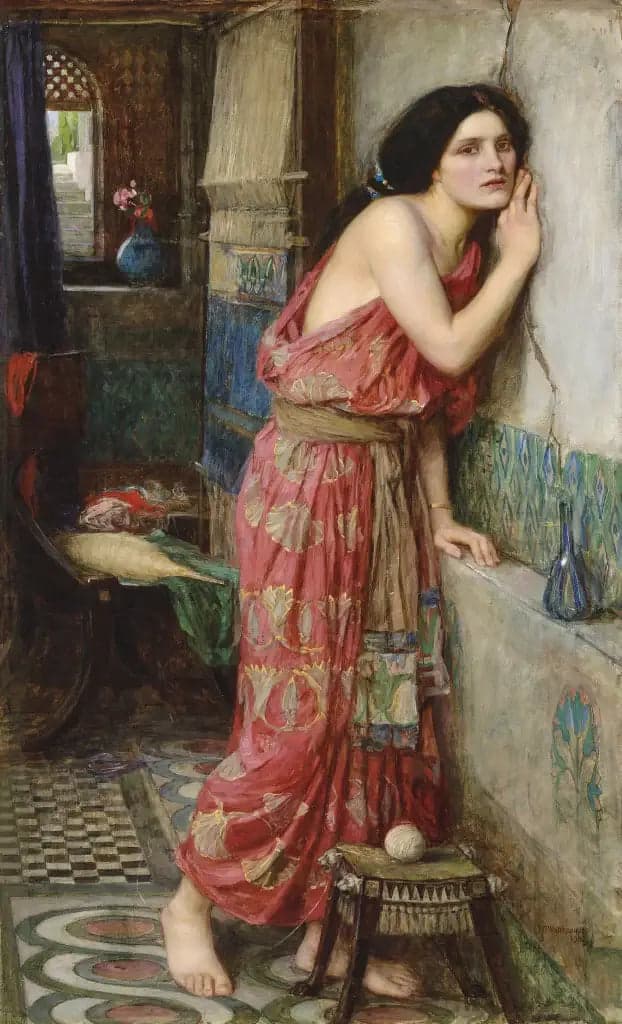
Thisbe
Scene depicted
This painting illustrates the tragic myth of Thisbe, lover of Pyramus, depicting their fateful meeting through an enchanting setting. Waterhouse transcends mere representation to invite the viewer to dive into the turmoil of emotions. The softness of the drapery, the shimmering colors, all contribute to evoking a fleeting moment where love and sadness skillfully intertwine.
Historical context
Created in 1900, this iconic painting by John William Waterhouse is part of the Pre-Raphaelite movement, characterized by a particular attention to color and light. Located in London, this pictorial work is currently housed at the Tate Britain . With impressive dimensions of 168 cm x 92 cm, it captures the viewer's imagination at first glance.
Place in the artist's career
Thisbe represents a pivotal period in Waterhouse's career. Alongside other paintings like "The Lady of Shalott" and "Ulysses and the Sirens," this masterpiece reflects a stylistic evolution marked by the exploration of mythology and sensuality themes, while continuing to exploit the dynamic light and vivid colors characteristic of his work.
Anecdote
"My art is the echo of the dreams I see in the morning light," Waterhouse once declared. It was at the dawn of a bright spring, probably in a quiet alley of Kensington, that he found inspiration for this masterpiece. The intensity of every detail in this painting reveals the emotional depth of the artist.