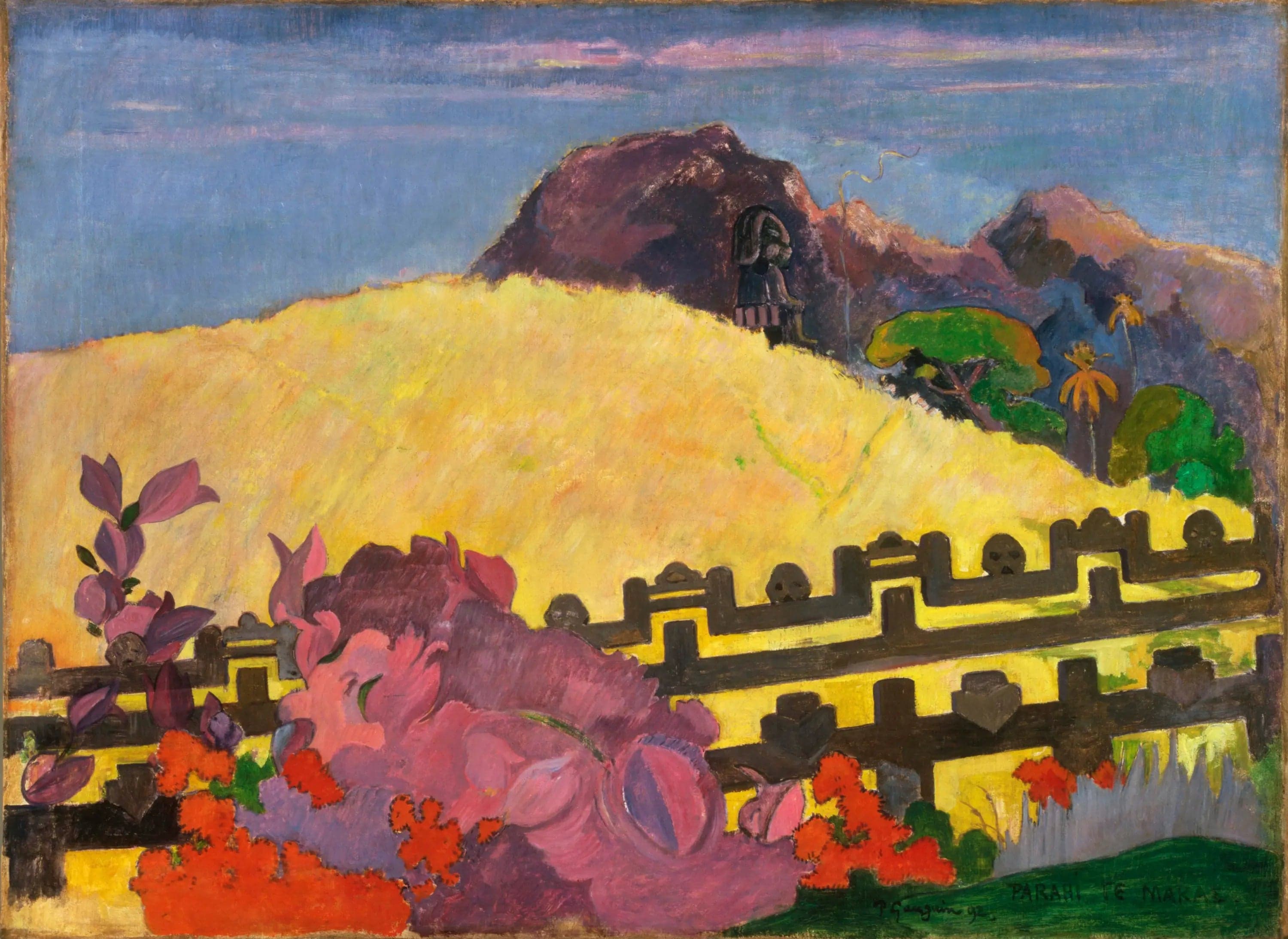
There lies the temple
- Original dimensions
- 91 x 68 cm
- Museum
- Philadelphia Museum of Art
- Year
- 1892
Scene depicted
In Where the Temple Stands , Gauguin takes us into a universe where nature and the spiritual intertwine harmoniously. The human figures, emblematic of daily Tahitian life, stand out for their simplicity, while a lush background evokes the vibrant richness of the environment. This pictorial work breathes serenity and contemplation, highlighting ancestral beliefs related to the land and the divine.
Historical context
Created in 1892, this painting embodies its roots in Pont-Aven, Brittany, a key city of the post-impressionist movement. Integrated into the artistic current of the Pont-Aven school, Where the Temple Stands captures the essence of the era while cultivating an intimate dialogue with Tahitian culture. The canvas is currently displayed at the Philadelphia Museum of Art in Pennsylvania, where this vibrant composition continues to amaze art lovers.
Place in the artist's career
This painting fits perfectly into Gauguin's artistic maturation. It represents a pivotal period where his style sharpens, at the intersection of impressionism and symbolism . Parallel to The Yellow Christ and Vision After the Sermon , Where the Temple Stands bears witness to a spiritual quest marked by the bold use of colors and the simplification of forms.
Anecdote
"Art must be a reflection of the soul," Gauguin once said, in a creative breath. He evoked that precise moment, in the heart of a sunny morning, when light played on the wooden facades of Tahiti. This emotion beautifies every brushstroke in his masterpiece , transforming the painting into a celebration of colors and forms that transcend reality.