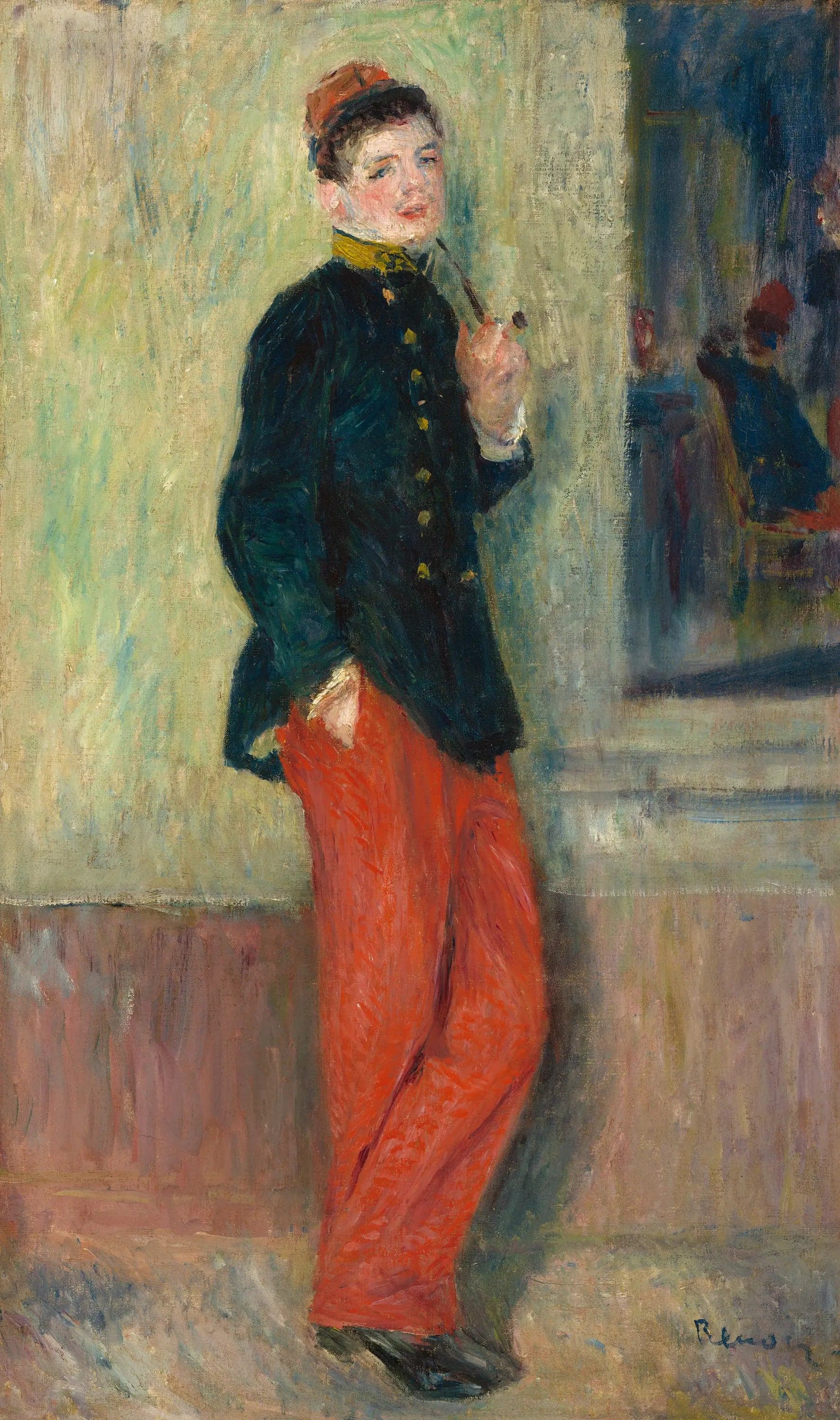
The Young Soldier - Pierre
- Original dimensions
- 33.02 x 54.93 cm
- Museum
- National Gallery of Art
- Year
- 1880
Scene depicted
This canvas is distinguished by its poignant representation of a young soldier, with an introspective gaze, floating in playful vegetation. Light brush strokes of paint perfectly describe the movement and liveliness of the scene, inviting the viewer to feel the quiet strength and anxiety of the time. The unique composition captures an exposed fragility, highlighting the paradoxes of youth in the face of the brutality of war.
Historical context
Created in 1880, this painting , emblematic of the Impressionist movement, emerges in the dynamic city of Paris. It is a pivotal time when art breaks free from academic conventions, diving into vibrant light and colors. Today, this essential canvas is housed at the National Gallery of Art , Washington D.C., where it continues to fascinate visitors with its emotional depth and timeless brilliance.
Place in the artist's career
In the career of Auguste Renoir , The Young Soldier plays a pivotal role, marking a technical and emotional maturity. This masterpiece is part of a period where the artist evolves towards bolder compositions. In parallel, works like Lunch of the Boating Party and The Large Bathers reveal the richness of his palette and the intensity of his emotions, thus shaping an iconic career.
Anecdote
“Beauty is in the light that dances on souls,” said Renoir, evoking his inspirations drawn from the simple moments of life. It was on a gentle spring morning, as nature awakened after the storm, that he captured the essence of a young soldier, a symbol of hope and vibrancy. The raw emotion of this scene is reflected in The Young Soldier , echoes of a youth full of promises.