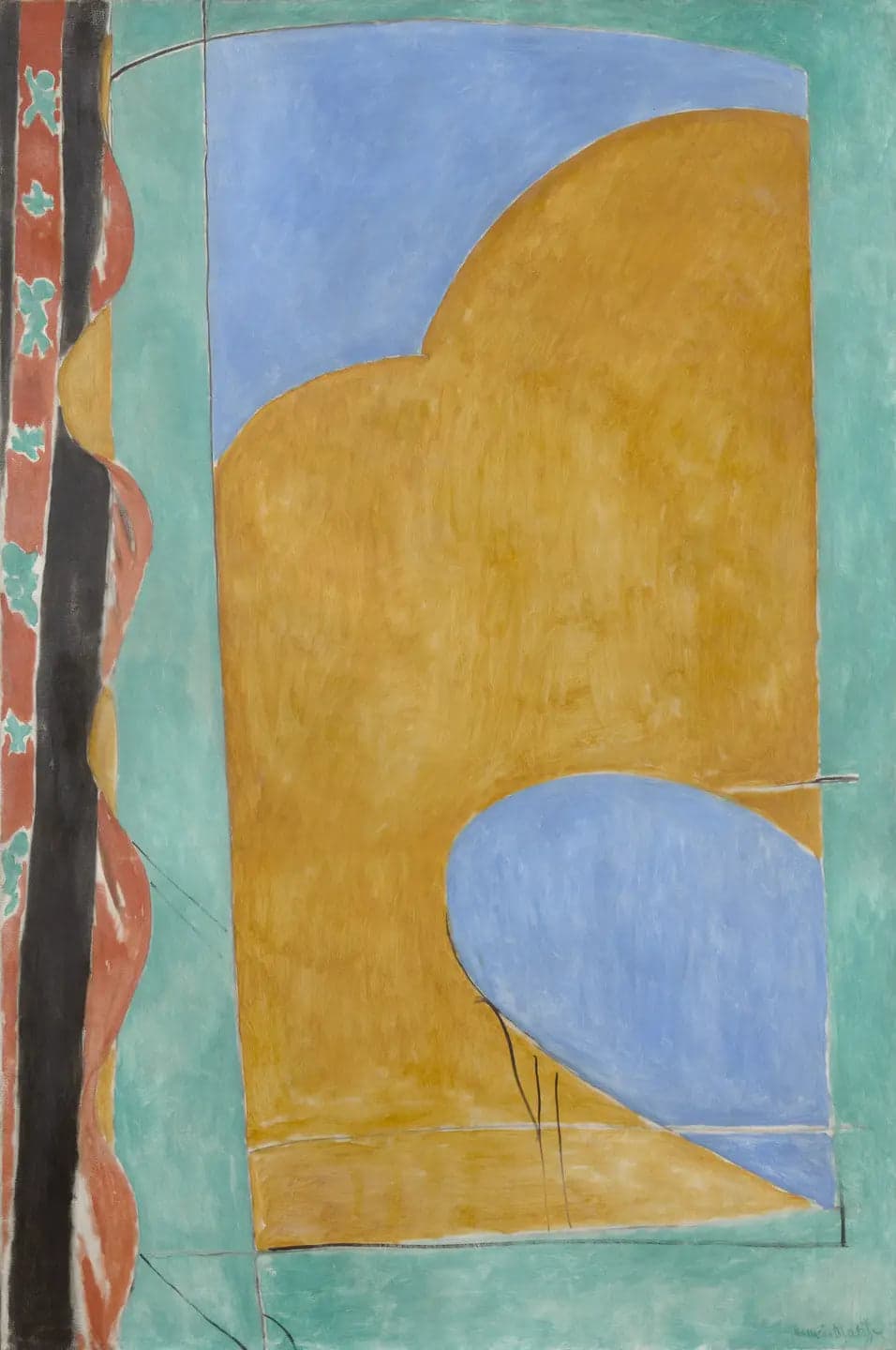
The Yellow Curtain
- Original dimensions
- 97 x 146 cm
- Museum
- Museum of Modern Art
- Year
- 1915
Scene depicted
In The Yellow Curtain , Matisse immerses us in a room bathed in light where a vibrantly colored curtain becomes the focal point. The composition reveals a subtle dialogue between nature and the interior, where forms blend in an almost musical harmony. Through shadows and lights, the work tells a story of intimacy and comfort, resonating with the viewer like a personal melody.
Historical context
Created in 1915 in Issy-les-Moulineaux, The Yellow Curtain is part of the Fauvist movement, famous for its chromatic boldness and pictorial revolution. This canvas , currently exhibited at the Museum of Modern Art, rejects the conventions of classical representation. With its captivating dimensions of 97 x 146 cm, this painting celebrates the innovation and freedom of expression of the time.
Place in the artist's career
The Yellow Curtain marks a significant turning point in Matisse's career, representing the effervescent creativity of a period of artistic maturation. Alongside The Dance and The Music , this painting illustrates the impressive evolution of his style, moving from a bold exploration of colors to a mastery of forms. It is with The Yellow Curtain that he brilliantly asserted his unique vision of art.
Anecdote
"Color is a force, a light, a field of vibration that rises and transforms." This quote, inspired by Matisse's state of mind, evokes the moment he captured the vibrant essence of The Yellow Curtain . One spring-like morning, as light played through the curtains, he felt the call of color like a song, allowing him to create this masterpiece filled with emotion.