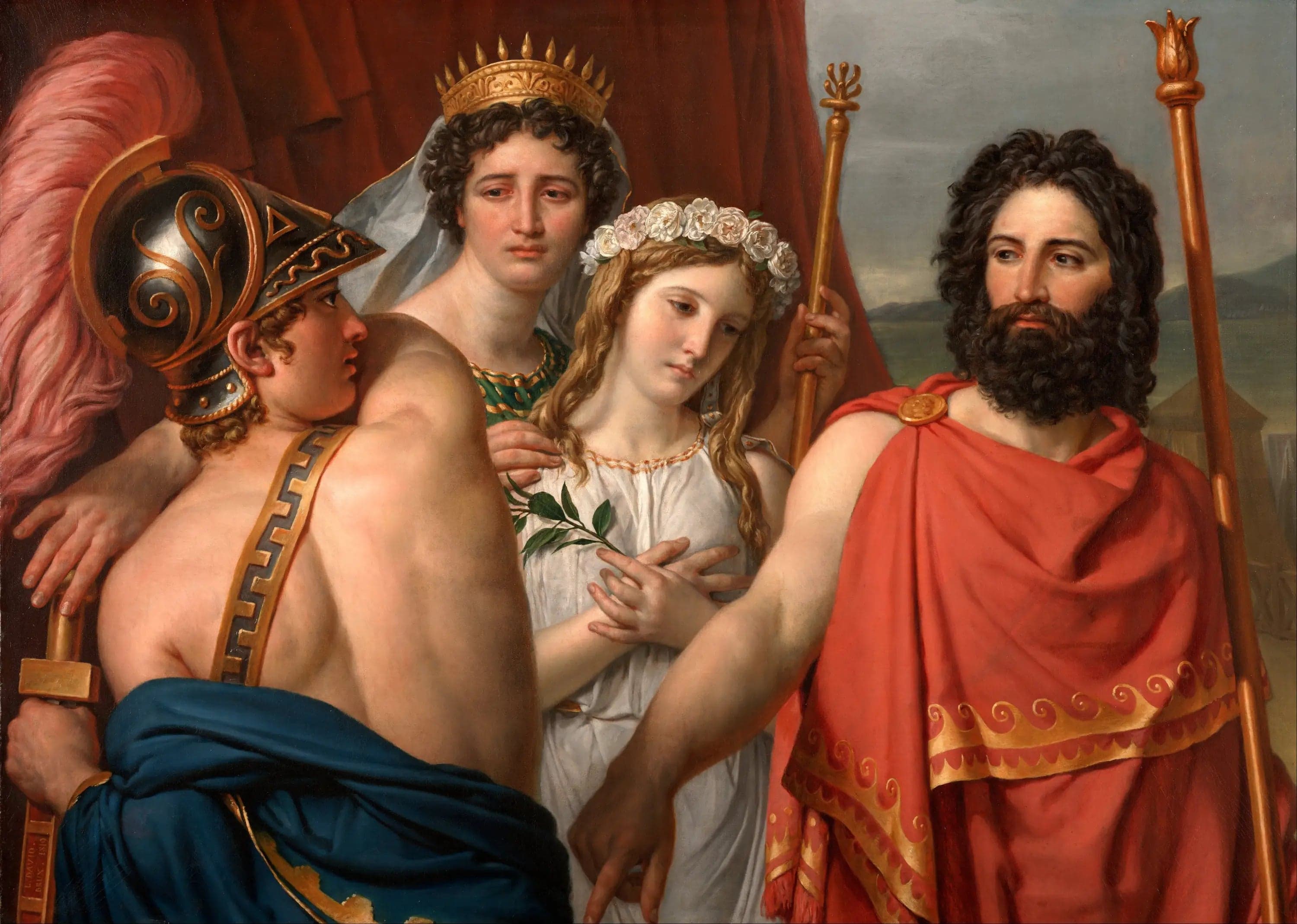
The Wrath of Achilles - Jacques
- Original dimensions
- 145 x 105.3 cm
- Museum
- Kimbell Art Museum
- Year
- 1819
Scene depicted
The Wrath of Achilles immerses us in the explosion of emotions of its mythical hero. Against a tumultuous background, Achilles, his features marked by fury, stands with immeasurable strength. This canvas , far from being a simple narrative, becomes an open window to human tragedy, where each character seems animated by deep feelings.
Historical context
Artwork: The Wrath of Achilles |BRK| Artist: Jacques-Louis David |BRK| Year: 1819 |BRK| Museum: Kimbell Art Museum |BRK| Dimensions: 145 x 105.3 cm |BRK| Art Movement: neoclassicism |BRK|
Place in the artist's career
The painting The Wrath of Achilles marks a turning point in David's career, steering clear of past styles to fully embrace neoclassicism . Alongside other iconic canvases such as The Oath of the Horatii and The Death of Socrates , this canvas reveals the evolution of his techniques, from drama to rigorous composition.
Anecdote
Jacques-Louis David once declared: “The canvas must express the truth of passions.” This conviction guided him as he drew inspiration from a spring morning in Rome, where vibrant colors and dancing shadows united to create an aura of intensity. The painting The Wrath of Achilles is a powerful resonance of this, magnifying rage and pain in the face of injustices.