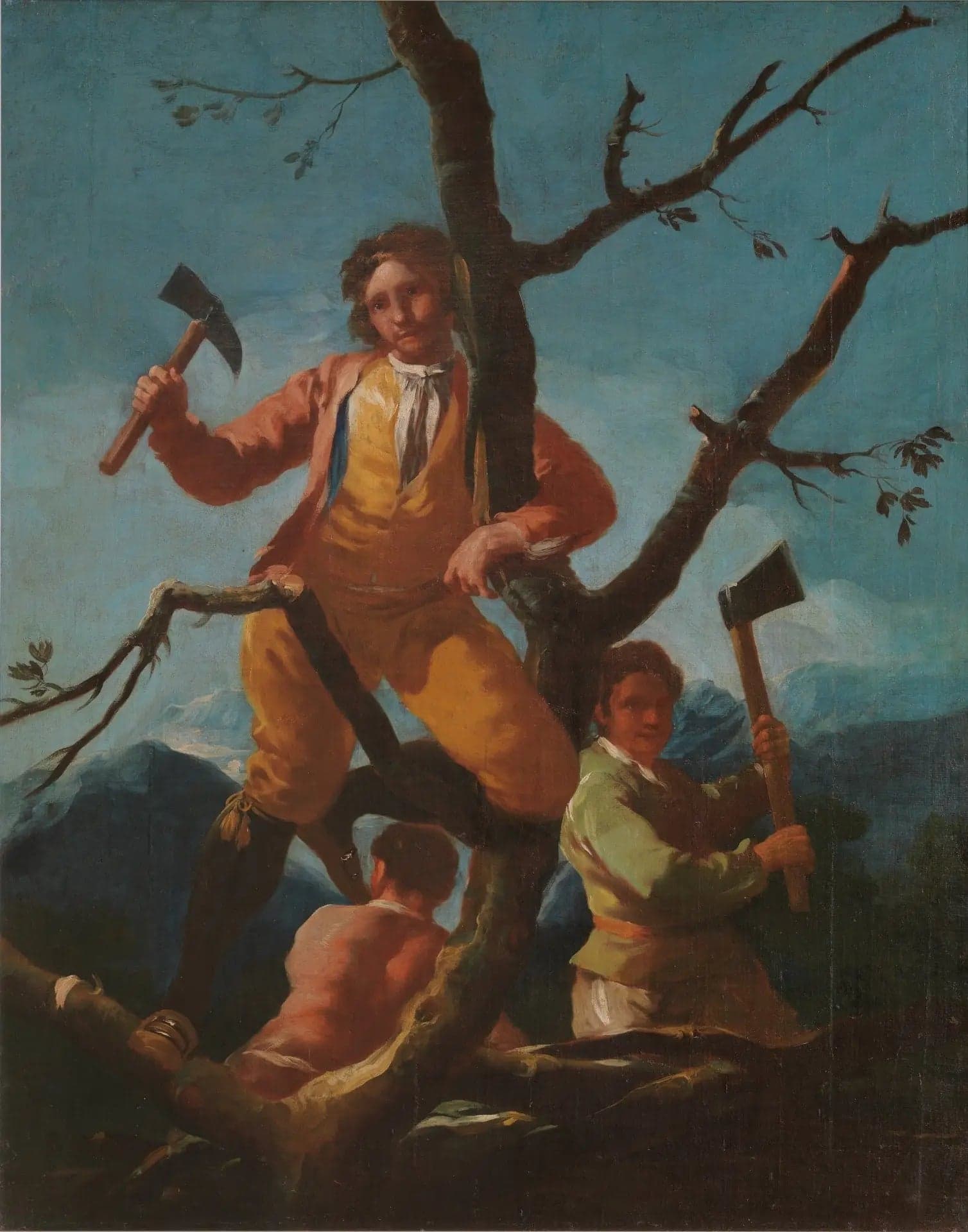
The Woodcutters
- Original dimensions
- 114 x 141 cm
- Museum
- Prado Museum
- Year
- 1777
Scene depicted
The painting “The Woodcutters” depicts a scene that is both intimate and powerful, where peasants are busy felling trees in the heart of a forest. Goya manages to capture the sweat of effort, the sound of axes striking wood, and the thrill of wild nature. The characters, represented with precise anatomy, seem connected to their environment, evoking a tragic harmony between man and nature, where human effort collides with the majesty and grandeur of the natural element.
Historical context
Created in 1777, this painting emblematic finds its roots in Madrid, at the heart of Spain, a period marked by neoclassicism and the first glimmers of romanticism . The Woodcutters is a work that resonates with the social tension and artistic evolution of its time. Currently, this canvas is preserved in the prestigious Prado Museum, testifying to Goya's invaluable legacy. Its dimensions, 114 x 141 cm, pay tribute to the grandeur of this composition .
Place in the artist's career
“The Woodcutters” is situated at a turning point in Goya's career. This masterpiece foreshadows his mature style, revealing a transition towards darker and more introspective themes. Compared to earlier works like “The Naked Maja” or his later paintings such as “The Executions of May 3rd,” a profound evolution is observed in his choice of subjects and technique.
Anecdote
“I wanted to capture the quiet strength of the workers, their hands marked by effort, their connection to the earth,” Goya is said to have remarked about his canvas . Inspired one autumn morning, he observed the silent struggle of the woodcutters in the heart of the Madrid forests, a scene vibrant with life and authenticity, which nourished this unique pictorial work .