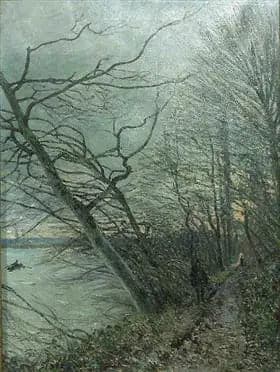
The Wood of the Rocks
- Original dimensions
- 55.5 x 73 cm
- Museum
- room 903
- Year
- 1880
Scene depicted
This canvas represents a natural scene where light filters through the foliage. The rocks, adorned with living moss, infuse a vibrant energy into the landscape, which, through its tranquility, invites contemplation. Sisley succeeds in capturing a fleeting moment: a moment when nature, both majestic and delicate, reveals its ephemeral beauty.
Historical context
Created in 1880, in the heart of the town of Moret-sur-Loing, in France, this painting belongs to the Impressionist movement. At that time, vibrant colors and the search for light marked a true revolution in the art world. Currently immersed in the permanent collections of the museum, this painting measures 55.5 by 73 cm and attracts attention with its serene and poetic atmosphere.
Place in the artist's career
The Wood of Rocks is part of a period of artistic maturity for Alfred Sisley . This painting , like other creations such as "The Loing at Moret" and "The Seine at Bougival," reflects an increased mastery of light play and a delicacy in rendering textures. Through this work, Sisley explains his stylistic evolution, combining technique and sensitivity.
Anecdote
Alfred Sisley , in one of his moments of reflection, stated: "Nature is a silent poem that is read in colors and shapes." This masterpiece was inspired one spring morning when a soft light caressed the foliage, creating an atmosphere of perfect calm. The painting thus evokes this inner peace, felt through the green and golden hues of the landscape.
Major exhibitions
From Corot to Modern Art. Memories and Variations