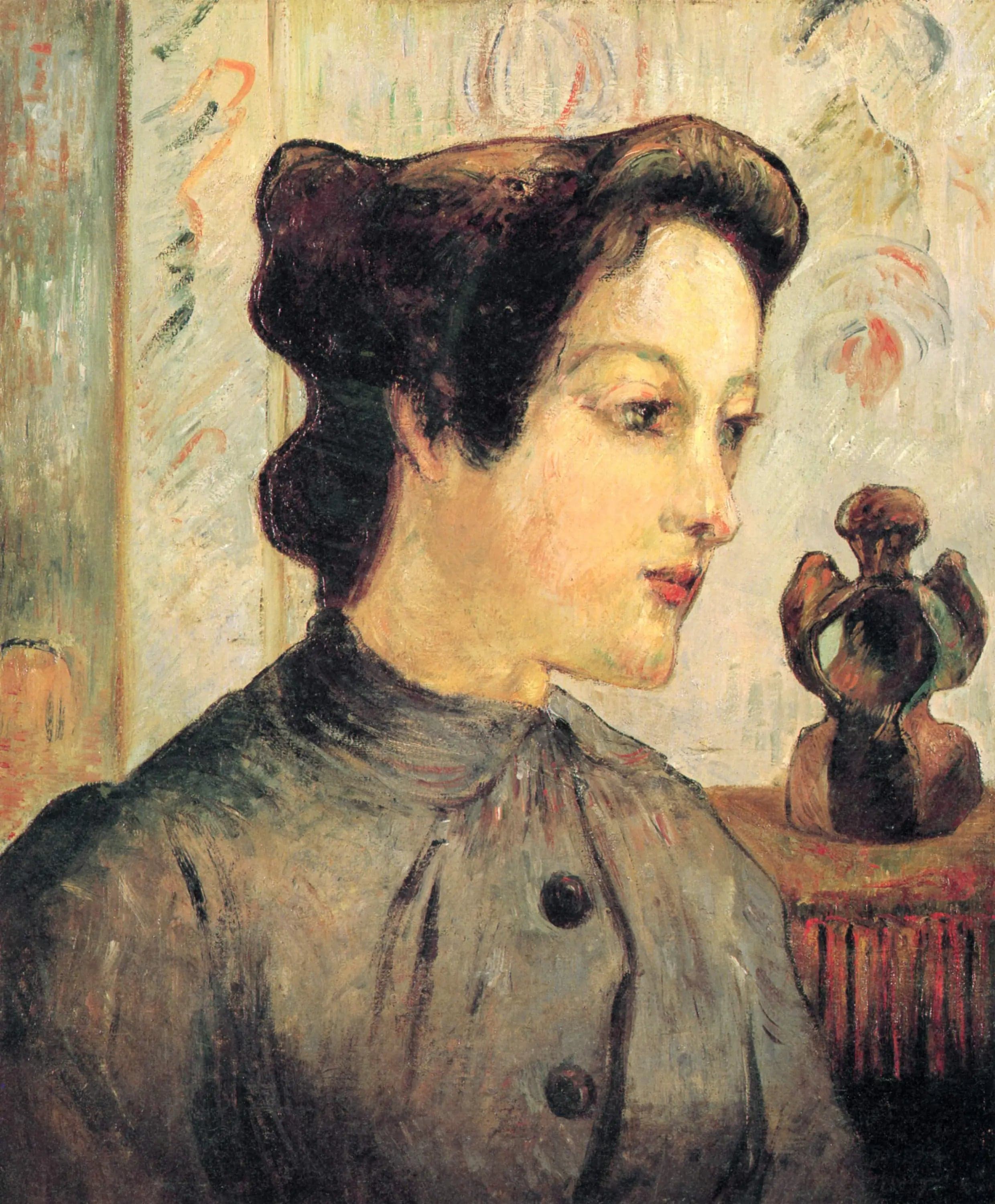
The Woman with the Bun
- Original dimensions
- 38 x 46 cm
- Museum
- Artizon Museum
- Year
- 1886
Scene depicted
This timeless painting features a woman delicately styled with an elegant bun, lost in her thoughts. The composition evokes a palpable serenity, accentuated by warm colors. She seems suspended in a moment of introspection, inviting the viewer to share this fragment of intimacy. The meticulous details reveal Gauguin's mastery in the art of capturing emotions and human relationships.
Historical context
Created in 1886, during a period marked by the emergence of Post-Impressionism in Paris, this painting conveys Paul Gauguin's exploration of color and forms. Set in the vibrant context of the Artizon Museum , this pictorial work is a window into a world where each brushstroke resonates with the passion of a time of artistic transformation. With its dimensions of 38 x 46 cm, this painting finds its place among the jewels that represent the soul of the 19th century.
Place in the artist's career
As a significant milestone in his career, The Woman with the Bun represents a turning point towards a simplification of forms and a bold use of colors. Positioned between "Vision After the Sermon" and "The Beautiful Angèle," this work illustrates Gauguin's stylistic maturation, revealing his transition from an attachment to realism to an innovator of symbolic dimensions.
Anecdote
“Art must not only reproduce reality but transcend it.” This is what Paul Gauguin felt one winter morning as he observed a female silhouette in a secret garden, light filtering through the branches. The expressive strength of The Woman with the Bun emerges from these fleeting moments, capturing the essence of a beauty that is both human and timeless.