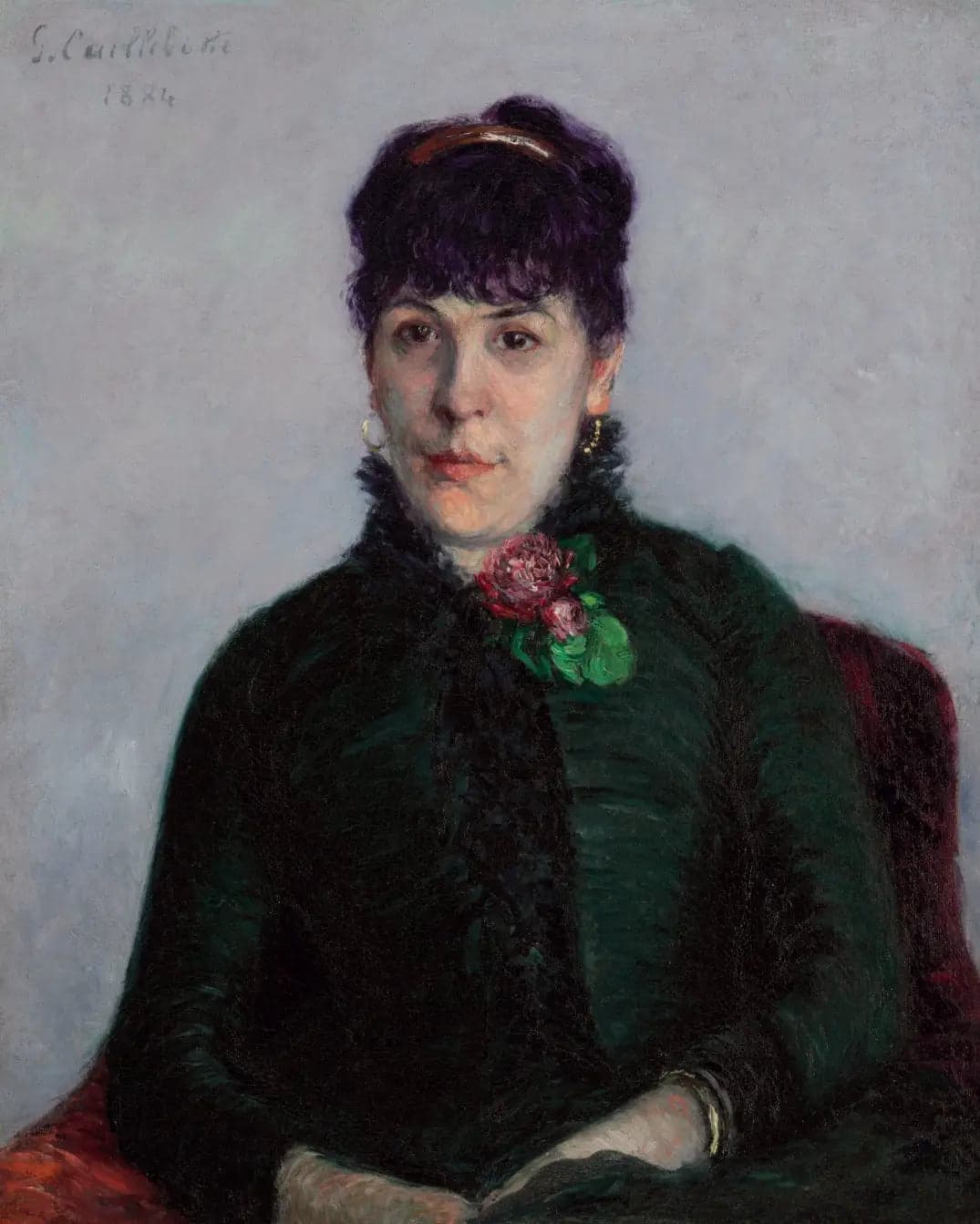
The Woman with Roses
- Original dimensions
- 60.3 x 72.7 cm
- Museum
- Chimei Museum
- Year
- 1884
Scene depicted
This painting depicts an elegant woman, surrounded by vibrant roses, preparing to arrange them carefully. The composition denotes a harmony between the human and nature, evoking softness and delicacy. Caillebotte plays with natural light, projecting a soothing atmosphere that evokes the tranquility of a moment stolen from everyday life. The flowers, symbols of ephemeral beauty, seem to merge into the serenity of this canvas.
Historical context
Created in 1884, the painting The Woman with Roses is at the heart of the Impressionist movement, which blossomed in Paris, France, during a time when art was emancipating itself from academic conventions. This iconic painting, currently housed in the Chimei Museum, reflects a refined aesthetic and an innovative gaze on light and everyday life. On a canvas measuring 60.3 x 72.7 cm, Caillebotte captures the fleeting beauty of a moment, making the colors of nature and the textures of the material resonate.
Place in the artist's career
The Woman with Roses fits into a period of great vitality in Caillebotte's career. While his painting The Village Dance showcases his talents as a narrator of urban life, The Street of Paris, Rainy Weather focuses on the melancholy of urban life moments. This pictorial work represents an artistic maturation where Caillebotte perfectly masters light and color nuances.
Anecdote
“Beauty is often hidden in the simplicity of things,” Caillebotte might have said while contemplating the lush garden that inspired him. Imagine a sunny morning, the scent of roses perfuming the air, as he observes a woman tending to the flowers, his canvas waiting to immortalize this delicate scene. The Woman with Roses is designed as a tribute to the fleeting beauty of life.