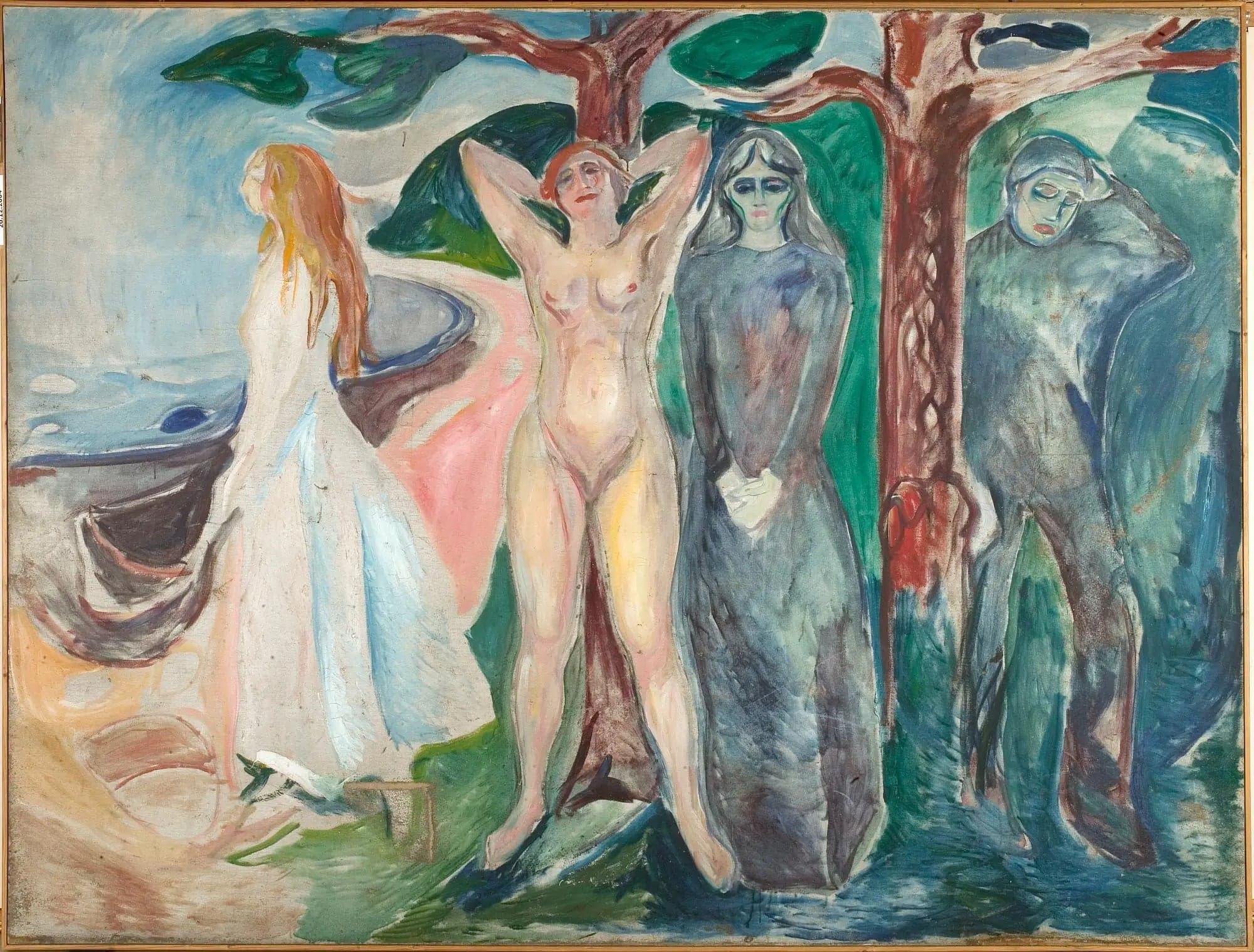
The Woman
- Original dimensions
- 262.5 x 199 cm
- Museum
- Munch Museum
- Year
- 1916
Scene depicted
This painting illustrates a mysterious woman, whose facial expression evokes both beauty and melancholy. Munch, while playing on the depths of emotion, delivers a poignant and introspective vision of femininity. The composition invites reflection on the soul, solitude, and the delicate understanding of human feelings. Each brushstroke dramatizes the scene, enhancing the atmosphere of mystery that emanates from the work.
Historical context
Created in 1916, this painting is located in Oslo, Norway. Edvard Munch , an iconic figure of the expressionist movement, is part of a time when art seeks to translate human emotions in a poignant way. Currently displayed at the Munch Museum, this canvas of large dimensions, measuring 262.5 cm wide and 199 cm high, demonstrates the artist's exceptional mastery in representing the complexity of human feelings.
Place in the artist's career
The Woman is situated at a turning point in Munch's career, a period when he explores the themes of anxiety and sensuality more intensely. In parallel, we can mention The Scream , a major work from 1893, and The Madonna , painted in 1894-1895, which, like The Woman , question human existence and individual psychology through distinctive techniques and style.
Anecdote
“I never paint what I see, I paint what I feel.” This quote from Edvard Munch immerses us in the emotional universe of this masterpiece . Imagine him, one spring morning, walking through the streets of Oslo, letting his mind wander. The strength of the emotions he captured in every face, in every gesture, was the source of inspiration for The Woman , a fascinating work that still resonates today.
Major exhibitions
Edvard Munch . Monumental projects