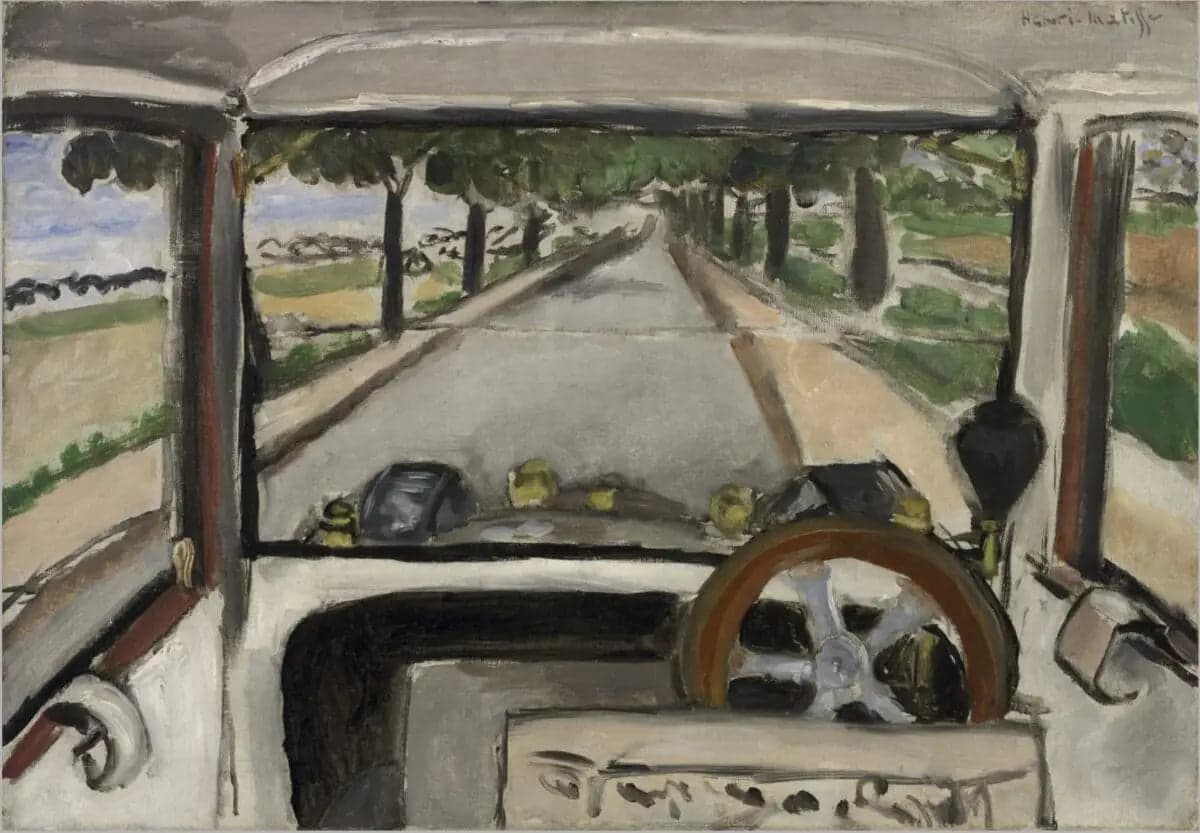
The Windshield, on the road to Villacoublay
- Original dimensions
- 55.2 x 38.2 cm
- Museum
- Cleveland Museum of Art
- Year
- 1917
Scene depicted
In this composition , colors intertwine to paint a landscape where the outside world emerges gently, floating between a dream and reality. The windshield then becomes a symbol of protection, a barrier between what we are and what we see, translating a quest for escape and serenity.
Historical context
This painting was born in the heart of the turmoil of 1917, a time marked by World War I, in an evolving corner of France. Imbued with Fauvism , Matisse offers through this canvas an escape from chaos, a clear and bright vision where the jewel of his creativity reveals itself with strength. Currently preserved at the Cleveland Museum of Art , this painting measures 55.2 x 38.2 cm, a symbol of a moment frozen in time.
Place in the artist's career
The Windshield, on the road to Villacoublay is situated in a pivotal period of Matisse's career, oscillating between the Fauvist movement and his later explorations. Following The Dance and The Joy of Life , this painting illustrates his peak in the confounding universe of vibrant colors before leaning towards more abstract forms.
Anecdote
“Light, more than form, is the key to art,” Matisse might have said, inspired by daily rituals, perhaps observing the gentle breeze of a peaceful morning by the road to Villacoublay. This fleeting moment, illustrating escape and simple beauty, is reflected in the vibration of the painting , creating a link between nature and spirit.