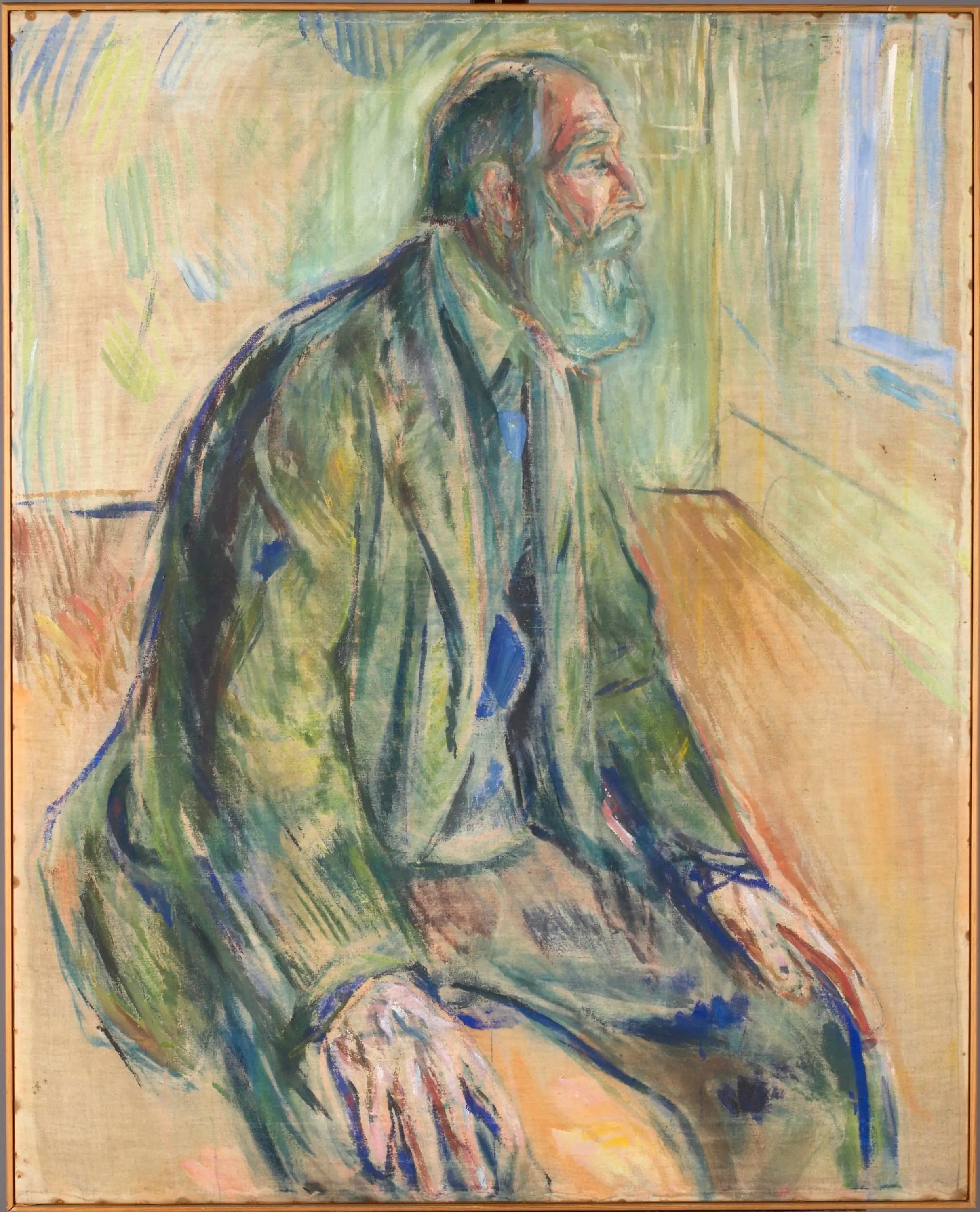
The Window
- Original dimensions
- 95.5 x 118 cm
- Museum
- Munch Museum
- Year
- 1910
Scene depicted
In the painting “Breaking the Window,” Munch depicts the scene of a woman standing at a window, her gaze lost in the distance. This painting illustrates the quest for light and the outside world, while capturing the melancholy of a confined interior. The composition invites reflection on isolation and the intensity of human emotions.
Historical context
Created in 1910 in Oslo, this painting is emblematic of the expressionist movement, characterized by an intense and personal vision of reality. This canvas is currently displayed at the Munch Museum, a place dedicated to the artist's legacy. At that time, Europe was in the midst of cultural upheaval, and Munch's work reflects the turmoil and passions of a changing society.
Place in the artist's career
Breaking the Window represents a key period in Munch's career, where he explores themes of solitude and emotional interiority. In contrast to his famous painting “The Scream” and his canvas “The Madonna,” this work testifies to an evolution towards ever-deeper introspection. It is part of an artistic maturation marked by bolder brushstrokes and innovative color choices.
Anecdote
“Art must first and foremost feel,” said Munch. This quote finds its full meaning in the creation of Breaking the Window . Imagine the painter, one spring morning, contemplating the golden light filtering through the curtains. This fleeting moment inspired this canvas , revealing deep and troubling emotions.