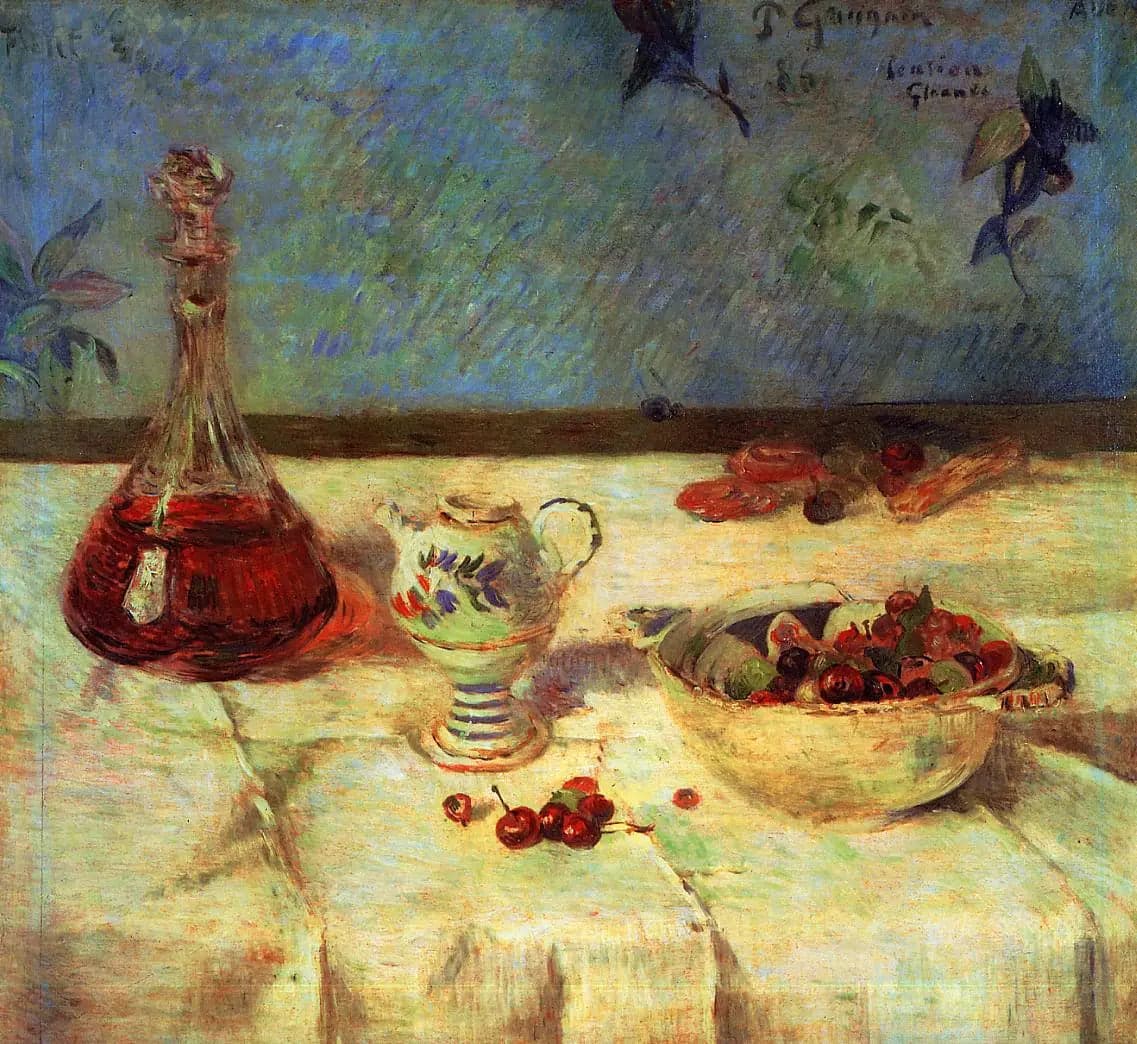
The White Tablecloth
- Original dimensions
- 58.2 x 54.4 cm
- Museum
- Pola Museum
- Year
- 1886
Scene depicted
In this pictorial work , Gauguin captures a tranquil nature, where a white tablecloth frequently used during meals unfolds majestically, creating a striking contrast with the surrounding colors. Elements of daily life transform into a visual harmony, revealing the poetic in the mundane. It is an invitation to contemplate the simple beauty of existence.
Historical context
Created in 1886, this painting is emblematic of an artistic movement at the crossroads of symbolism and post-impressionism . Located in Paris, a flourishing city at that time, The White Tablecloth reflects a pivotal period where artists freely experimented with their relationship to color and form. This canvas is currently housed at the Pola Museum , a space dedicated to art that allows for the rediscovery of lesser-known masterpieces.
Place in the artist's career
The White Tablecloth represents a milestone in Gauguin's career, marking the transition to a bolder and more suggestive style. Compared to his masterpiece “Vision After the Sermon” and “Asia,” this painting reflects a quest for deeper emotions and an enriched palette, thus marking a significant evolution in the artist's artistic journey.
Anecdote
“I seek the soul of things.” These words resonate through The White Tablecloth , painted by Gauguin on a spring morning in Pont-Aven, a place rich in stories. The softness of the air, the song of the birds, and the golden light of the sun filtering through the branches nourished his imagination. Each brushstroke on this canvas evokes this passionate search for fragile beauty and a new aesthetic.