The White River
- Original dimensions
- 60 x 72 cm
- Movement
- post impressionism
- Museum
- Grenoble Museum
- Year
- 1888
Scene depicted
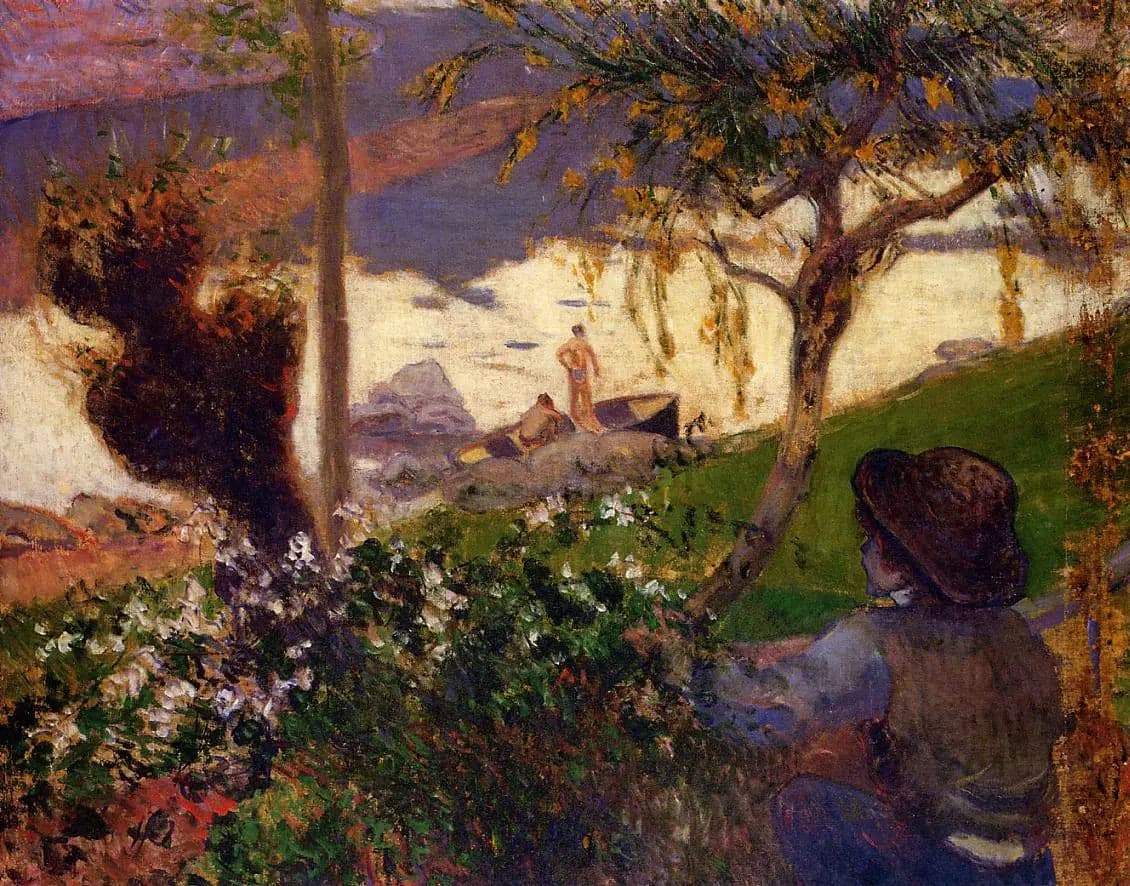
The White River depicts a dreamlike landscape where forms intertwine. The work transports us to the edge of a river, where reflections on the water shimmer under a calm sky. The lush greens of the trees and the cool tones of the water inspire a palpable serenity. This painting tells a story, that of a world in harmony, a moment suspended between earth and sky, inviting daydreaming and escape.
Historical context
Created at the end of the 19th century, this painting is part of an innovative artistic movement, post impressionism , evoking the desire to transcend the limits of realism . Located in the charming city of Grenoble, this pictorial work has found its place within the precious collection of the Grenoble Museum , where it continues to inspire generations of visitors. With dimensions of 60 x 72 cm, the canvas reveals a wealth of emotions equal to the natural beauty that surrounds it.
Place in the artist's career
This painting is positioned at the heart of the artistic journey of Paul Gauguin , at the crossroads of his periods of experimentation. It perfectly juxtaposes with other canvases such as “Vision After the Sermon” and “The Yellow Christ,” illustrating a transition towards colorful and expressive abstraction. The White River embodies both a beacon of his promising talent and a deeply personal work, testifying to his connection with nature.
Anecdote
“Nature is my source of inspiration, I feel it as a call to creation,” Gauguin might have said in a moment of contemplation facing the diffused light of an April morning. This feeling, born from a fleeting moment, is embodied in every brushstroke of this sumptuous painting that is The White River , inviting anyone to lose themselves in its nuances and the magic of its landscapes.