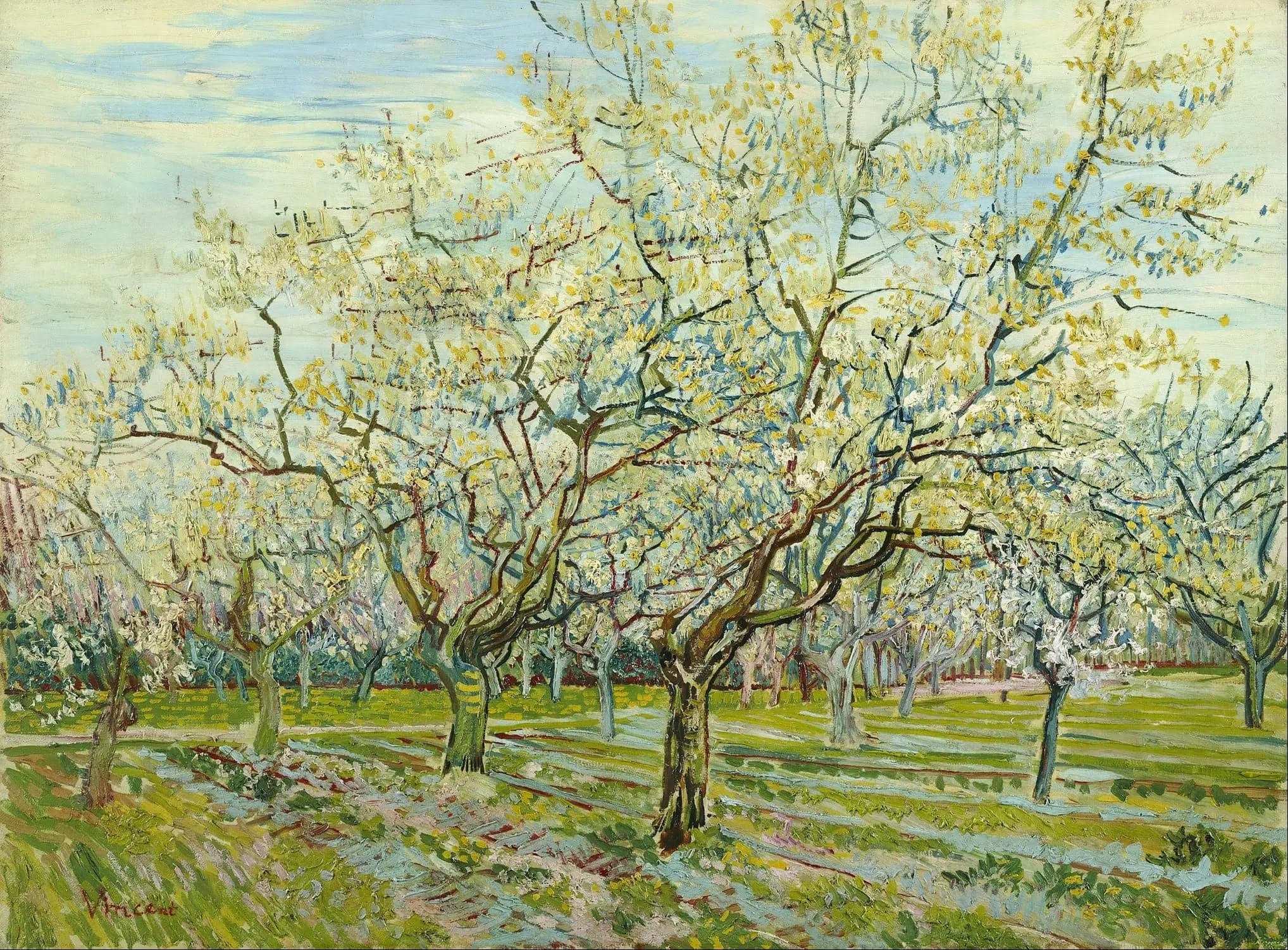
The White Orchard
Scene depicted
In The White Orchard , van Gogh depicts a pastoral landscape where flowering trees rise under a blue sky. This pictorial work evokes the rebirth and ephemeral beauty of nature, like a celebration of spring. The branches laden with white flowers blend with soft shadows, revealing joy and wonder in the face of the beauty of life.
Historical context
Created in 1888, The White Orchard is set against the vibrant backdrop of the city of Arles , France. This period is marked by the Post-Impressionist movement, an artistic current that seeks to capture light and color in an innovative way. The painting is currently displayed at the Van Gogh Museum , where each visitor can feel the emotion captured through its canvas measuring 60 x 81 cm.
Place in the artist's career
While The White Orchard represents the pinnacle of van Gogh's Arles period, it also fits into his unceasing quest to capture light. Alongside The Starry Night and The Sunflowers , this painting reveals a remarkable technical evolution, highlighting his transition from an Impressionist technique to a more personal and emotional approach.
Anecdote
“I would like my paintings to be like flowers .” These words resonate deeply as Vincent van Gogh stood in his orchard among flowers one April morning. The sweet scent of the flowers and the song of the birds inspired the vibrant composition of this masterpiece , where light plays on each petal, creating an atmosphere of serenity and beauty.