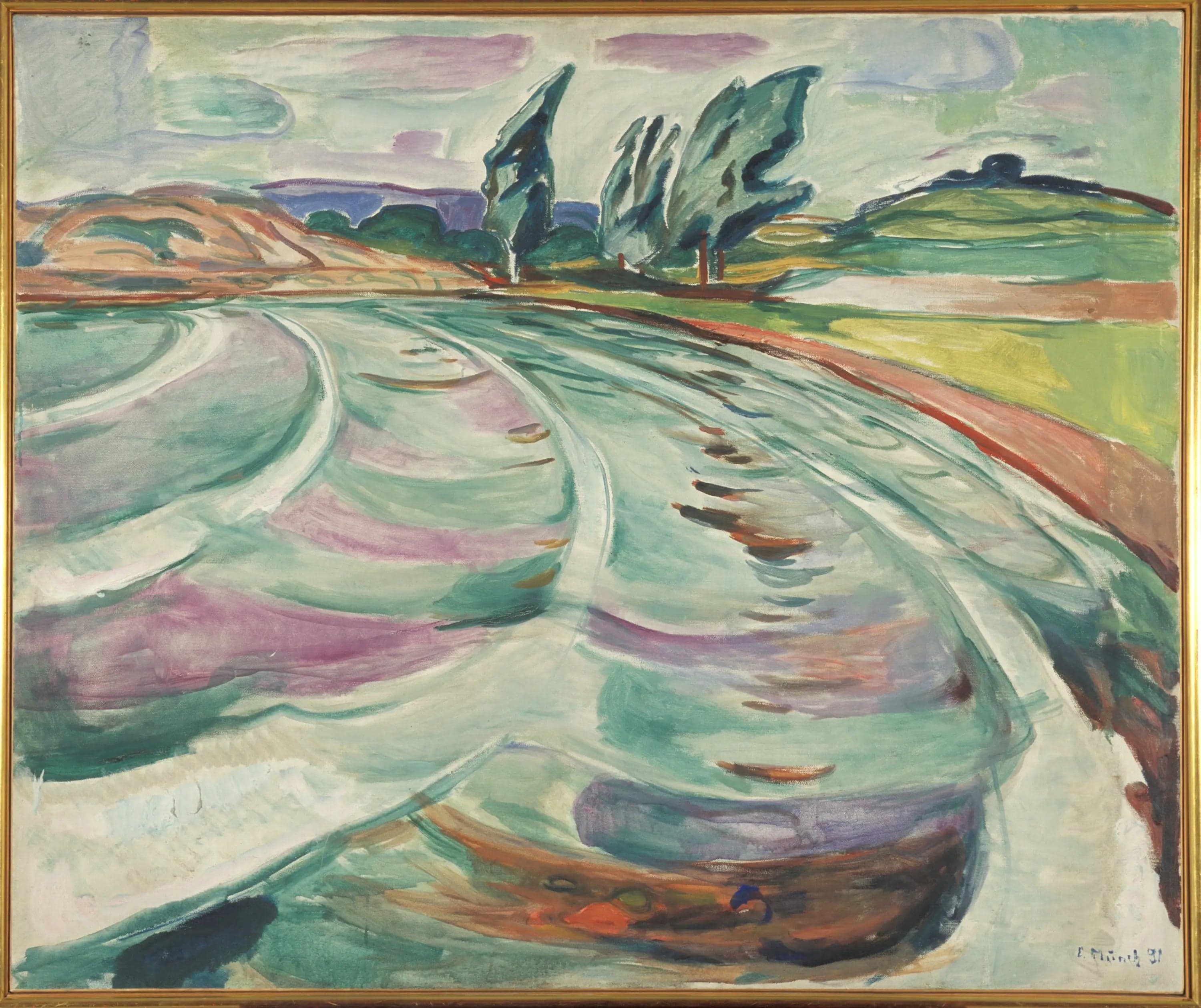
The Wave
- Original dimensions
- 120.5 x 100.5 cm
- Museum
- Munch Museum
- Year
- 1931
Scene depicted
In this painting, Edvard Munch illustrates a raging sea whose waves seem to crash with force, symbolizing the intensity of human emotions. This pictorial work captivates with its dynamism and expression, revealing the struggle between man and natural elements, a vivid representation of passion, fear, and serenity.
Historical context
Created in the vibrant atmosphere of Oslo, Norway, in 1931, this painting is part of the expressionist movement, reflecting a troubled time where human emotions are highlighted. The painting is currently displayed at the Munch Museum, where it is carefully preserved to be admired by art enthusiasts from around the world.
Place in the artist's career
The Wave sits at a turning point in Munch's career, marking a period of full maturity. It dialogues skillfully with other iconic paintings , such as The Scream and The Madonna, establishing a stylistic and thematic continuity, in which the human condition is illuminated, sublimated by the force of emotion.
Anecdote
“The sea is like a mirror of the soul, oscillating between calm and storm.” This is a thought that resonates at the heart of the genesis of this masterpiece . Inspired by an emotional trance, Munch walked the Norwegian shores, observing the tumultuous waves in a moment of revelation.