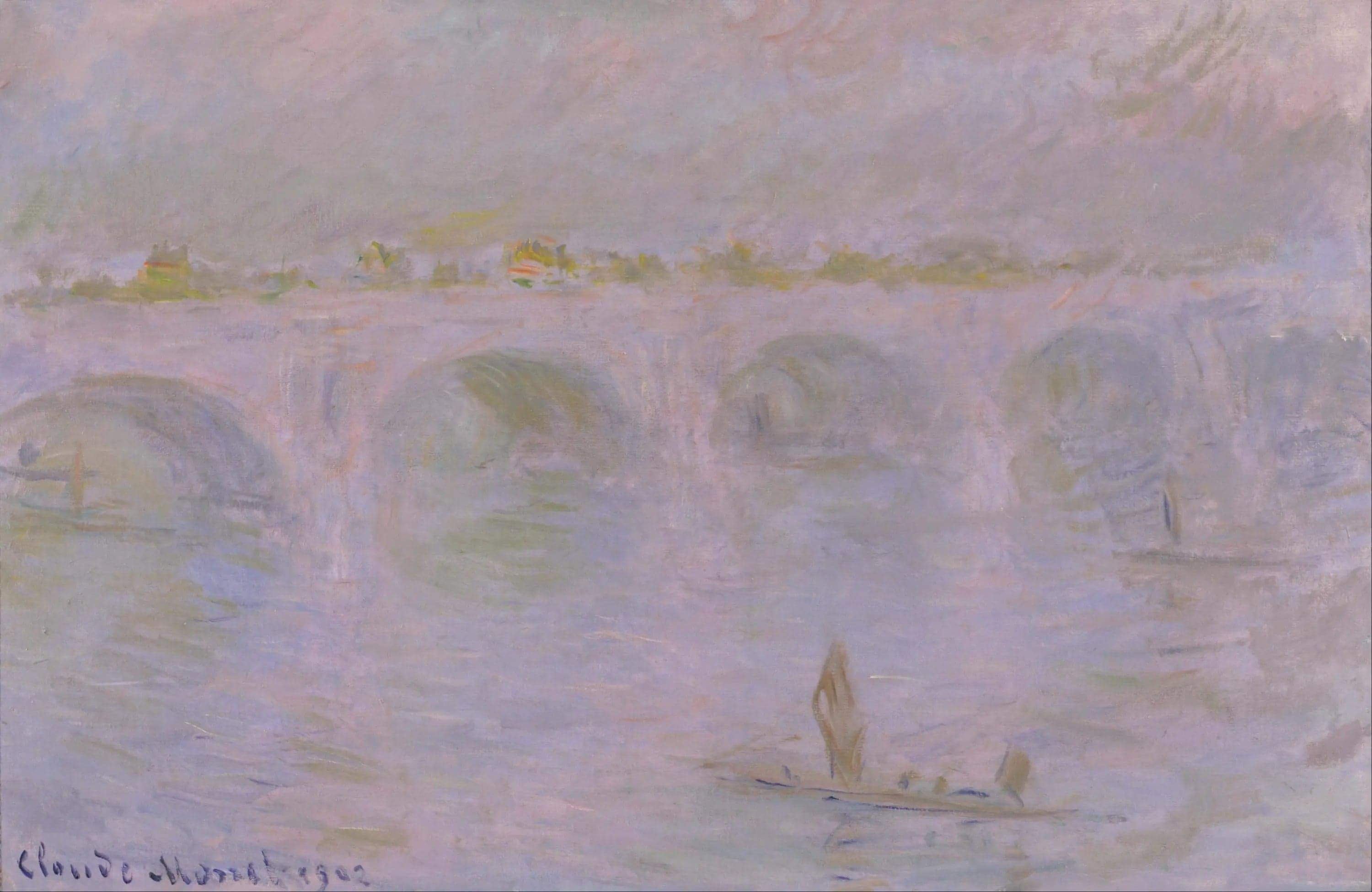
The Waterloo Bridge in London
- Original dimensions
- 1005 x 657 cm
- Museum
- National Museum of Western Art
- Year
- 1902
Scene depicted
Waterloo Bridge , majestic and iconic, is the main subject of this canvas that celebrates the beauty of urban landscapes. Monet, armed with his characteristic Impressionism , translated the changing light that dances on the water. The sails of boats gliding silently, the shadows cast by the structure of the bridge are elements that breathe life and movement into this iconic pictorial work.
Historical context
Year: 1902 |BRK| Museum: National Museum of Western Art |BRK| Dimensions: 1005 x 657 cm
Place in the artist's career
This painting is at the heart of Monet's career, illustrating his evolution towards mastery of light effects and colors. Compared to other famous canvases like “ Impression, Sunrise ” or “ Water Lilies ”, the masterpiece of Waterloo Bridge surpasses his earlier works with its chromatic richness and refined technique, showcasing a flamboyant artistic maturity.
Anecdote
“The lights of London are a perpetual dance…” Monet is said to have remarked while contemplating the bridge in the early morning. It was a suspended moment, the reflection of the waters coming alive under the cool breeze. This quote resonates with the evocative power of the painting , transporting us to a reality where each color speaks to the heart. Monet, fascinated by the contrast between London's grayness and luminous brilliance, managed to capture the very soul of this city.