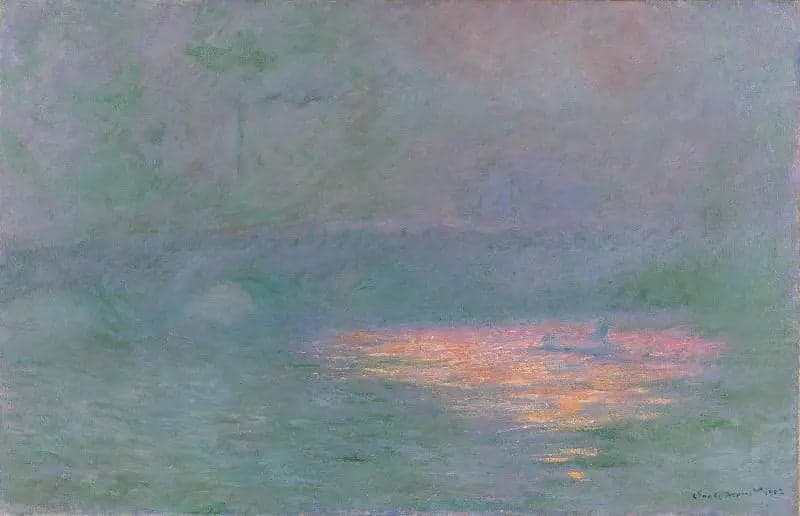
The Waterloo Bridge
- Original dimensions
- 100 x 35 cm
- Museum
- Kunsthaus Zurich
- Year
- 1902
Scene depicted
This canvas depicts a vibrant scene of urban life in London , capturing the essence of the famous bridge through the Impressionist technique. The sparkling reflections on the water, along with the passing silhouettes, create a captivating dynamic. The atmosphere in this painting is both peaceful and energetic, reflecting the fleeting beauty of the moment. The color shades blend fluidly, bringing a touch of magic to this pictorial work .
Historical context
Year: 1902 |BRK| Museum: Kunsthaus Zurich |BRK| Dimensions: 100 x 35 cm
Place in the artist's career
"The Waterloo Bridge" marks a flourishing phase in Claude Monet's career, where he perfectly masters the technique of Impressionism . When compared to other paintings such as " Impression, Sunrise " and " The Saint-Lazare Station ", one can observe his evolution towards delicate abstraction and an increased mastery of color and light, as well as an even more intense exploration of nature motifs.
Anecdote
He loves to say that art is a way to capture the light of the world. Imagine Monet, on a spring morning, scrutinizing the shimmering reflections of the waters under the bridge, inspired by the vibrant energy of his surroundings. This painting carries the echoes of that inspiration, each brushstroke vibrating like a whisper from the past, weaving a connection between nature and man.