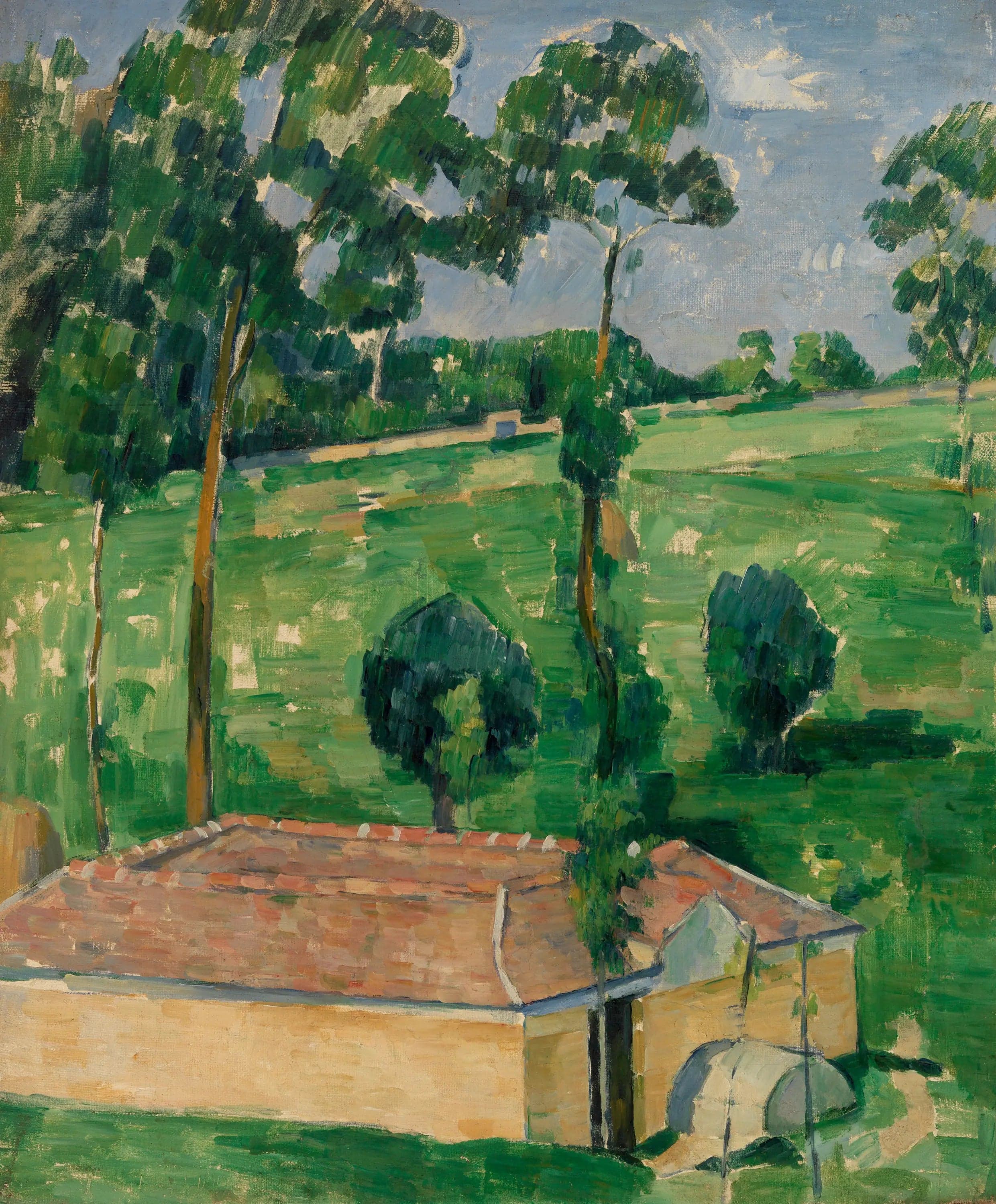
The Water Conduit
- Original dimensions
- 50 x 60 cm
- Museum
- Barnes Foundation
- Year
- 1879
Scene depicted
In this pictorial work , Cézanne highlights a bucolic scene where water slowly flows through the lush valleys, reminding us of the intimate connection between man and nature. The peaceful curves of the waterways blend with the solid forms of the mountains in the background, creating perfect harmony. This painting, through its authenticity, immerses us in an atmosphere of calm and contemplation.
Historical context
Created in 1879, the canvas The Water Conduit unfolds in the enchanting setting of Aix-en-Provence, in the heart of the Provence-Alpes-Côte d'Azur region. This iconic work is part of the Impressionist movement, an artistic current that redefined the perception of light and color in the 19th century. Today, this painting captivates at the Barnes Foundation , a haven dedicated to art where its dimensions of 50 x 60 cm can be appreciated in all their depth.
Place in the artist's career
The Water Conduit marks a turning point in Cézanne's career, where he begins to combine his unique style with a bolder and more symbolic representation of reality. In parallel, his other masterpieces, such as The Large Bathers and Mont Sainte-Victoire , show the evolution of his technique, moving from a figurative approach to a more frank abstraction, highlighting his role as a precursor of modernism.
Anecdote
“Painting is another world, a nature woven with emotions.” Such could be Cézanne's words when evoking his artistic approach. Inspired by the serene landscapes of Provence, on a sunny morning, he captured the life flowing peacefully, like water winding through nature. This moment of grace is subtly reflected in the evocative power of The Water Conduit .