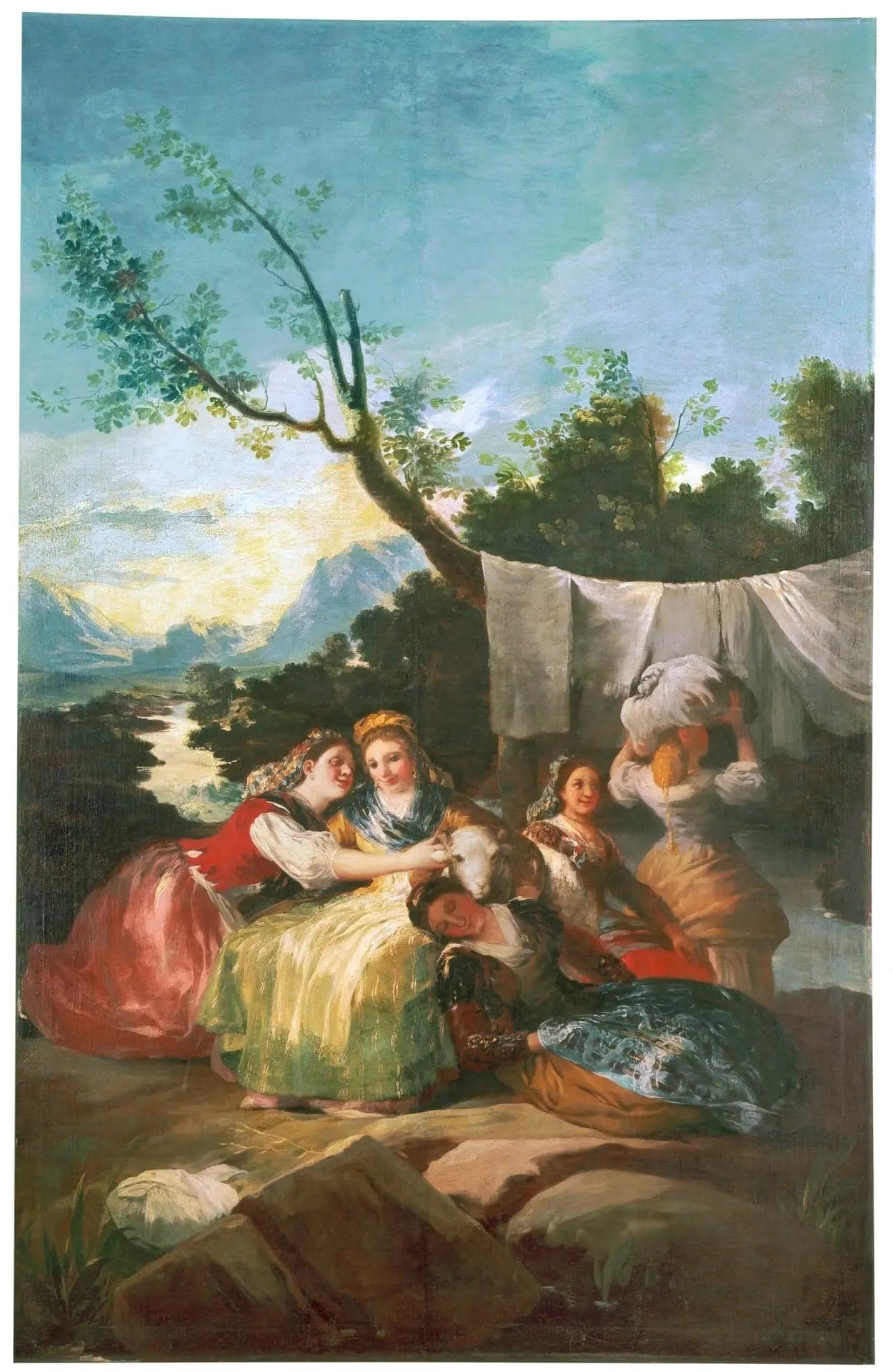
The Washerwomen
- Original dimensions
- 166 x 257.5 cm
- Museum
- Prado Museum
- Year
- 1779
Scene depicted
In The Washerwomen , Goya depicts women along a river, bent over baskets overflowing with laundry. The water, sky, and earth meet, creating an atmosphere of tranquil work, where each face tells a story of labor and camaraderie. This canvas is a tribute to the strength and resilience of women in nature.
Historical context
Created in Madrid at the heart of Spain in the 18th century, The Washerwomen is part of the early romanticism movement. This painting highlights not only the region and its history but also the daily lives of the women who dedicated themselves to this essential task. Currently, this precious canvas is preserved in the Prado Museum, testifying to its time and artistic robustness, measuring 166 by 257.5 cm.
Place in the artist's career
The Washerwomen is situated at the beginning of Goya's career, a promising moment when his style begins to take shape. In comparison with The Naked Maja and The Caprices , we can observe an evolution, where realism and emotion intertwine, leading to a technical maturity that will permeate his later works.
Anecdote
Goya once said about his canvas : "The beauty of simple moments captures eternity." Imagine him, one April morning, stopping to observe these women, their laughter mingling with the echo of the water. It is this fleeting moment that breathed life into The Washerwomen , transforming a mundane scene into a timeless masterpiece .