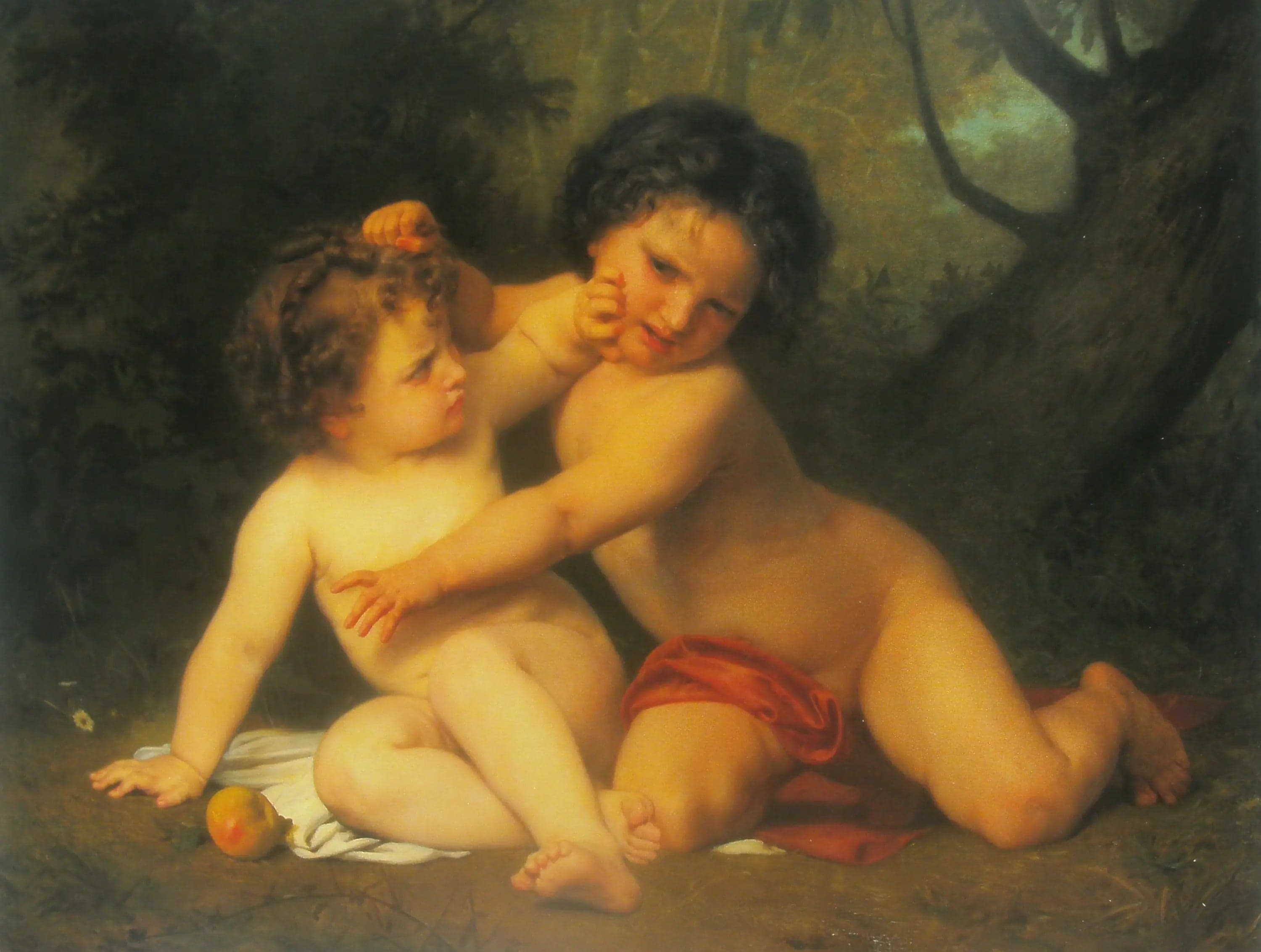
The War
- Original dimensions
- 105 x 84 cm
- Museum
- Not specified
- Year
- 1864
Scene depicted
The War unveils a poignant scene where suffering and resistance intertwine. It reveals characters expressing intense emotions: loss, courage, and determination. This pictorial work depicts the devastating consequences of conflict on men and women, inviting the viewer to a deep reflection on the ravages of war.
Historical context
Created in 1864, this iconic painting of the 19th century finds its origin in the tumultuous context of the post-Napoleonic era. Captivated by realism and the beauty of human forms, Bouguereau, a master of French academic painting, managed to capture the essence of despair and struggle through his masterpiece. Currently, the painting is not displayed in a specific museum, making the quest for its history even more fascinating.
Place in the artist's career
The War stands as a technical and emotional turning point in Bouguereau's career. This painting distinguishes itself from his previous works such as The Little Fisherman and The Intrigue by revealing a more mature style and an increased mastery of human expressions. It has become a cornerstone in the journey of this artist whose always sharp gaze on the human condition continues to evoke complex emotions.
Anecdote
“Pain is a language that only those who live it can translate.” William-Adolphe Bouguereau painted The War inspired by a sunny morning, a breath of fresh wind at the end of spring that reminded him of the tragedies of the past. This moment of introspection fueled his imagination, connecting his soul to the heroic figures in his painting.