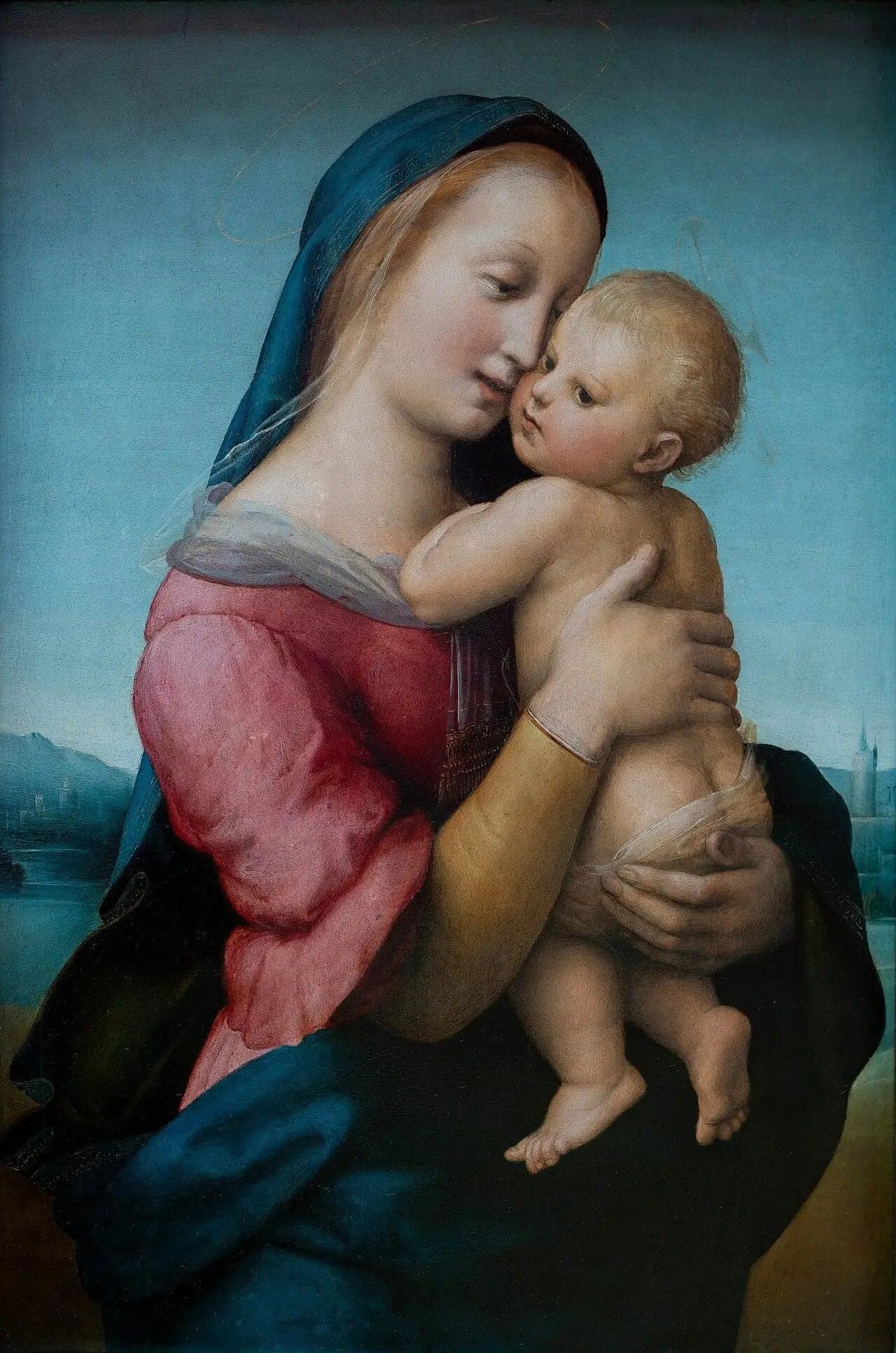
The Virgin Tempi
- Original dimensions
- 51.6 x 75.3 cm
- Movement
- High Renaissance
- Museum
- Alte Pinakothek
- Year
- 1508
Scene depicted
In this painting , the Virgin Mary is depicted in a moment of infinite tenderness, uniting humanity and the divine through the tenderness of her gaze and the protective embrace of her arms around the child Jesus. The composition also reveals a soothing nature, which constitutes the ideal setting of peace and adoration, translating the very essence of faith and sacred motherhood.
Historical context
Created in 1508, The Virgin Tempi is anchored in the heart of the High Renaissance , an artistic movement that advocates beauty, harmony, and balance. Located in Munich, within the Alte Pinakothek , this painting reflects the genius of Raphael Sanzio in a context of cultural upheaval where art becomes a vector of spirituality and beauty. Its dimensions of 51.6 x 75.3 cm make it an intimate work, perfect for close admiration.
Place in the artist's career
The Virgin Tempi represents a high point in Raphael's career, marking a period of stylistic exploration and transcendent emotion. Compared to The Sistine Madonna and The Marriage of the Virgin , this painting bears witness to a maturity where the artist merges religious iconography with emotional depth, placing themes of everyday life in response to the sacred.
Anecdote
Raphael once declared: "True beauty lies in the harmony of forms and colors, as well as in the brilliance of the emotions they evoke." This quote resonates deeply when contemplating The Virgin Tempi . Imagine him, sitting in a quiet alley in Florence, immersed in his thoughts, when the idea for this dazzling pictorial work emerged under the golden light of a spring morning.