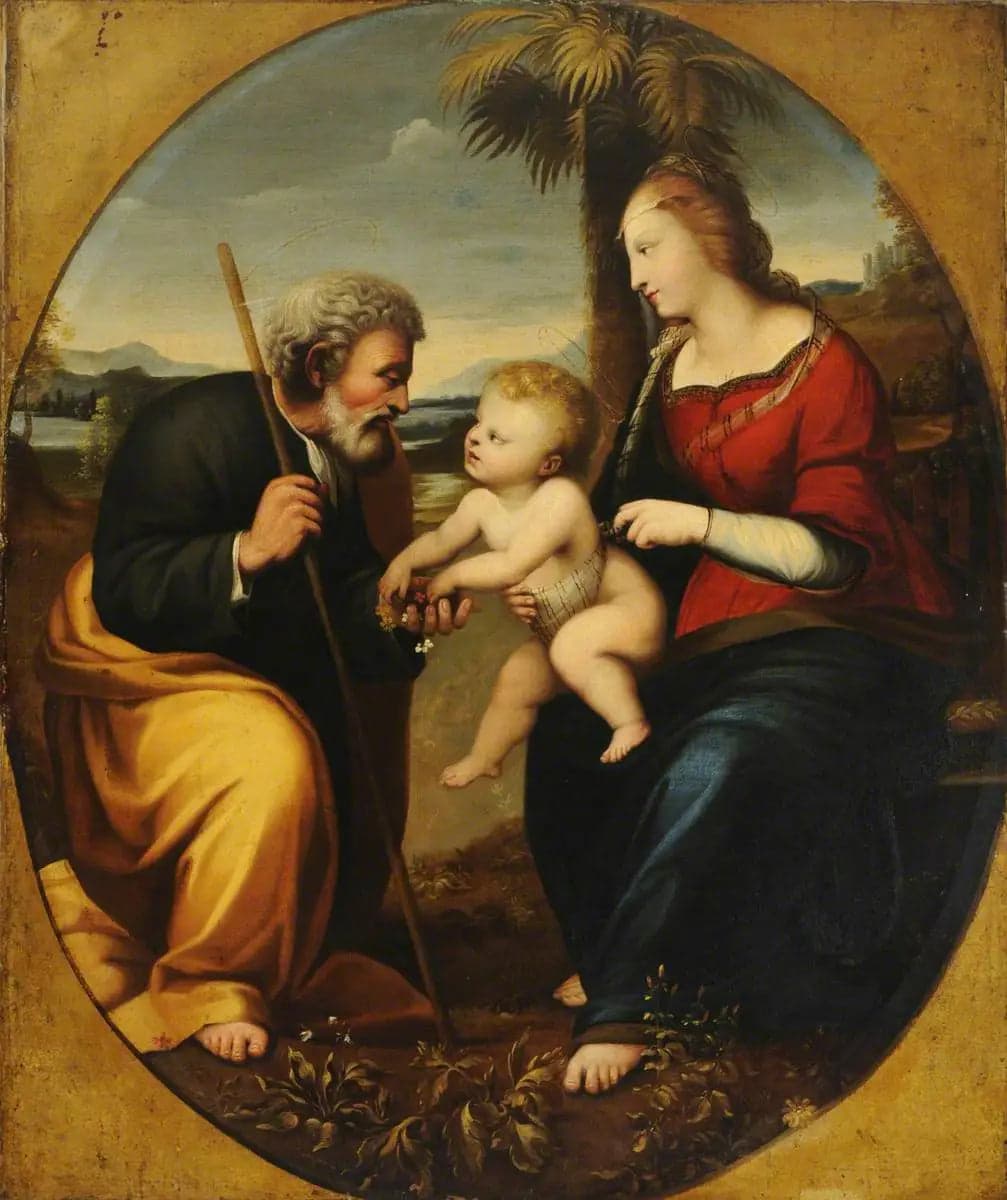
The Virgin of the Palm Tree
- Original dimensions
- 127 x 147.5 cm
- Museum
- Beningbrough Hall
Scene depicted
This painting depicts the Virgin Mary holding the Child Jesus, surrounded by symbolic palms that add an exquisite dimension to the composition. Evoking notions of eternal life and spiritual fertility, Raphael succeeds in infusing an emotional depth that transcends the mere gaze, making this painting so timeless.
Historical context
Created in the early 16th century, in the flourishing climate of the Italian Renaissance , this painting emblematic of Raphael is located in Rome, an artistic and cultural epicenter of the time. The canvas is currently displayed at the Beningbrough Hall museum, where the public can admire this masterpiece at the crossroads of humanistic and religious influences, testifying to the virtuosity of its creator.
Place in the artist's career
The Virgin of the Palm finds its place in Raphael's career, just as he reaches the peak of his style, marking a period of full artistic maturity. Alongside The Sistine Madonna and The Virgin with the Long Scarf , the canvas fits into an evolution where emotion becomes predominant, technical mastery blending with enriching spiritual expression.
Anecdote
Raphael, surrounded by the walls adorned with majestic frescoes of the Vatican , is said to have declared one day: “Art knows how to imitate the poetry of existence.” Through the creation of The Virgin of the Palm, on a sweet spring morning, his brush was nourished by the gentle whispers of the leaves and distant gazes, thus capturing the divine and human intimacy present in this pictorial work .