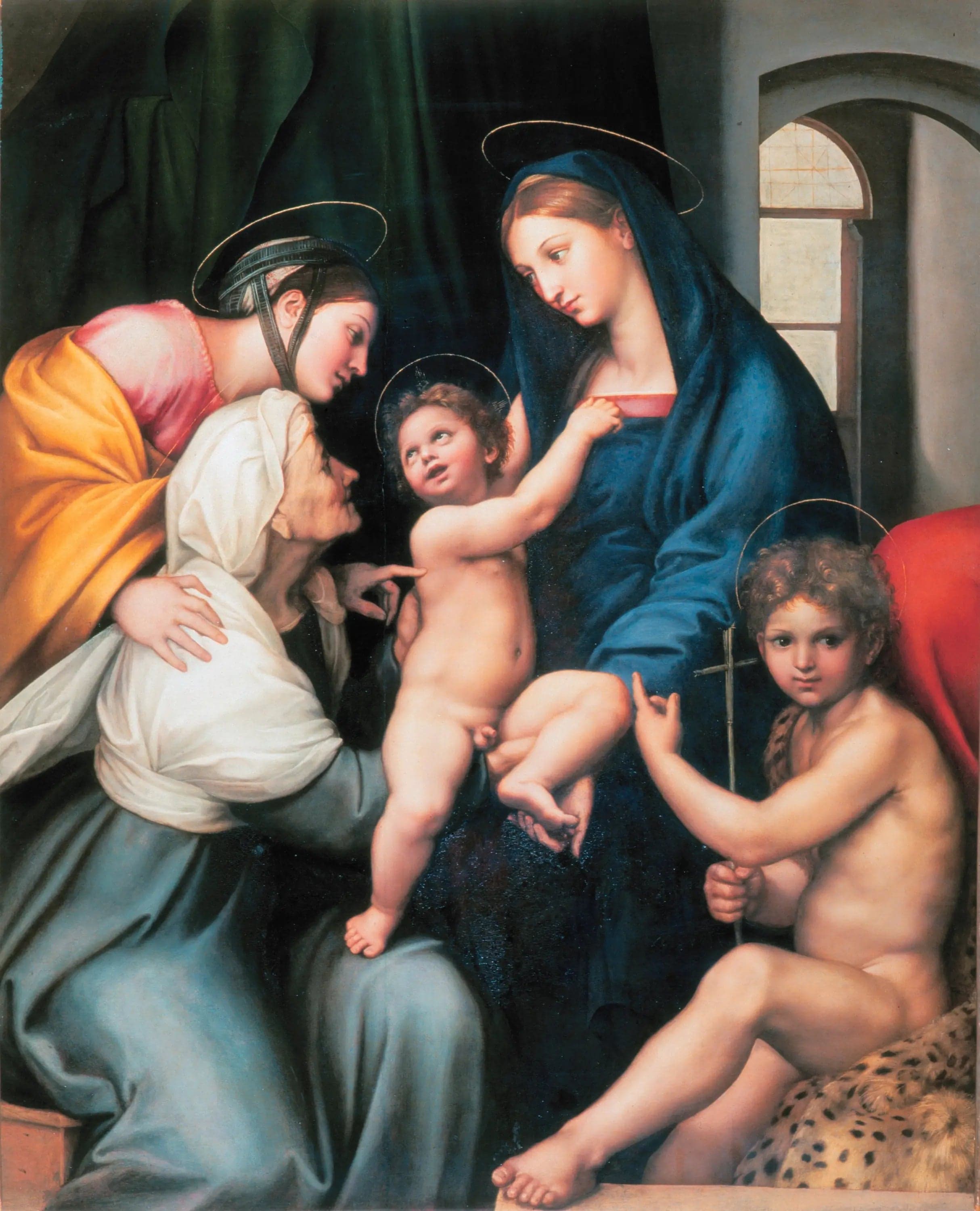
The Virgin of the Impannata
- Original dimensions
- 125 x 158 cm
- Movement
- High Renaissance
- Museum
- Hall of Ulysses
- Year
- 1513
Scene depicted
The composition of The Virgin of the Impannata reveals a Virgin, enveloped in an aura of delicacy, standing behind a curtain, a silent witness to sacred events. The divine light descending from the vault mingles with soft shadows, creating a mystical atmosphere where faith and humanity meet. The angelic faces, delicately constructed, convey a palpable emotion, thus offering a penetrating look into the spirituality of its time.
Historical context
Created in 1513, this painting is set in the flourishing context of the High Renaissance , an artistic movement that marked the peak of Italian art. A true treasure of landscapes and spirituality, The Virgin of the Impannata is currently displayed in the famous Hall of Ulysses, a mythical place in Rome. The painting, measuring 125 x 158 cm, unfolds in all its splendor, offering a captivating glimpse into the religious history of its time.
Place in the artist's career
This canvas is emblematic of the peak of Raphael's career. A true culmination of his art, it follows masterpieces such as The Sistine Madonna and precedes The Transfigurations , where the artist explores themes of transcendence and light. The progression of his style is felt, revealing a growing mastery of color, movement, and emotion.
Anecdote
Raphael once confided: "Every brushstroke is a breath given to the soul of the painting." This testimony reveals the intensity of his inspiration, drawn from the mysteries of the silent streets of Rome. It was on a gentle spring morning, as the light caressed the ancient stones, that he sketched this pictorial work freehand, imbued with an unparalleled sweetness and serenity.