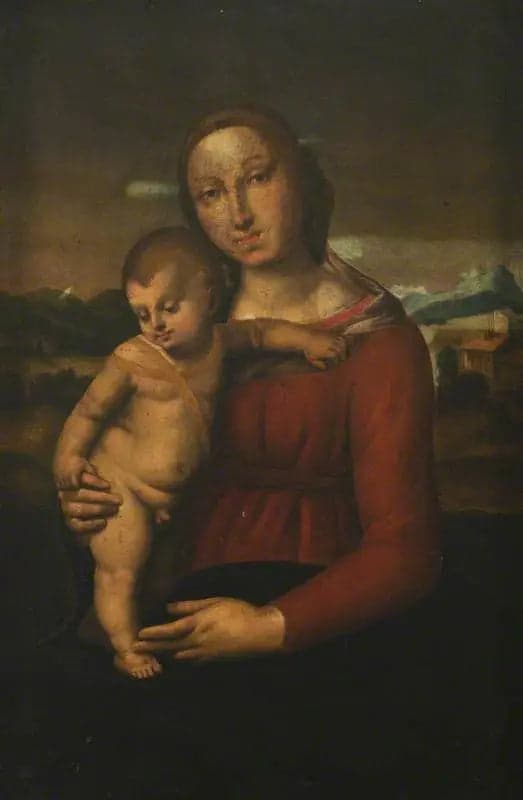
The Virgin and Child
- Original dimensions
- 41.5 x 60 cm
- Museum
- Christ Church
Scene depicted
This painting bears witness to the affection between Mary and the Child Jesus, a constant theme in religious painting. Through delicate gestures and a serene expression, Raphael immortalizes the sacred bond that unites mother and son, evoking peace and protection, while revealing an atmosphere of spiritual devotion.
Historical context
Created in the early 16th century, this painting is rooted in the Italian Renaissance , a period celebrated for its artistic and humanistic awakening. Located at Christ Church, Oxford, this iconic work showcases Raphael's sublime mastery, whose painting transcends its time and remains a beacon of Western painting.
Place in the artist's career
“The Virgin and Child” marks a turning point in Raphael's career, solidifying his reputation as an innovative artist. This work, with its harmonious composition, foreshadows other iconic paintings such as “The Sistine Madonna” and “The Virgin of the Rocks,” where he continues to refine his visual language and poignant emotions.
Anecdote
“Art is a language that the heart understands” Raphael might have said one spring morning, in his studio bathed in the soft light of Rome. It was during these quiet moments that the idea for this masterpiece took root, inspired by luminous faces encountered in daylight, capturing the tenderness of a mother and the innocence of a child.