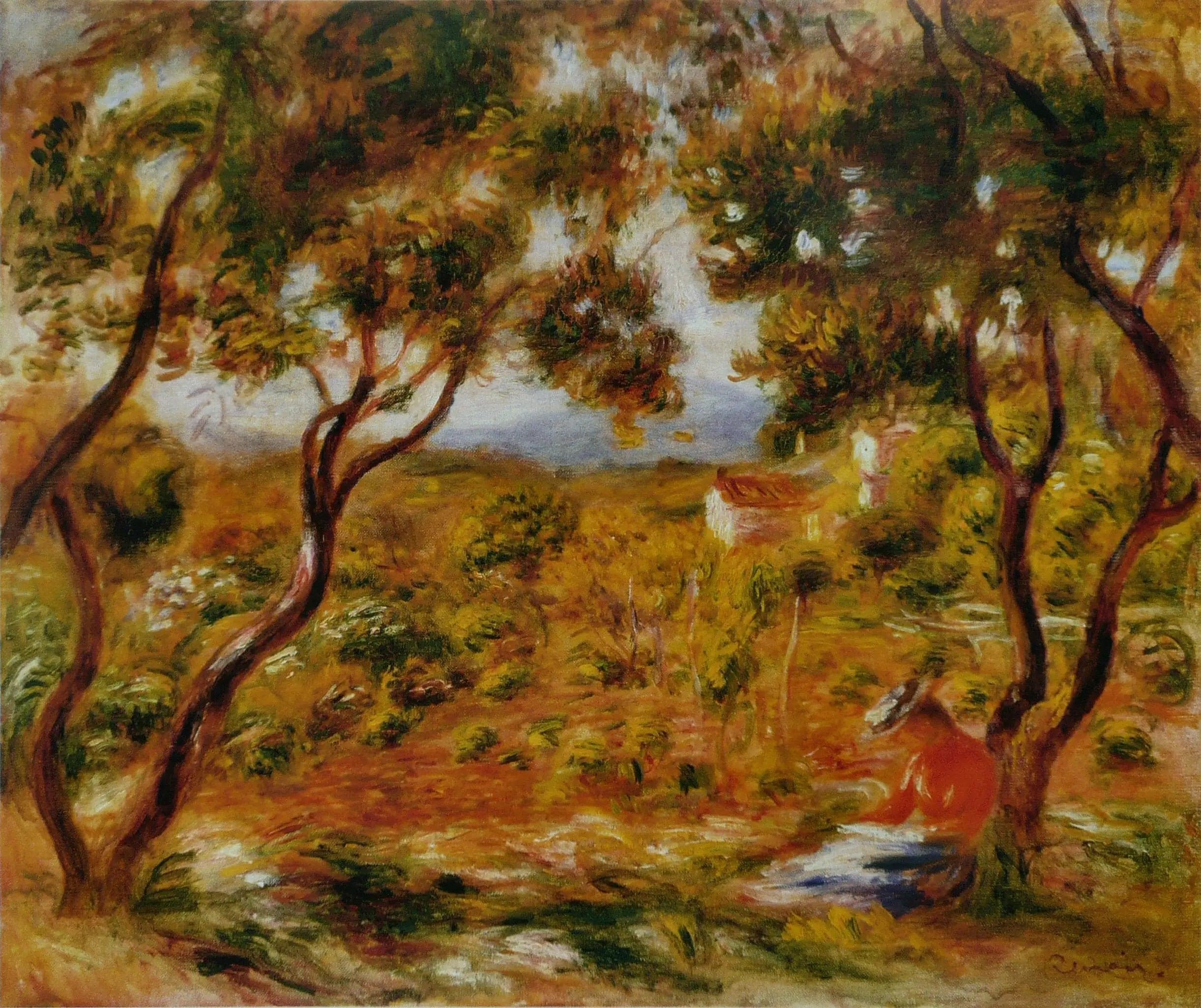
The Vines at Cagnes - Pierre
- Original dimensions
- 55.2 x 46.4 cm
- Museum
- Brooklyn Museum
- Year
- 1908
Scene depicted
In this pictorial work, Renoir celebrates the lush vines that stand proudly against the azure sky. The composition highlights a bucolic landscape where the harvests blend with a sense of peace. The play of light creates a natural ballet, the shadows dance under the bright sun, while the air is filled with the fruity aromas of the vines. This painting thus becomes an ode to nature, a hymn to life and harmony.
Historical context
Created in 1908 in the charming coastal town of Cagnes-sur-Mer, this painting is part of the Impressionist movement, marking a time when light and color became essential in pictorial work. In the heart of Provence, Renoir, captivated by the vibrancy of the landscapes, captures a scene where nature unites with man. His painting resides today at the Brooklyn Museum , carefully preserved in the city of New York and measures 55.2 x 46.4 cm.
Place in the artist's career
The Vines at Cagnes stands as one of Renoir's stylistic peaks, illustrating his evolution towards an increased mastery of light and color play. Compared to works such as Luncheon of the Boating Party and The Large Bathers, this painting indicates a period of maturity where the painter boldly forges his artistic identity.
Anecdote
"It seems to me that the light dances on the leaves..." Renoir might have said, dazzled by the vibrant vines at the dawn of a spring morning. This magical moment, when nature revealed its shimmering colors, inspired his masterpiece. In this canvas, each brushstroke evokes the harmony between man and his environment.