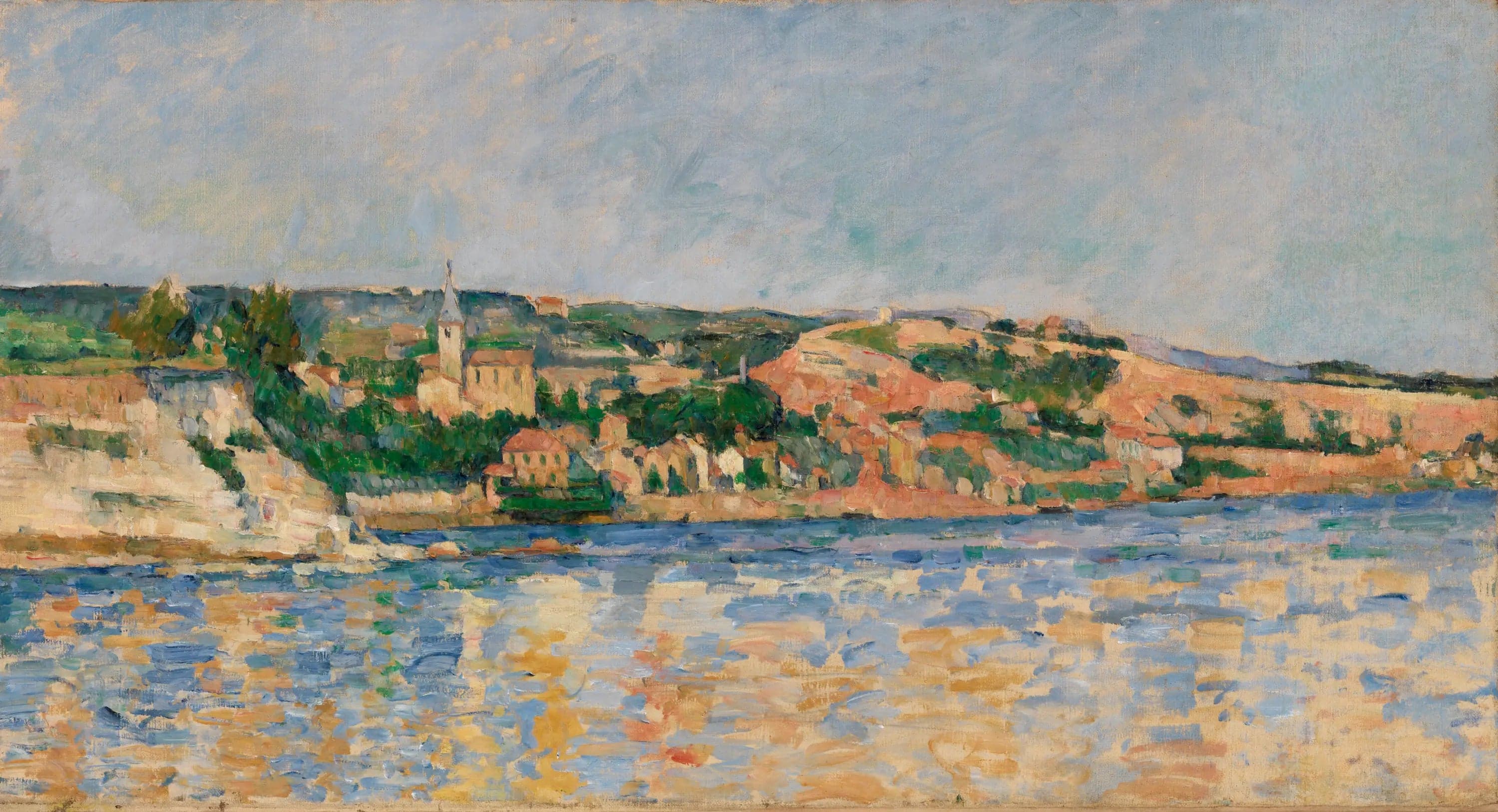
The village of l'Estaque seen from the sea
- Original dimensions
- 81.3 x 44.1 cm
- Museum
- Barnes Foundation
- Year
- 1876
Scene depicted
In this composition, Cézanne highlights the coastal landscape of l'Estaque, with its white houses nestled against the lush hills, bathed by the turquoise sea. The geometric shapes and the careful design of the space invite the viewer to dive into the heart of this peaceful scene, bathed by the soft reflections of summer light. The painting captures the very essence of simple happiness, a tranquility found in the ebb and flow of the waves.
Historical context
Created in 1876, at the dawn of the Impressionist movement, the painting represents the Village of l'Estaque, a small piece of paradise on the coasts of Provence, France. This pictorial masterpiece, now exhibited at the Barnes Foundation , captures the Mediterranean light and invites an escape to enchanting shores, its peaceful ambiance revealing all the artistic sensitivity of Cézanne. This painting, measuring 81.3 x 44.1 cm, remains an open window to a time when painting changed forever.
Place in the artist's career
The Village of l'Estaque Seen from the Sea is at the crossroads of Cézanne's career, marking a crucial step towards his mature style. In parallel with works like Houses at l'Estaque and The Montagne Sainte-Victoire, this painting bears witness to a technical and emotional evolution, where light becomes a character in its own right, redefining the art of landscape.
Anecdote
“I want to paint like the bird sings,” Cézanne is said to have declared, inspired by the gentle murmurs of the sea waves and the warmth of the sun on his skin. Every morning, the painter would stroll along the coasts of l'Estaque, observing the nuances of light dancing on the water. This quest for instinctive beauty gives birth to the evocative power of The Village of l'Estaque Seen from the Sea, a painting where each brushstroke tells a story of wonder.