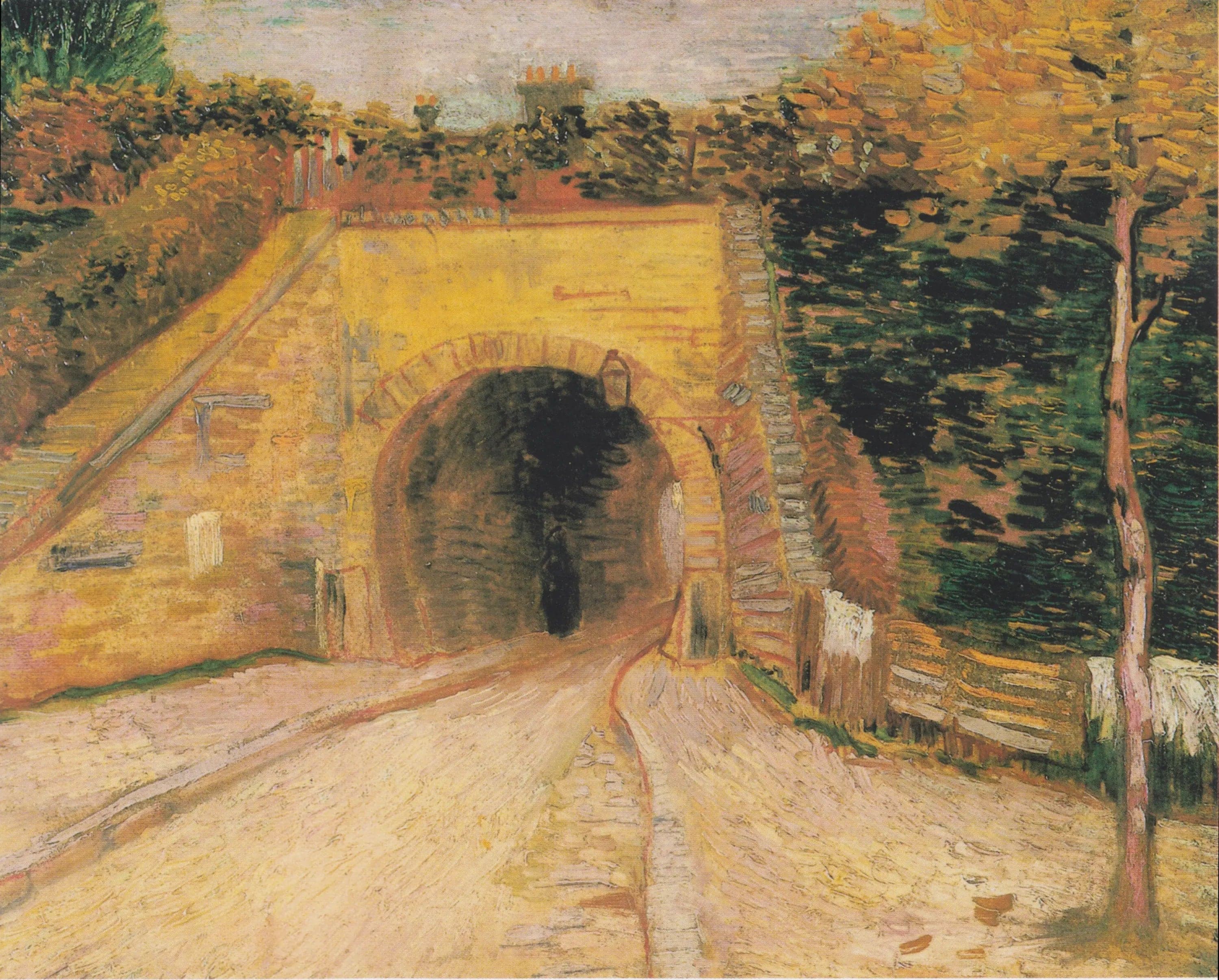
The Viaduct
- Original dimensions
- 40.5 x 31.5 cm
- Museum
- Solomon R. Guggenheim Museum
- Year
- 1887
Scene depicted
The painting “The Viaduct” symbolizes a moment of eternity frozen in time. With majestic arches rising to connect sky and earth, it illustrates the emerging urbanity of Paris . Each brushstroke resonates with an esoteric energy, capturing the essence of modernity at the heart of the 19th century.
Historical context
Artwork: The Viaduct |BRK| Artist: Vincent van Gogh |BRK| Year: 1887 |BRK| Museum: Solomon R. Guggenheim Museum |BRK| Place of Creation: Paris |BRK| Dimensions: 40.5 x 31.5 cm
Place in the artist's career
Situated during a period of intense exploration, The Viaduct represents a crucial step in van Gogh's stylistic evolution. Compared to works such as “ The Starry Night ” and “The Sunflowers ”, this painting highlights his bold exploration of colors and forms, revealing the journey towards his iconic style.
Anecdote
Vincent van Gogh once declared: “Light is not a simple thing, it is a promise of emotions.” That morning, as he stood on a Parisian alley, he was struck by the play of light on the viaduct, a blend of mystery and raw beauty, which inspired his masterpiece . The echo of this revelation is inscribed in the shimmering vibration of the painting and transports the viewer into his universe.