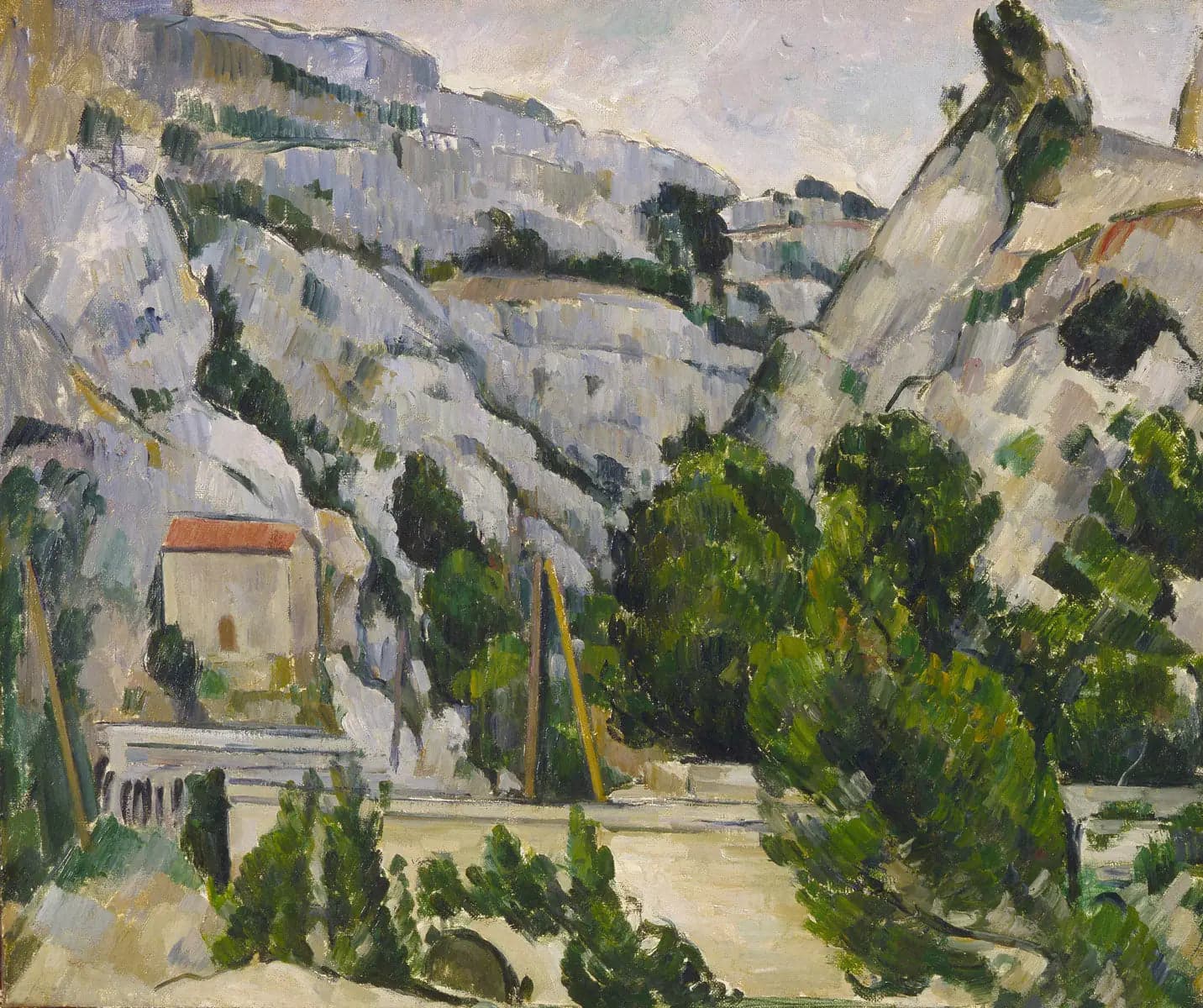
The Viaduct at L'Estaque
- Original dimensions
- 55.6 x 46.5 cm
- Museum
- Allen Memorial Art Museum
- Year
- 1882
Scene depicted
The Viaduct at l'Estaque, with its elegant arches, pays tribute to the connection between man and nature. This canvas transports the viewer to a moment suspended in time, where the geometry of human constructions meets the hills and the sparkling sea. Cézanne's unique composition invites every gaze to embark on exploration, discovering nuances, shapes, and infinite perspectives.
Historical context
Created in 1882 at l'Estaque, a small locality in the south of France, this painting marries light and structure in a unique way, emblematic of the Impressionist movement of which Cézanne is one of the pioneers. The canvas is currently exhibited at the Allen Memorial Art Museum , offering visitors a journey through time amidst the sublime atmosphere of Provence.
Place in the artist's career
Situated at the heart of Cézanne's career, this painting testifies to his ability to unify landscape and architecture, heralding an evolution towards Cubism . It stands alongside other notable canvases like The Large Bathers and The Montagne Sainte-Victoire, proving its essential role in the development of his distinctive style.
Anecdote
“Nature is my greatest school.” These words of Cézanne resonate deeply when one looks at the masterpiece that is The Viaduct at l'Estaque. Imagine the artist, one spring morning, allowing himself to be inspired by the soft light bathing the scene and the scents of Mediterranean flowers floating in the warm air.