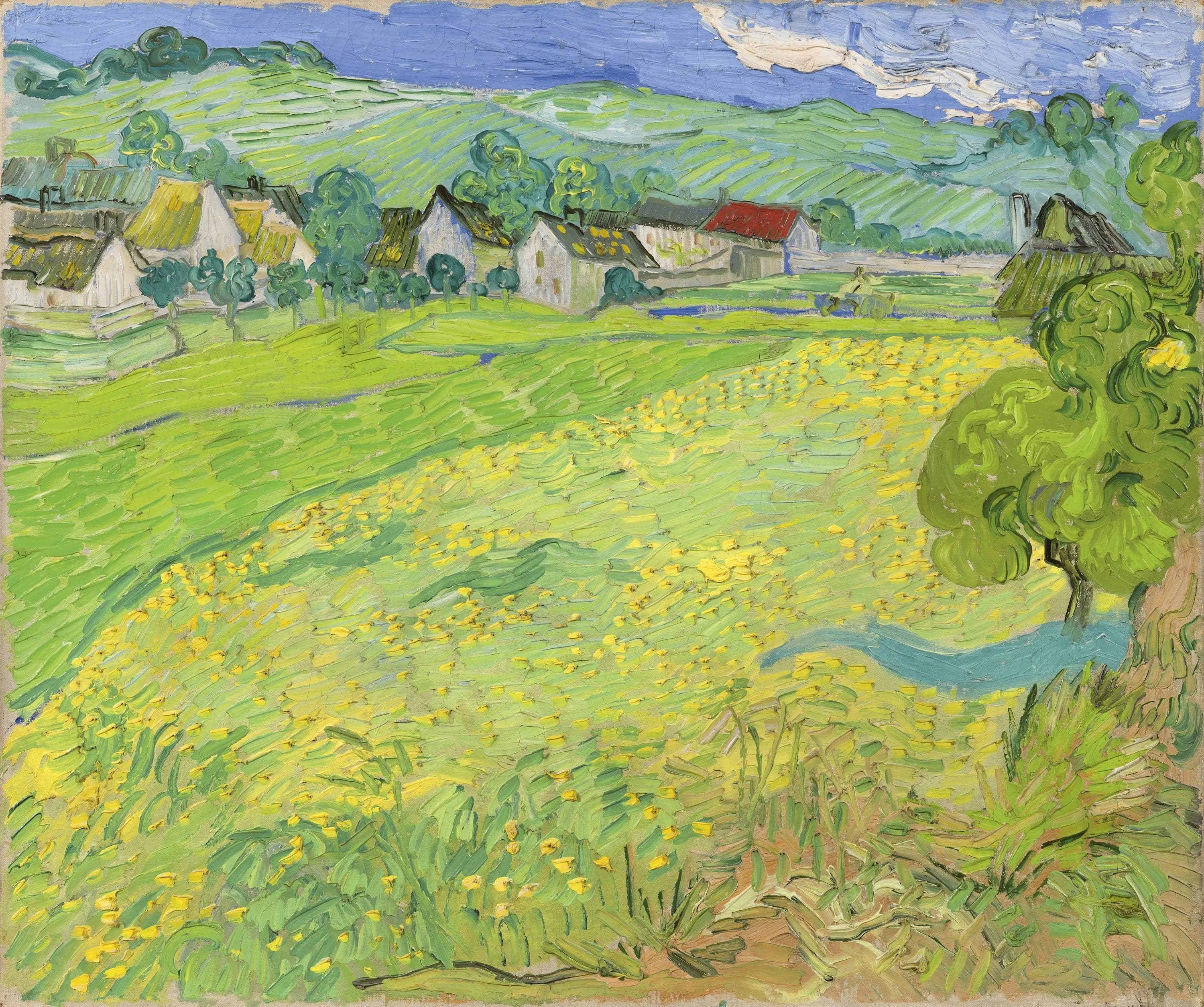
The Vessenots in Auvers
- Original dimensions
- 65 x 55 cm
- Museum
- Thyssen-Bornemisza Museum
- Year
- 1890
Scene depicted
The painting "Les Vessenots à Auvers" offers a striking representation of the pastoral landscape of Auvers, showcasing lush vines and fertile land, bathed in golden light. Each brushstroke captures the soul of the peasant, flourishing in his environment, while celebrating the ephemeral beauty of the nature surrounding him.
Historical context
Created in 1890, in the charming village of Auvers-sur-Oise , this iconic painting is part of Post- Impressionism , a movement that highlights the subjective expression of emotions through color and light. Today, this masterpiece is carefully preserved at the Thyssen-Bornemisza Museum , a treasure accessible to art lovers.
Place in the artist's career
This painting stands at a crossroads in Van Gogh's career, representing a peak of his artistic creation. Alongside The Starry Night which expresses a mystical vision of the night sky, and The Sunflowers famous for their vibrant brightness, Les Vessenots evokes a serenity at the heart of rural life, illustrating the evolution of his technique in relation to nature.
Anecdote
Vincent was known for his deep reflections on nature and art. He once stated: "Nature must be understood, with all its nuances." This powerful thought resonates through the chiaroscuro of Les Vessenots à Auvers , where the softness of the fields and the golden light of a typical morning in Auvers overlay sensations of peace and melancholy.