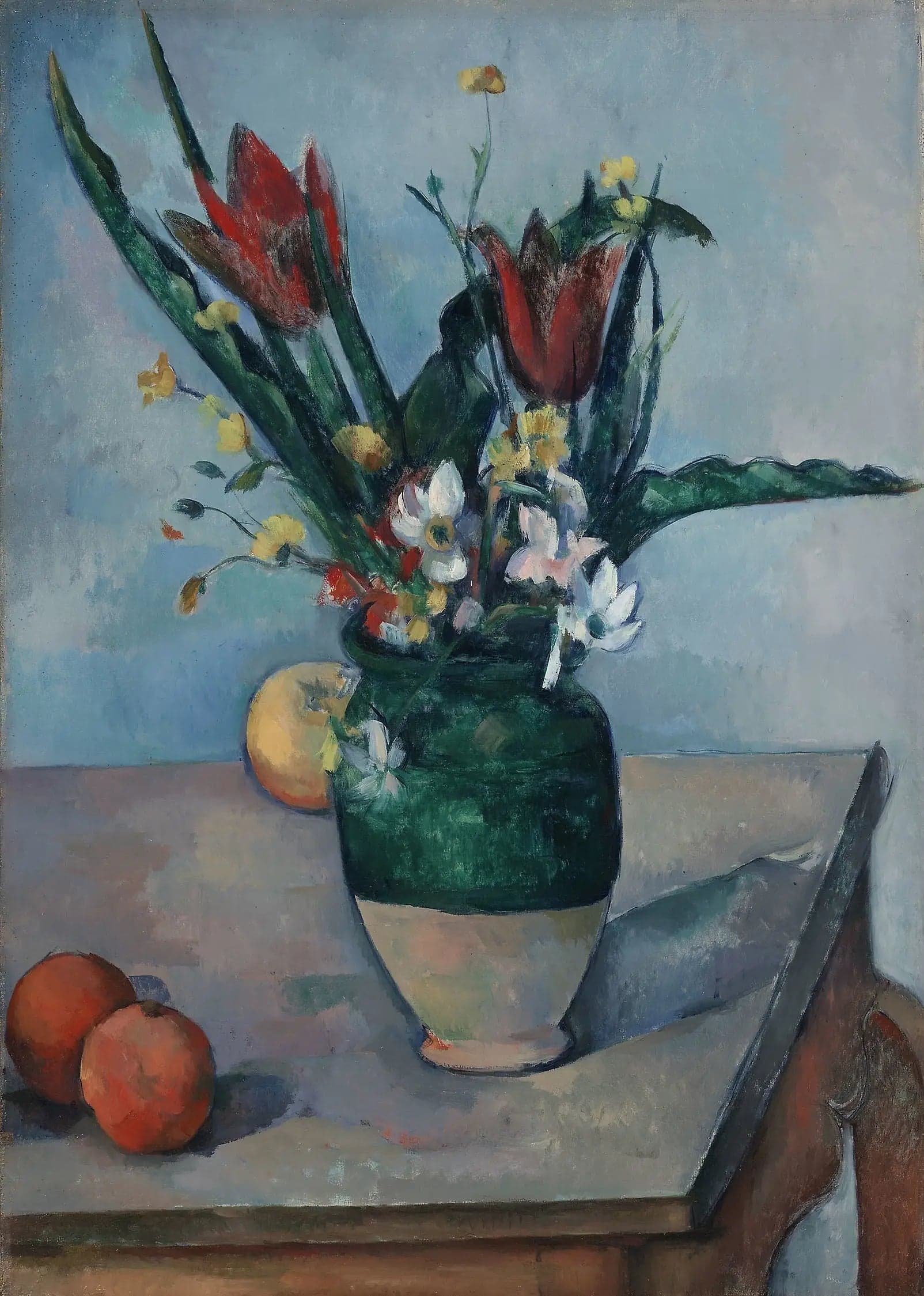
The Vase of Tulips
- Original dimensions
- 42.3 x 59.6 cm
- Museum
- Art Institute of Chicago
- Year
- 1890
Scene depicted
This pictorial work represents an elegant vase filled with vibrant tulips, placed on a table with a serene appearance. The vibrant colors and delicate shapes of these flowers rise up, contrasting with the neutral background, inviting the viewer to dive into a sensory experience. The painting illustrates Cézanne's quest for visual honesty, where each brushstroke testifies to his attentive gaze towards nature, thus revealing the beauty of simple things.
Historical context
Born in the heart of the late 19th century, during the height of the Impressionist movement, The Vase of Tulips by Paul Cézanne is an iconic canvas, created under the gentle sun of Provence. This majestic painting evokes a time when light and colors were rediscovered, an artistic movement that disrupted the codes of European painting. Today, it rests in the prestigious collections of the Art Institute of Chicago , a sanctuary of artistic heritage that allows enthusiasts to contemplate this work of timeless beauty.
Place in the artist's career
The Vase of Tulips occupies a prominent place in Cézanne's career, marking a crucial stage of his mature period. Through this canvas, he undertakes an innovative exploration of volumes and lights, comparable to his other masterpieces like The Montagne Sainte-Victoire or The Card Players . Each of these works reflects a stylistic journey, evolving from Impressionism towards a more structured and analytical approach to form.
Anecdote
“Nature eludes us, but in details, it reveals everything.” These words of Cézanne resonate like a deep echo in his creative process, as he lingered over a simple vase of tulips one spring morning. The golden light filtered through the leaves, nourishing his thoughts, guiding his hand with sensitivity. It is from this everyday scene that the evocative power of The Vase of Tulips emerges, a composition that captures a pure and palpable emotion.