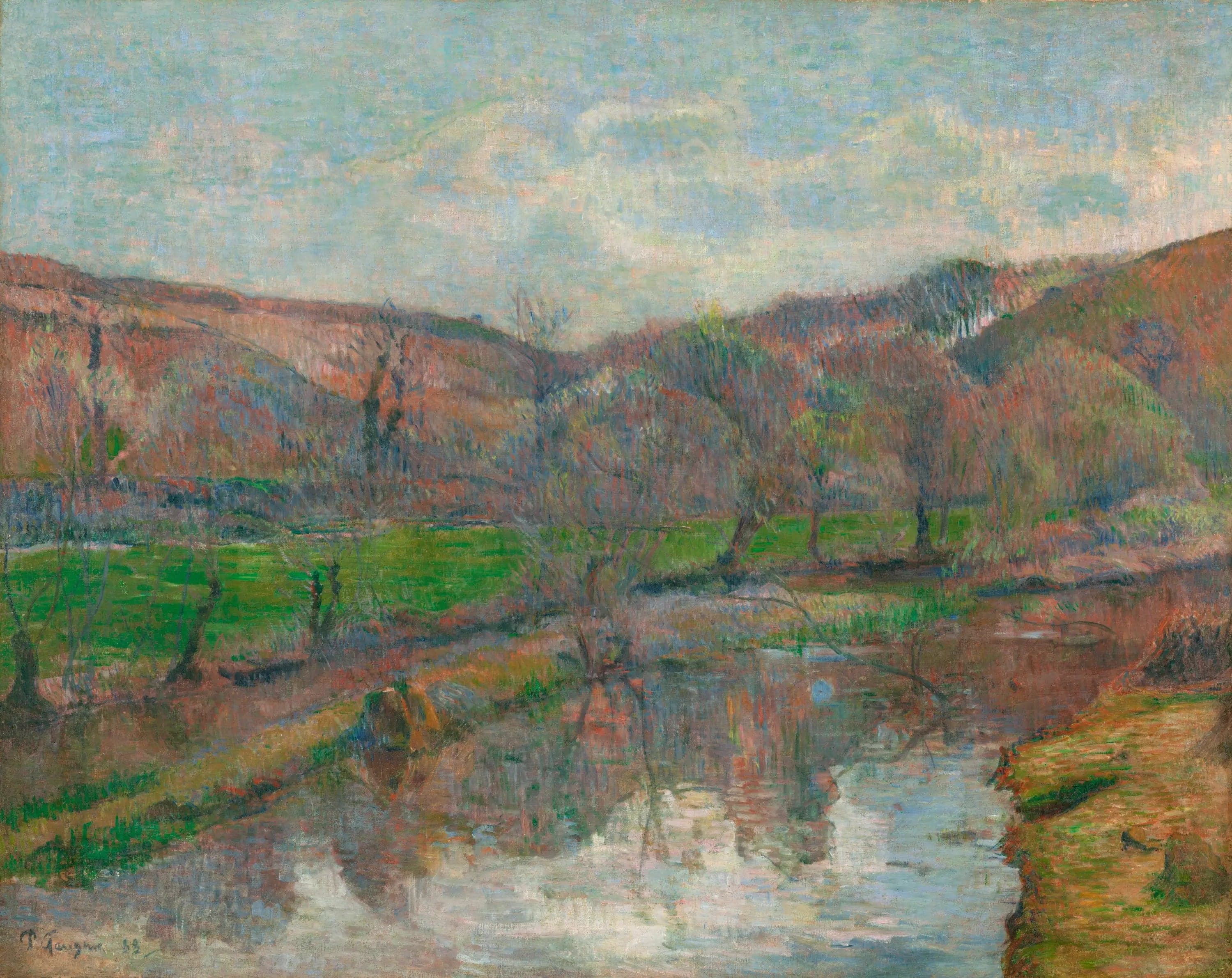
The Valley of the Aven and the Mount of Pont-Aven
- Original dimensions
- 89.5 x 71.1 cm
- Museum
- National Gallery of Art
- Year
- 1888
Scene depicted
This canvas famously depicts an idyllic landscape where the vibrant greens of the fields blend with the soothing blues of the Breton sky. Gauguin's brushstrokes transform the scene into a pictorial work that vibrates with a serene atmosphere, as if time suspended its flight to the gentle flows of the Aven River.
Historical context
Created in 1888, during a bubbling period of artistic creativity, this painting emblematic of Paul Gauguin is set in the unique framework of Pont-Aven, a charming commune in Brittany. This place, known for its natural beauty and enchanting landscapes, has served as a muse to many artists, notably those of the Post-Impressionist movement. The painting, currently exhibited at the National Gallery of Art, measures 89.5 by 71.1 cm and encapsulates the splendor of an era.
Place in the artist's career
The Valley of the Aven and the Mount of Pont-Aven represents one of the pivotal stages in Gauguin's career, marking his transition to a bolder and more symbolic style. Alongside other masterpieces like Vision of the Sermon and The Sorcerer of Hiva Oa , this painting illustrates the evolution of his artistic and emotional approach, reinforcing his place in the pantheon of influential artists of his time.
Anecdote
Paul Gauguin once stated: “Nature is my only true inspiration.” That morning, on the calm shores of the Valley of the Aven, he captured the essence of rural life, portraying the harmony between man and nature. The painting evokes a deep emotion, connecting his roots to the wild beauty that surrounds him.