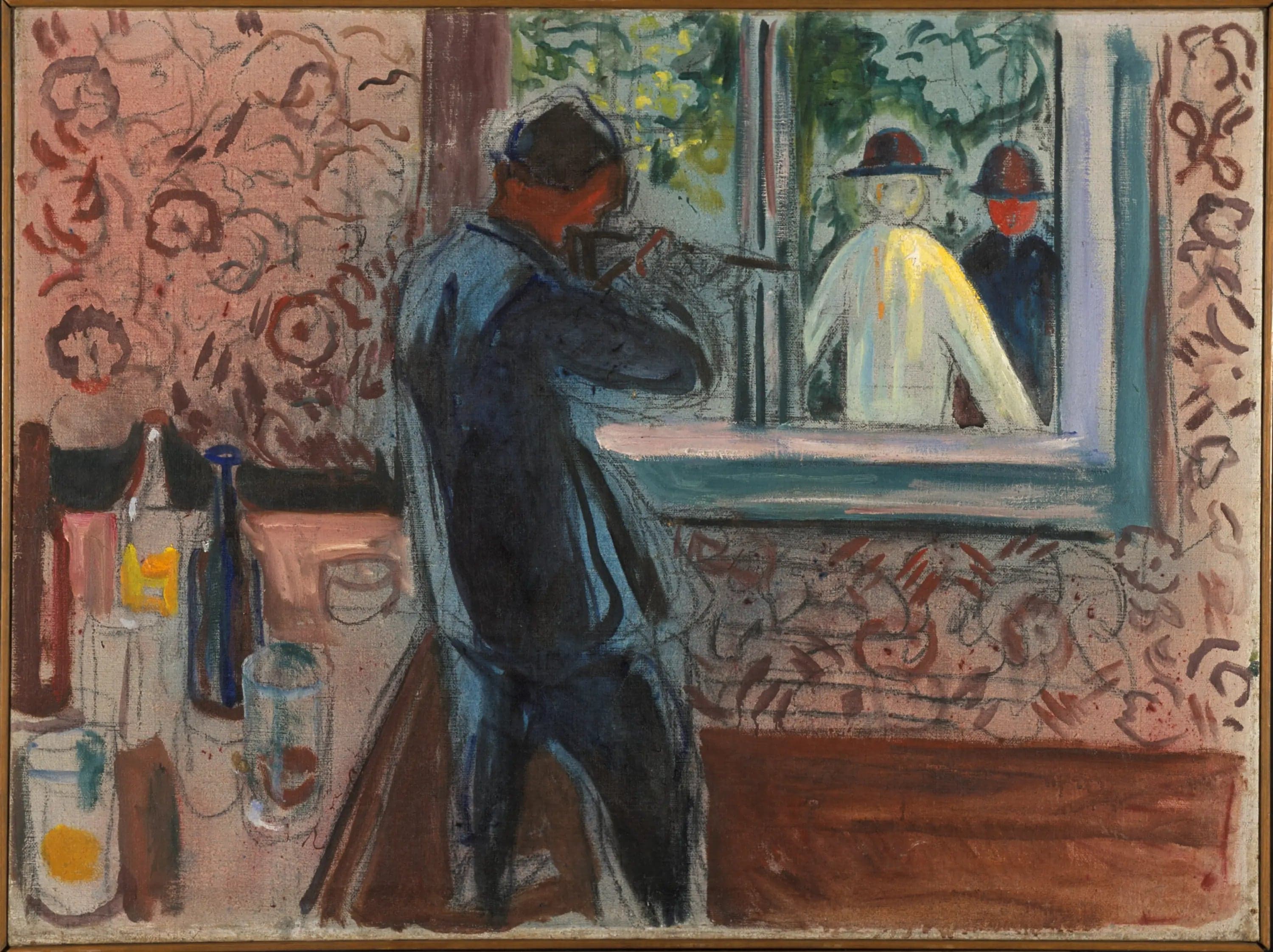
The Uninvited Guests
- Original dimensions
- 100.5 x 75 cm
- Museum
- Munch Museum
- Year
- 1932
Scene depicted
In this work, Munch depicts a tense scene where guests, with blurred faces, stand both distant and interconnected, capturing the essence of alienation in society. This composition reveals the contrast between the appearance of a social gathering and the depth of solitude felt by each, echoing the tormented spirit of the artist.
Historical context
Created in 1932, this painting emblematic of Edvard Munch is rooted in the expressionist movement, a revolutionary artistic movement that reveals human emotions with intensity. The scene in Oslo, Norway, takes place during a time of social upheaval, where the quest for meaning in the face of modern anxiety became pressing. The painting is now exhibited at the Munch Museum in the same city, a sanctuary of art that houses his legacy.
Place in the artist's career
The Uninvited Guests represents a period of maturity in Munch's career, where stylistic mastery combines with universal themes of anxiety and existence. Alongside The Anxiety and The Scream, this masterpiece marks a significant evolution towards a deeper and more nuanced reflection on human emotions.
Anecdote
With inspiration drawn from the intensity of human relationships, Munch once declared: “Art lives from the struggle between shadow and light.” Imagine the artist walking on a rainy night, gathering strange faces in narrow alleys, which then become the protagonists of his canvas , illustrating despair and isolation. It is this poignant emotion that pulses through The Uninvited Guests.