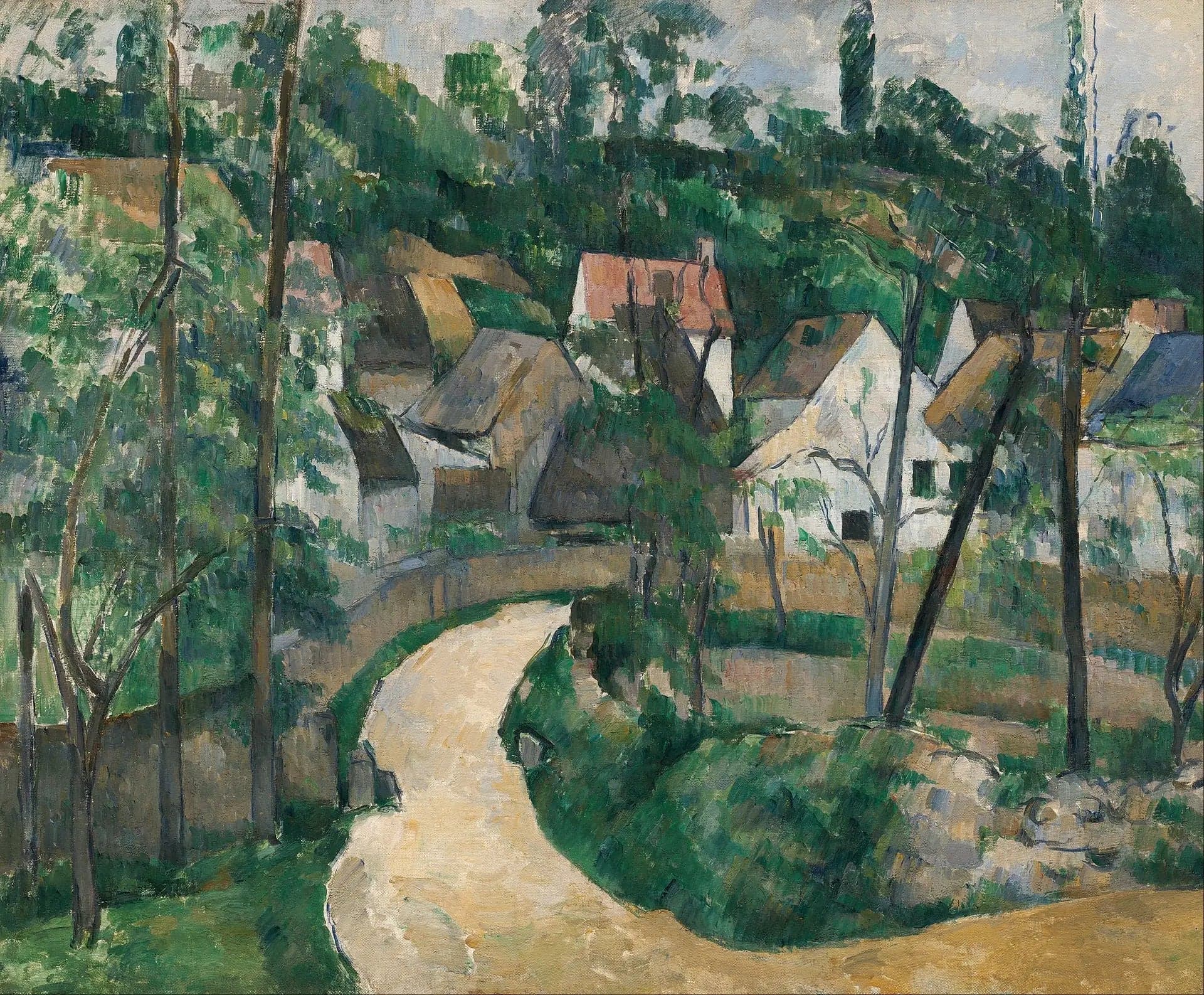
The Turning Road
- Original dimensions
- 73.3 x 60.6 cm
- Museum
- Museum of Fine Arts Boston
- Year
- 1880
Scene depicted
This painting masterfully represents a winding path through a Provençal landscape, where nature seems to vibrate under Cézanne's brushstrokes. The trees, generously leafy, stand proudly, while the surrounding hills offer an infinite perspective, creating a sense of harmony with the environment. Each element is carefully arranged to resonate with the history and essence of the land.
Historical context
Created in 1880, this painting is set in the picturesque backdrop of Aix-en-Provence, Cézanne's hometown. Rooted in the Impressionist movement, The Winding Road illustrates the fusion between nature and art, an exploration of light and forms. The painting now resides at the Museum of Fine Arts Boston , where it captivates visitors with its majestic dimensions.
Place in the artist's career
The Winding Road marks a crucial moment in Cézanne's career, heralding a period of artistic maturity where his techniques were refined. To be paralleled with The Large Bathers and Mont Sainte-Victoire , this masterpiece reveals his stylistic evolution, blending each brushstroke with a quest for depth and expression.
Anecdote
“Art is not an exercise of the mind, but the echo of nature,” Cézanne is said to have explained, inspired by a sunny morning, where shadows and light mingle on the winding path. It is precisely this fleeting impression that he sought to capture in The Winding Road , thus conveying a timeless emotion.