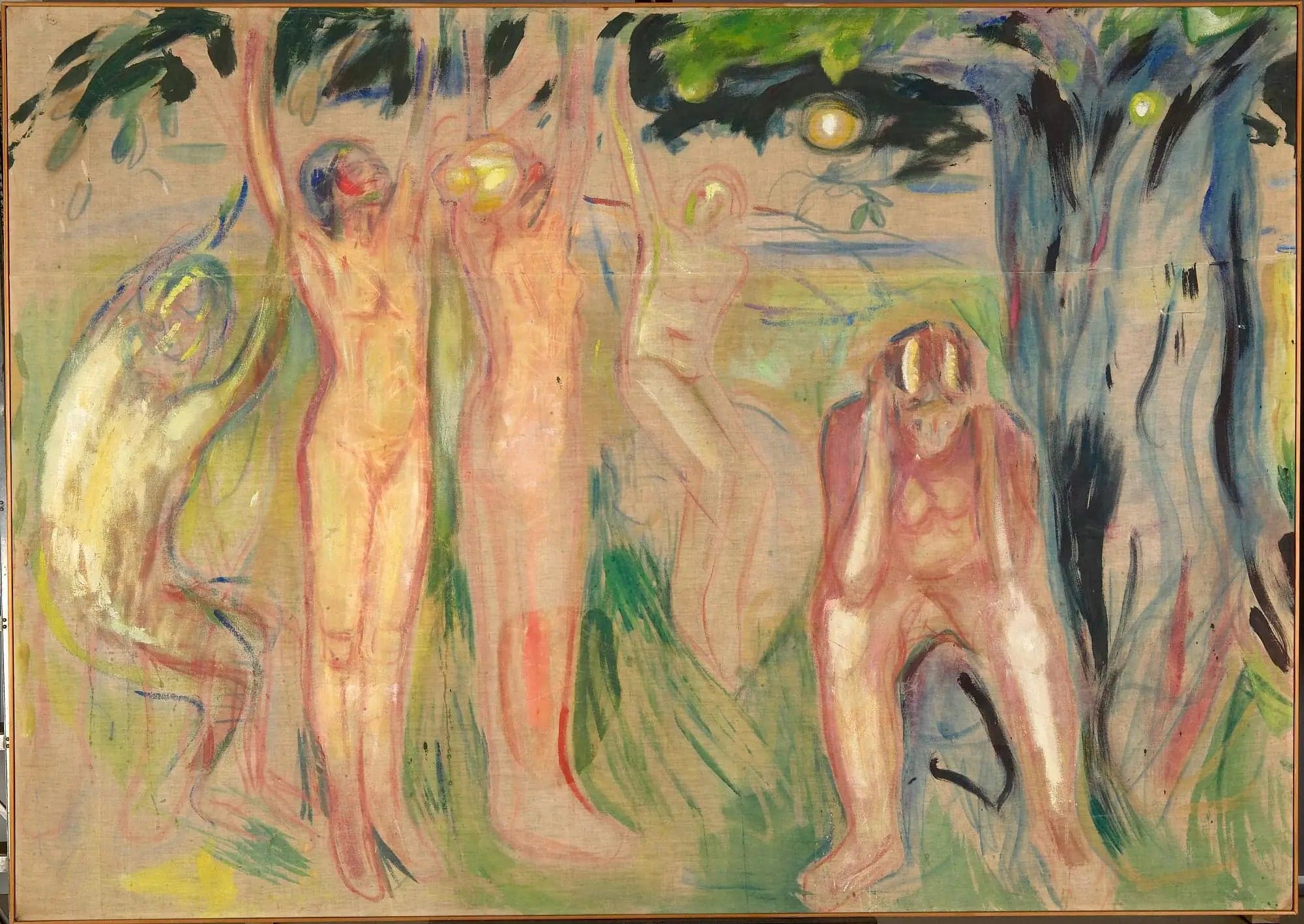
The Tree of Life: Left Side
- Original dimensions
- 198 x 140.5 cm
- Museum
- Munch Museum
- Year
- 1910
Scene depicted
In the painting The Tree of Life: left side , Munch captures a scene of introspection where the majestic tree symbolizes life, the passage of time, and human connections. The intertwined roots evoke our origins, while the branches rise towards a sky vibrant with colors, translating the deepest human emotions. It is a visual journey within human existence, a reflection of the struggles and joys that shape the human condition.
Historical context
Created in 1910, in Oslo, the work The Tree of Life: left side is part of the expressionist movement. This artistic movement, a witness to the torments of the human soul, finds its peak here. Munch, a visionary painter, absorbed the vibrant atmosphere of the city to bring this canvas to life. The painting is currently housed in the Munch Museum, revealing to the public this iconic work that measures 198 x 140.5 cm.
Place in the artist's career
This painting is situated at a decisive turning point in Munch's career, marking his transition to a more personal and intimate expression. While works such as The Scream and The Madonna have already established his fame, The Tree of Life: left side reflects a stylistic maturity, integrating elements of his past while opening up to new dimensions of color and emotion.
Anecdote
It is said that Edvard Munch once declared: "Painting is a cry of joy or pain that is heard in the silence of colors." This sentiment resonates strongly with The Tree of Life: left side , born on a morning where the melancholy of spring intertwines with the warmth of colors. A simple walk in the gardens of Oslo may have inspired this masterpiece , an ode to the beauty of life and nature.