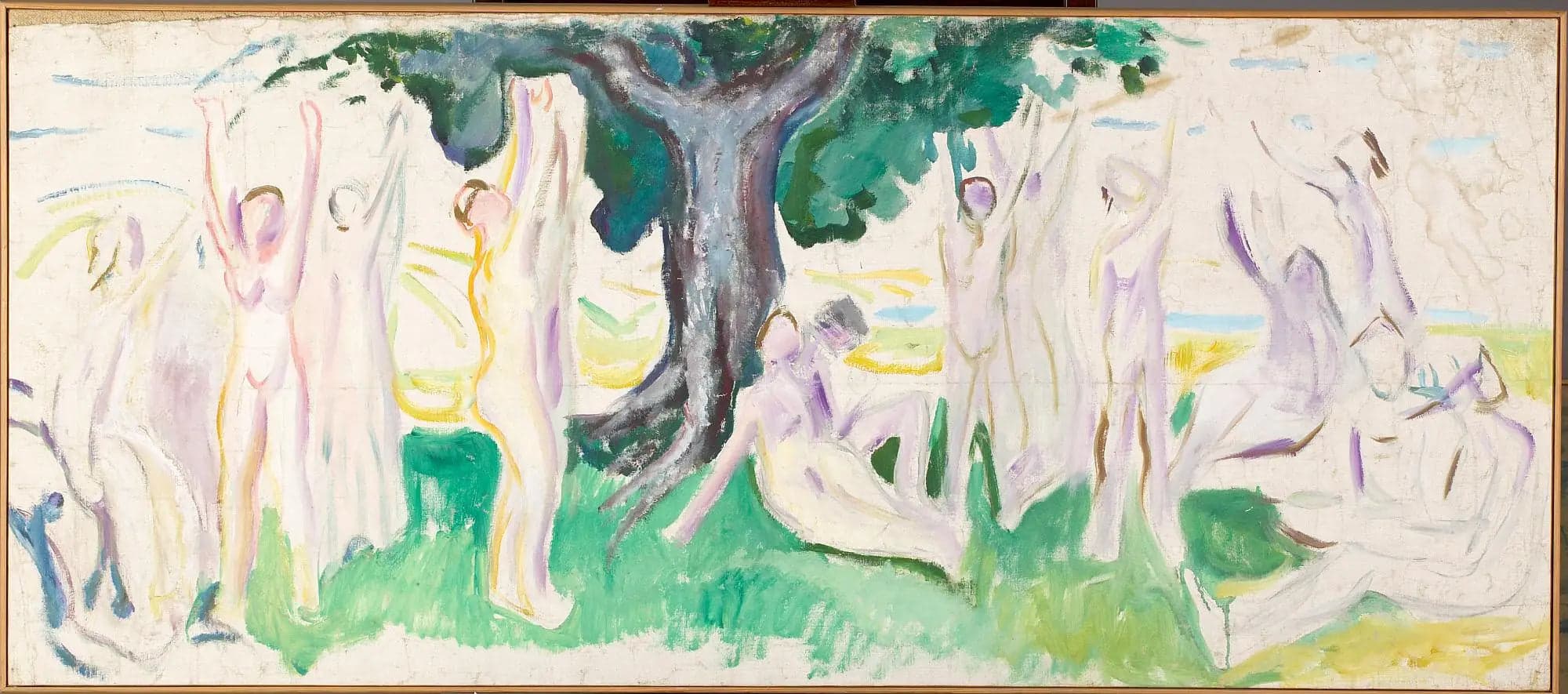
The Tree of Life
- Original dimensions
- 159 x 69.5 cm
- Museum
- Munch Museum
- Year
- 1910
Scene depicted
The composition of "The Tree of Life" depicts a majestic tree, standing as an angelic symbol amidst a dreamlike landscape. The roots intertwine with life and death, embodying the eternal cycle of human existence. The stylized figures surrounding it seem to be in search of meaning, captivated by the vital force of their environment, infusing this canvas with unparalleled emotional depth.
Historical context
Created in 1910, the painting "The Tree of Life" by Edvard Munch is set against the vibrant backdrop of Norway at the dawn of the 20th century. Munch, an iconic figure of symbolism and expressionism , draws from his roots and personal history to bring this canvas to life. Currently housed in the Munch Museum in Oslo, this painting , measuring 159 by 69.5 cm, remains a poignant reflection of the human soul.
Place in the artist's career
This painting marks a crucial period in Munch's career, reflecting his stylistic and emotional peak. Before "The Tree of Life," he created "The Scream" (1893), a work already laden with emotions, followed by "The Madonna" (1894-1895), symbolizing his relentless quest for love and mortality. "The Tree of Life" thus fits into this search for universal truth through pictorial expression.
Anecdote
"Every painting is a cry of the soul and a reflection of its torment." These words from the master evoke a misty morning in Oslo, when Munch, wandering in a garden, found inspiration to capture the essence of life and death in his masterpiece . This painting thus illustrates the eternal conflict between the beauty of nature and inner turmoil.