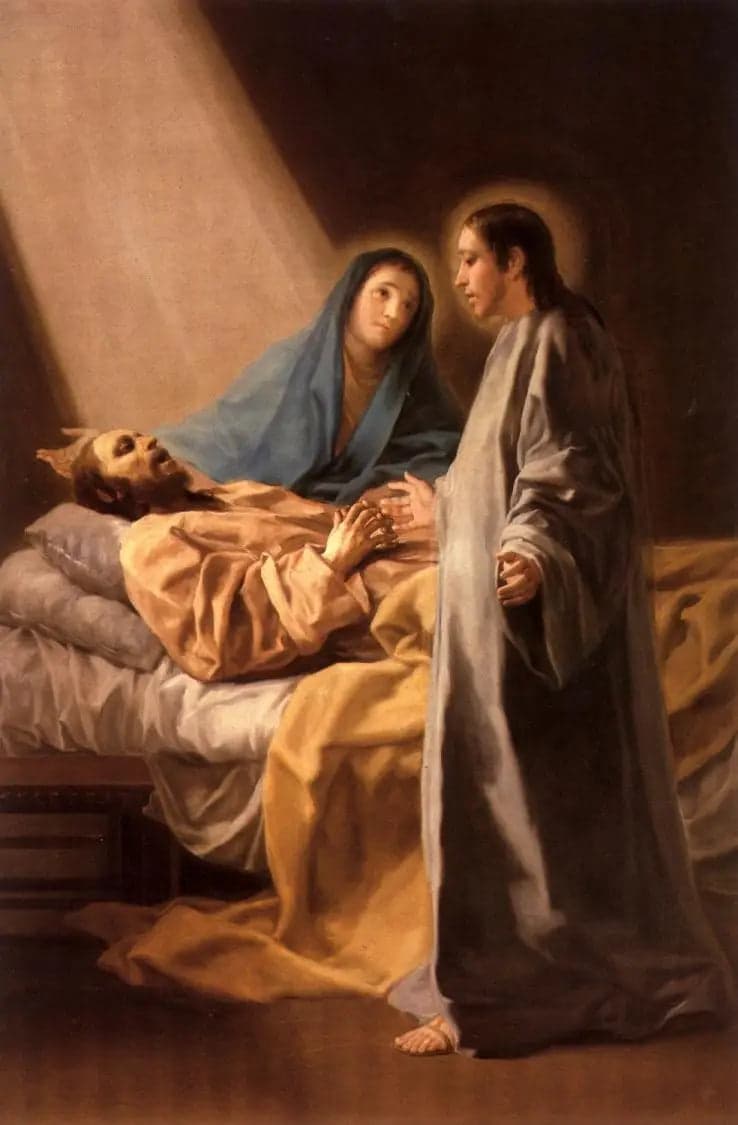
The Transit of Saint Joseph
- Original dimensions
- 153 x 220 cm
- Museum
- Royal Monastery of Saint Joachim and Saint Anne
- Year
- 1787
Scene depicted
In this painting, Goya illustrates the poignant moment of the transit of Saint Joseph, a man of faith and legend. The scene depicts an environment imbued with gentleness where the image of Joseph, surrounded by light, evokes peace and serenity in adversity. The colorful figures, united in this composition, tell a timeless story full of humanity and devotion.
Historical context
Created in the heart of late 18th century Spain, The Transit of Saint Joseph is part of the emerging romantic movement. This iconic painting, displayed at the Royal Monastery of Saint Joachim and Saint Anne, reflects a time when spirituality and humanity intertwine. From 1787, this painting illustrates Goya's artistic genius, offering a unique vision of religious history.
Place in the artist's career
This painting , a major work in Goya's career, marks a pivotal moment. This masterpiece, in interaction with other paintings such as The Caprices and The Naked Maja , demonstrates a fascinating stylistic evolution, blending dark shades and bright highlights, bringing an unparalleled depth to his work.
Anecdote
“Light is not only in the sky, it is in the heart,” Goya might have said one inspiring morning, while contemplating the solitude of a rural landscape. It is in this introspection that his masterpiece was born, touching the human soul through the sacred canvas .