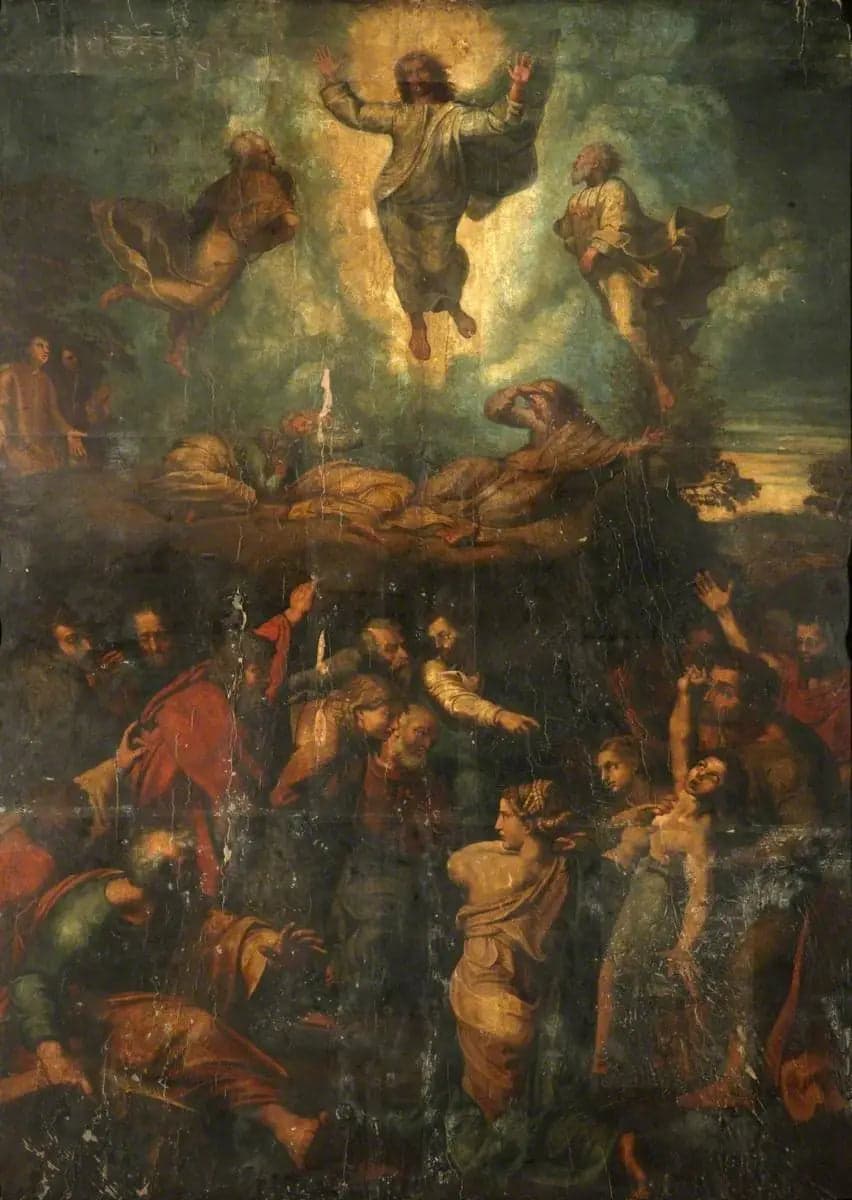
The Transfiguration
- Original dimensions
- 279 x 410 cm
- Movement
- Italian Renaissance
- Museum
- Vatican Pinacoteca
- Year
- 1518
Scene depicted
In this powerful scene, Christ shines at the top of the mountain, surrounded by divine light, while apostles, dazzled witnesses, face the inconceivable. At their feet, the despair of a father pleading for healing plunges deeper into an emotional whirlpool. This composition, fascinating, questions each person about the nature of faith and divine revelation.
Historical context
Created in 1518, this iconic work weaves a dramatic and spiritual narrative rooted in the Italian Renaissance . The canvas, within the Vatican Pinacoteca in Rome, enchants with its majesty and mystical aura. This painting not only belongs to its time but transcends it and continues to inspire entire generations.
Place in the artist's career
The Transfiguration, the pinnacle of Raphael 's career, illustrates his technical and spiritual evolution. At the crossroads between The Assumption of the Virgin and The Sistine Madonna, this canvas marks a culmination where pictorial mastery and emotional depth merge, thus composing a visual language that is both powerful and delicate.
Anecdote
“Reality is but a reflection, art is the true mirror,” could have said Raphael while contemplating his masterpiece. Perhaps that morning, a sweet scent of flowers floated in the Roman air. The golden light, already vibrant, would have illuminated his mind. This magic permeated the creation of The Transfiguration, essential to the artist's soul.