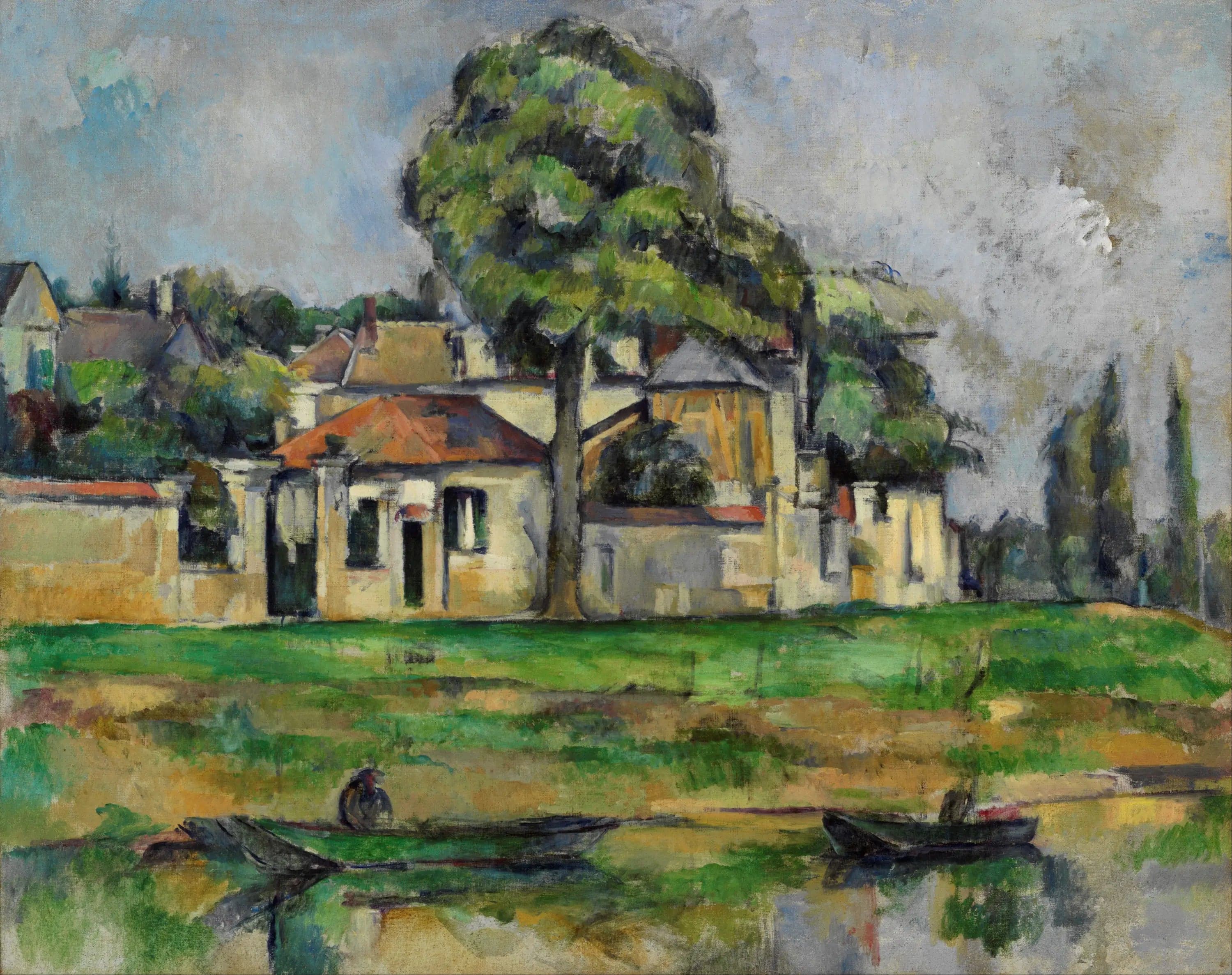
The Towpath on the Banks of the Marne at Créteil
- Original dimensions
- 79 x 63 cm
- Movement
- post impressionism
- Museum
- Art Gallery of New South Wales
- Year
- 1888
Scene depicted
This painting represents a tranquil scene of towing along the Marne, where light plays on the water, creating sumptuous reflections. The moored boats, the trees in the background, and this feeling of serenity offer an escape to a world where time seems suspended, revealing Cézanne's mastery in nature.
Historical context
Created in 1888, this painting emblematic of Paul Cézanne is part of the rich heritage of post impressionism . Located along the banks of the Marne, this pictorial work illustrates the tranquil beauty of nature at the heart of the French landscape. Today, this canvas is exhibited at the Art Gallery of New South Wales, providing art lovers with a unique visual experience.
Place in the artist's career
The Towpath on the Banks of the Marne in Créteil is situated at a crucial stage in Cézanne's career. It is a period where his style begins to take shape, blending impressionism with a more structured approach. It can be compared to other works, such as "The Large Bathers" and "Mont Sainte-Victoire," which illustrate the evolution of his artistic language towards more ambitious compositions.
Anecdote
Cézanne, in a moment of inspiration, said: “I seek to render nature in my own words, to capture the very essence of a moment.” One spring morning, walking along the banks, he felt the breath of the breeze and the brilliance of colors that prompted him to immortalize this magnificent scene. This precious moment is reflected in the evocative power of The Towpath on the Banks of the Marne in Créteil .
Major exhibitions
Thyssen-Bornemisza Museum