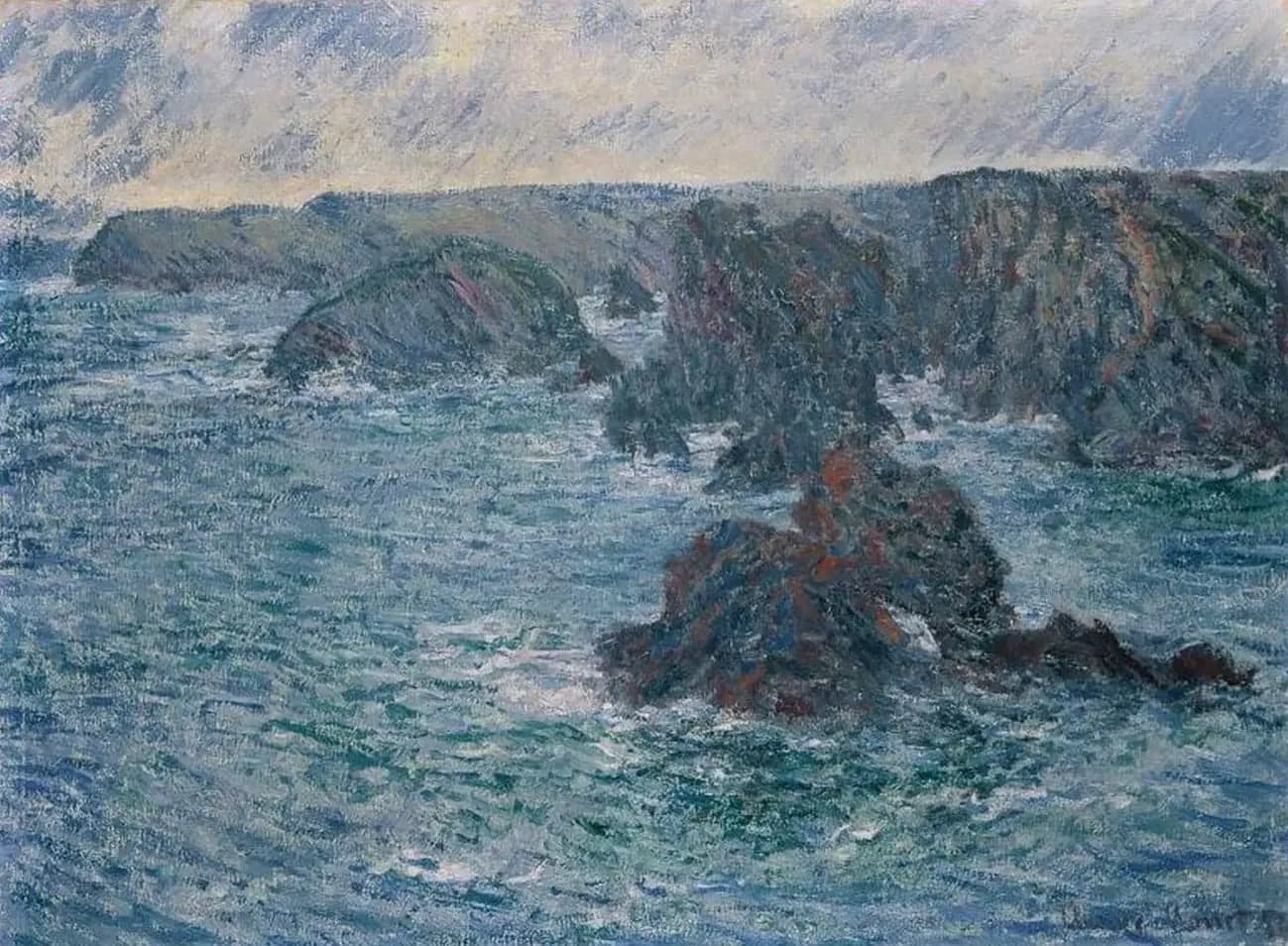
The town of Belle-Île
- Original dimensions
- 85.5 x 65 cm
- Museum
- Rodin Museum
- Year
- 1886
Scene depicted
This pictorial work testifies to Monet's ardent desire to capture the ephemeral, intertwining the island's seascapes and vibrant architecture. The waves, caressing the shore, seem to vibrate under the caress of the wind, while the buildings of the town stand dignified against the vastness of the ocean. The City of Belle-Île is a call to escape, a window open to a world where the elements dance to the rhythm of light.
Historical context
Year: 1886 |BRK| Museum: Rodin Museum |BRK| Dimensions: 85.5 x 65 cm
Place in the artist's career
This canvas positions itself at a turning point in Monet's career, a moment when his Impressionist style is characterized by an increased mastery of light and color. Through other works like Impression, Sunrise and The Water Lilies , one perceives the painter's stylistic evolution, moving from a naturalistic approach to radical abstraction, while remaining firmly rooted in sensations and intuition.
Anecdote
“Nature does nothing perfect, but in every detail, it offers us a masterpiece.” This quote from Monet perfectly conveys the magic of a spring morning on the island, when the painter, awed by the shades of blue and orange, captured the indescribable beauty of the landscape on his canvas. Each brushstroke is the result of an intimate encounter between the artist's gaze and the splendor of the place.