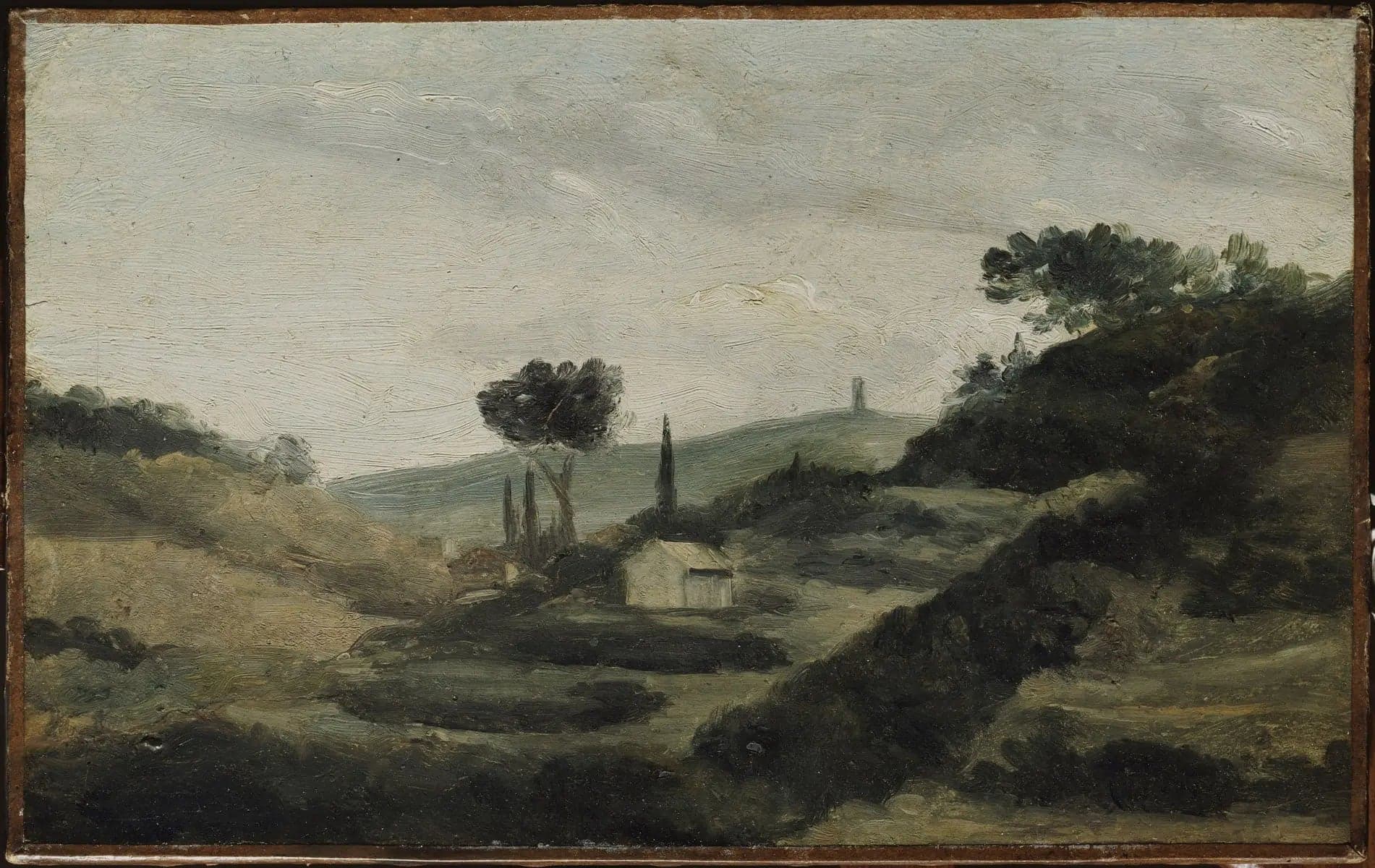
The Tower of Caesar
- Original dimensions
- 30.5 x 19.2 cm
- Museum
- musée Granet
- Year
- 1862
Scene depicted
In this masterpiece, Cézanne depicts the famous Tour de César, an iconic ruin that survives through the ages. This painting bears witness to a meeting between nature and history, where the hard rocks oppose the vaporous skies of clouds. The landscape is blurred by a soft light, enveloping the viewer in a meditative atmosphere imbued with serenity.
Historical context
Created in 1862, this painting is set in the geographical framework of Aix-en-Provence, where Paul Cézanne developed his distinctive style, rooted in post-impressionism . The composition of this canvas resonates with the spirit of innovation of the time, a moment when painting became the voice of modern reality. Currently exhibited at the musée Granet, this captivating pictorial work measures 30.5 x 19.2 cm, revealing a unique view of a timeless landscape.
Place in the artist's career
The Tour de César marks a turning point in Cézanne's career. This canvas represents his promising beginnings and heralds the maturity of his style. To be compared with works such as "The Card Players" and "Mont Sainte-Victoire," this masterpiece illustrates his technical and emotional evolution, sealing his legacy as a pioneer of the transition to modernism.
Anecdote
Paul Cézanne once stated: "I want to paint the world as it is, but also as it appears to my soul." It was on a sunny morning, with the sweet scent of lavender wafting through the air, that he took his place to observe the majestic Tour de César. Between light and shadow, each brushstroke brought the canvas and the vibrant emotions of his inspiration to life.