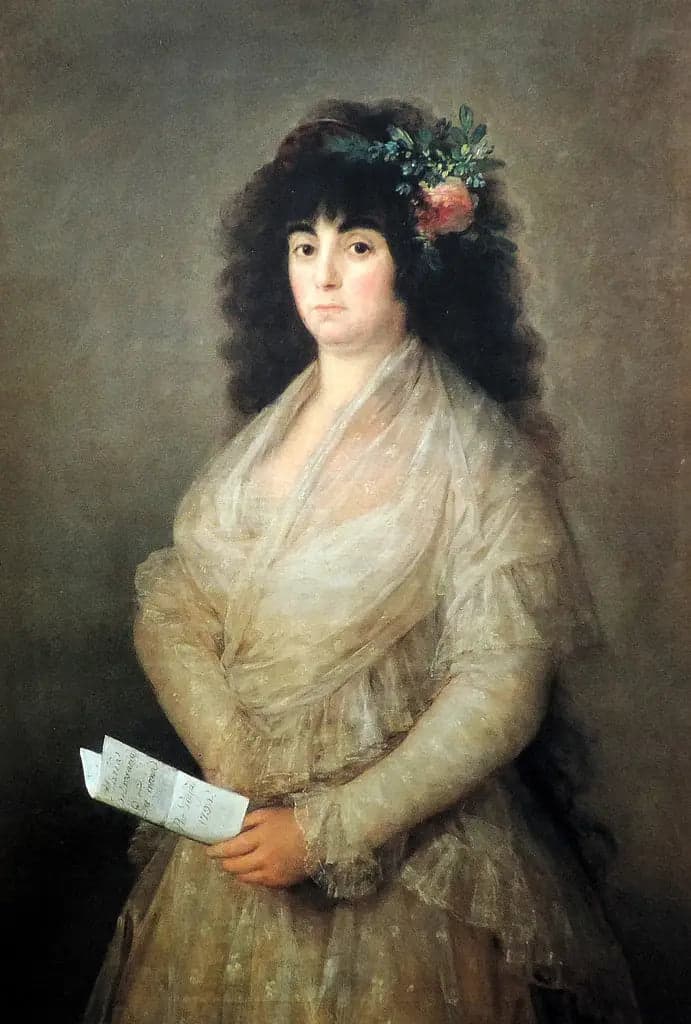
The Tirana
- Original dimensions
- 79 x 112 cm
- Museum
- Not specified
- Year
- 1794
Scene depicted
The canvas “La Tirana” captures the confrontation between tyranny and revolt, illustrating the oppressive power symbolized by the central figure. The palpable tension between the subject and its environment is evident, reinforcing the message of the struggle against injustice. This pictorial work transforms into a silent cry resonating through time, calling out to the consciousness of every viewer.
Historical context
Created in 1794, La Tirana is imbued with the spirit of Spain at the dawn of the 19th century, a time of political and social upheaval. Executed by Francisco de Goya , this painting is part of the artistic movement of romanticism , distinguished by its emotional depth and striking representation of the human condition. While its current exhibition location remains a mystery, its imposing dimensions make this canvas a centerpiece where shadow and light intertwine to tell a timeless story.
Place in the artist's career
“La Tirana” is situated at a major turning point in Goya's career, marking a period of blurring between realism and realism . Alongside works such as “The Duke of Osuna and His Family” and “The Naked Maja,” this masterpiece illustrates the stylistic evolution of the artist, from the charm of refined portraits to a more direct and stripped-down representation of moral dilemmas.
Anecdote
“Every brushstroke evokes a soul, a moment frozen in eternity.” In the tumult of a rich artistic life, Goya found inspiration in the alleys of Madrid, on a sweet April morning, where the cries of children and the scent of spring flowers sparkled in the air. It is from this vibrant atmosphere that the intensely palpable emotion emerges, which can be found in La Tirana .