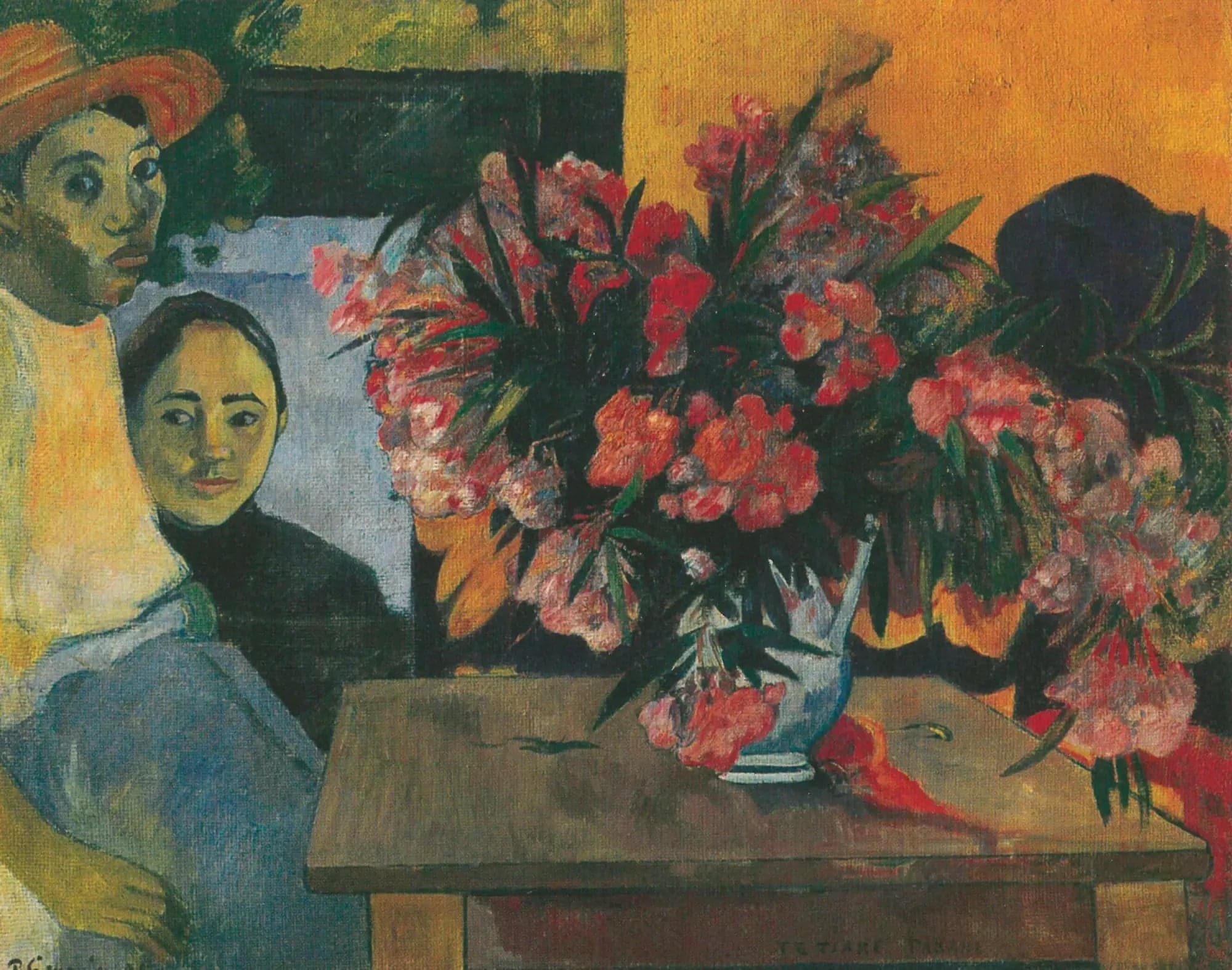
The tiare farani
- Original dimensions
- 92 x 72 cm
- Museum
- Pushkin Museum of Fine Arts
- Year
- 1891
Scene depicted
This painting unveils an intimate scene, where a young woman, crowned with flowers, seems to plunge into deep reflection. The composition highlights the wild beauty of the Tahitian nature surrounding the character, symbolizing the harmony between humanity and its environment. The painting invites the viewer to feel the spirituality of the moment, like a feather floating in the warm breeze.
Historical context
Created in 1891 in Tahiti, this iconic painting by Paul Gauguin belongs to the post-impressionist movement. Through this canvas , the artist seeks to distance himself from European artistic conventions, revealing a vibrant universe of colors and shapes. Currently exhibited at the Pushkin Museum of Fine Arts , this painting embodies Gauguin's quest for authentic art, stripped of Western influences.
Place in the artist's career
Te tiare farani marks a turning point in Gauguin's career, representing his stylistic peak. After works such as Vision after the sermon and The nap , this painting testifies to an artistic maturity and a desire to redefine the perception of Polynesian cultures. It awakens emotional introspection, while Gauguin hones his unique style. The painting here becomes a true mirror of his thoughts and aspirations.
Anecdote
“Art is a wish for immortality.” These words resonate like a mantra for Gauguin as he finds himself on the sunny beaches of Tahiti. One spring morning, he locks eyes with a young Tahitian woman, captivating his soul and nurturing the inspiration that will give birth to this masterpiece . The evocative power of Te tiare farani is thus rooted in a raw and authentic emotion, spring-like and ardent.