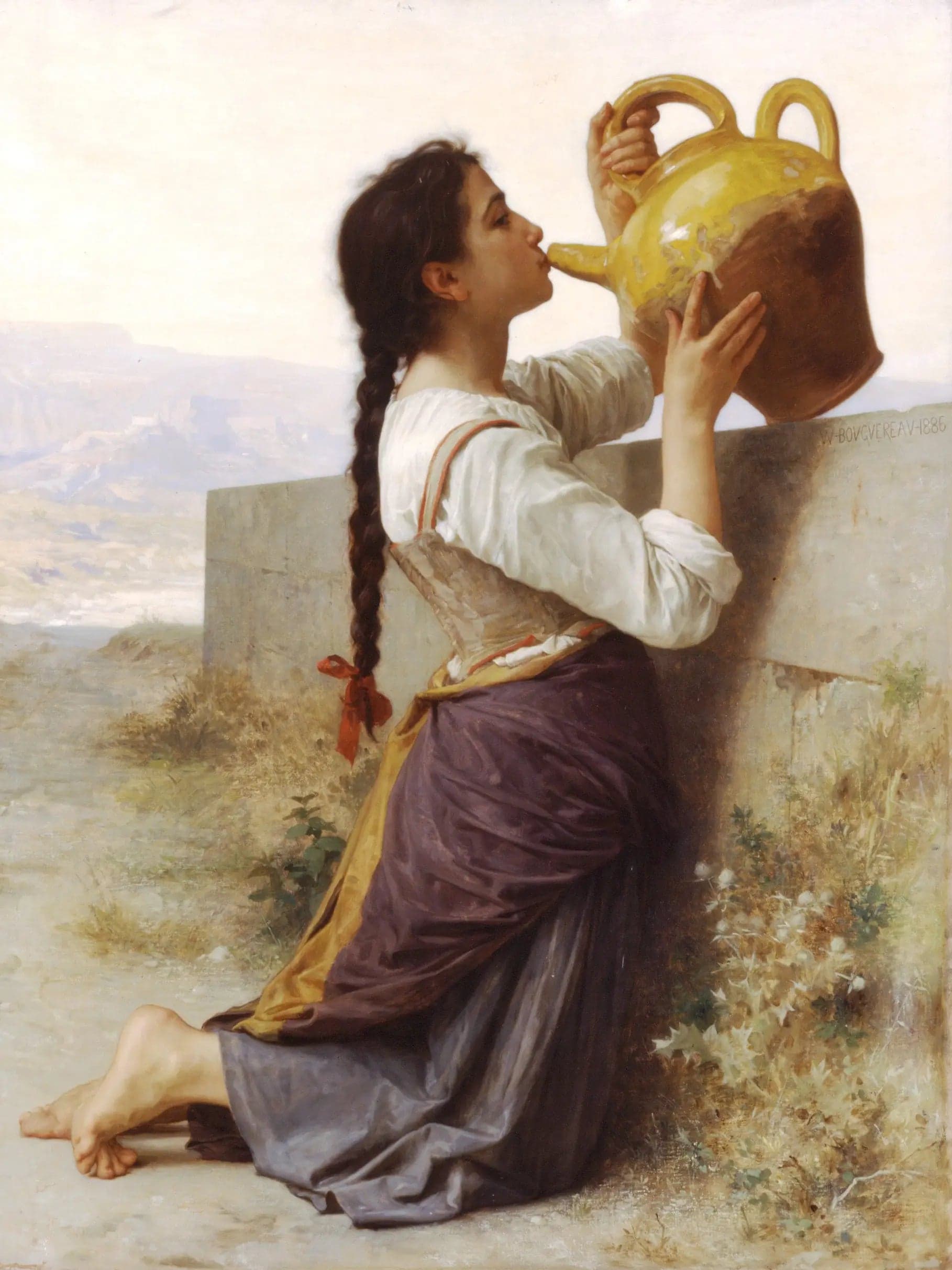
The Thirst
- Original dimensions
- 102 x 132 cm
- Museum
- Not specified
- Year
- 1886
Scene depicted
In this painting , we discover a scene vibrant with life, where the intensity of gazes and the soft light filtering through the space create an atmosphere of delicacy. A young adolescent, reaching towards the sky, embodies hope and the thirst for a life rich in emotions. This striking portrait asks viewers to feel the emotional connection with this feminine figure that transcends time.
Historical context
Created in the heart of the 19th century, at the crossroads of realism and naturalism, the painting The Thirst by William-Adolphe Bouguereau embodies all the beauty and emotion of its time. In the midst of an artistic boom in Paris, Bouguereau captures in this pictorial work an essence that is both universal and singular. It is not surprising that this painting resonates deeply in the art world, although its precise location at the time remains a mystery, today remaining an invaluable treasure of artistic culture.
Place in the artist's career
The Thirst represents a turning point in Bouguereau's career, testifying to his constant mastery. When compared with pieces such as The Guest and The Little Shepherd , one can observe a fluid artistic maturation, where the exploration of human emotions refines with each painting . This masterpiece lays the groundwork for his future success, consolidating his status as an undisputed master of realism .
Anecdote
“The beauty of life lies in the most delicate details,” Bouguereau might have said while painting The Thirst on a peaceful spring morning, in his light-filled studio. Finding inspiration in the curious gaze of a young girl, the artist immortalizes a pure emotion that echoes the search for meaning of every human being.